The New England Media Group said yesterday it will offer voluntary buyout packages to employees at The Boston Globe and the Worcester Telegram & Gazette, as it aims to cut 125 jobs from the two papers, including 19 in the Globe newsroom and editorial pages.
Fifty-five jobs to be cut in the buyout will be outsourced to outside contractors, said Alfred S. Larkin Jr., the Globe spokesman, primarily in finance operations.
"Our expectation is we will be able to accomplish our goal without resorting to layoffs," Larkin said.
The buyouts, the second round since the fall of 2005, come as the newspapers struggle with falling circulation and advertising revenue against the backdrop of similar declines in the industry. The New York Times Co., parent of the Globe and Telegram & Gazette, recently said that ad revenue at its New England group fell 11 percent in November from the same period a year ago.
In the six months ended in September, the most recent figures available, the Globe's average daily circulation declined 7 percent to about 386,000 from 414,000 a year earlier. The Telegram & Gazette reported an 11 percent decline in average daily circulation in that period, to 89,000.
Dan Totten, president of the Boston Newspaper Guild, denounced the outsourcing initiative as "corporate greed at its worst."
Read the full story by Robert Gavin of the Globe Staff
Read memos from publisher Steve Ainsley and editor Martin Baron
Friday, January 12, 2007


Thursday, January 11, 2007
John Olesky and Paula visit China

John Olesky and Paula didn’t take an easy access up to the Great Wall during their visit to China December 25 to January 2. Their tour guide, Tiger, took them to the Juyong Pass. That meant they had to climb 396 rock steps, which vary from two inches to about two feet, with each step a different height than the one below and above. To read about their trip, click on the headline above for John’s account on the BJ Retirees web site. There you will find a link to an album of photos. There are other photos of the Great Wall, which is 4,400 miles long, plus Tiananmen Square and a photo of John and Buddha.
Community News is mostly crime
Today was the third day running for the new Community News page on page B3 in the Beacon Journal. Ads appeared for the first time. There were 34 column inches of advertising or about 27 per cent of the 129 column inches on the page. All ads were from advertisters in Akron, Cuyahoga Falls and Barberton– none from outlying areas.
There was only one news item concerning local government. Three graphs were given to a plan by Medina school board to seek a sales tax increase. Another brief was about a Summit County elections board employee who will remain off the job while the sheriff investigates allegations he rented a truck without authorization. The other 10 items were about crimes.
There was only one news item concerning local government. Three graphs were given to a plan by Medina school board to seek a sales tax increase. Another brief was about a Summit County elections board employee who will remain off the job while the sheriff investigates allegations he rented a truck without authorization. The other 10 items were about crimes.
Wednesday, January 10, 2007
14 attend retirees lunch
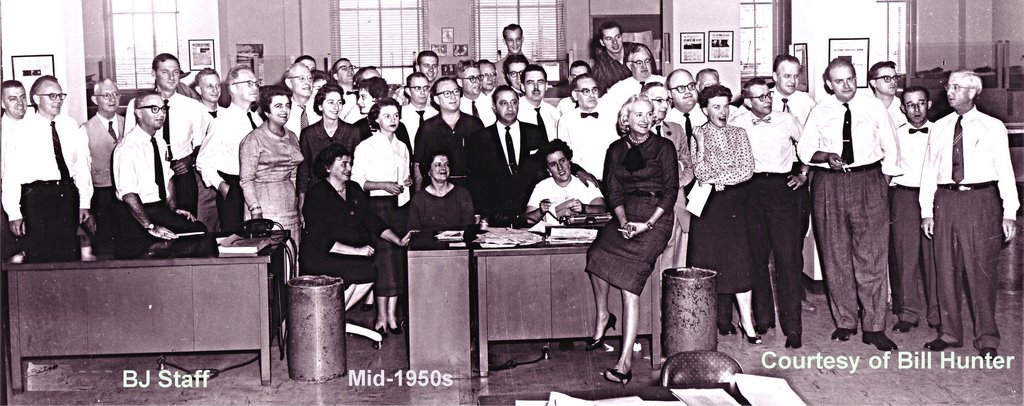
There were 14 at Papa Joe's for the BJ retirees' lunch today. Attending were Tom Moore, Cal Deshong, Bill Canterbury, Art Cullison, William Byrd, Gene McClellan, Watson Blanton and wife Rosetta, Ed Hanzel and wife Norma, Al Hunsicker, Bill Hunter, Carl Nelson and John Olesky.
Former chief photographer Bill Hunter brought old photos of newsroom personnel and Guild contracts, to show the paltry pay scales by today's standards.
The photo here is of the newsroom staff in the mid-1950s.
[Click on the photo to enlarge it for a better view]
Hunter also showed a memo he received from the late publisher Ben Maidenburg to thank him for sending him a photo of the staff at a 1980s picnic at the farm of Bud Morris. The photos sparked memories and laughter and maybe a bit of wistfulness.
Olesky, former TV editor, talked about his trip to China. Click here to read the Maidenburg memo. Click on the headline above to see an album of lunch photos.
TV personality Alice Weston dies
Alice Weston, who started her broadcasting career with a cooking show on WEWS Channel 5 in 1948 and retired as a seniors reporter for WKYC Channel 3 in 1996, died Tuesday at her home in Sheffield Lake.
She was 95.
When she became the host of one of Cleveland's first television shows for women, her name was not Weston - and she hated to cook.
"When I was beginning, there was only one path available for women in the new medium, and that was the discussion of food," Weston told an interviewer in 1978. "We've come a long way since 1948."
WEWS executives didn't like the real name of their newly hired happy homemaker - Alice Schowalter. They chose "Weston" as her small-screen surname, because its ring was similar to that of the station's call letters.
In 1968, she went to WUAB Channel 43 to help the fledgling station get started. What was supposed to be a six-month project stretched into a 26-year career. She served as public service director for Lorain and hosted such shows as "Lorain Conversation." In the 1970s and '80s, she co-hosted "43 A.M." with Linn Sheldon, better known to many as the elfin star of the children's show "Barnaby."
In 1994, Weston left WUAB for WKYC Channel 3 to do news segments about senior citizens.
She was born Alice Boter in Holland, Mich., to parents who emigrated from the Netherlands. Her father, a merchant, helped found the city's famous Tulip Time Festival.
Alice Weston 1911-2007
Survivors: Daughters, Susan Ruffing of Sheffield Lake and Sara Walters of Chicago; two grandchildren; and four great-grandchildren.
Services: Pending.
Arrangements: Bauer-Laubenthal Funeral Home, Elyria.
Click on the headline to read the full story by Alice Baranick in the Plain Dealer.
Tuesday, January 09, 2007
The BJ's local news surge
As advertised, the Beacon Journal kicked off its big local news surge today with a full page of briefs on page B3 and a large (4 col. X 12 inch) Paul Tople photo layout on a crew installing a sound wall on I-77 at 13th Avenue in Canton.
Three of the 18 briefs were from Akron, two from Barberton and one each from Bath, Boston Heights, Canal Fulton, Cuyahoga Falls, green, Medina, Norton, Revere schools, Stow, Wadsworth and Norteast Ohio (about a bald eagle count). There were none from Portage or Wayne counties-- the other two counties in the old five-county area once served by seven different editions.
Biggest brief was Revere Schools electing board officers--9 graphs. Credit at the bottom of briefs was given to five correspodents: Gina Mace 3, George W.. Davis and Jody Miller 2 each and Kimberly Sirk and Beau Dusz, 1 each.
Monday, January 08, 2007
Prescription math
[Posted for John Olesky]
Prescription math
I applied the math from my 2006 prescriptions to the 2007 changes decreed by the Canadian, even though the Guild contract for those who retired in 1996 and earlier and my retirement letter both say that I have the $2 co-pay and medical coverage for life.
As I understand the changes, and I'd be happy to recalculate if anyone, including management, finds an error in my figures, it would cost me up to $1,949.41 more a year in 2007 if I get the same monthly prescriptions that I did in 2006. I think I'm about average, since I'm in pretty good health.
Here's how I arrived at the up to $1,949.41 total of EXTRA prescription costs for 2007:
$643.41 in co-pays for the 5.4 months that it will take me to reach the $2,400 limit.
$1,450 for the donut hole, between $2,400 and $3,850, where the retiree pays everything on the prescriptions. Only what I pay is applied to go from $2,400 to $3,850, and I had NO generic prescriptions in 2006, so it's murky how much I would pay to get the same non-generic prescriptions.
$2,093.41 is the total amount that I can pay before I hit the $3,850 limit, if I ever do. As I understand it, and I'm open to correction, then the Canadian's plan would pay 100% of my prescription costs for the rest of the year, but the Canadian's plan seems to all but assure that no Guild retiree will hit the $3,850 limit.
$144.00 is the amount that I pay under the current plan, at $2 per prescription.
$1,949.41 is the difference between what I pay under the current plan and what I would pay under the Canadian's plan for the same prescriptions if I hit the $3,850 limit.
Editorials moved back to A section
Editorial and op-ed pages were moved back to the last two pages of the A section today and the nameplate of the Local & Opinion section has changed to read simply 'Local."
Managing editor Mizell Stewart announced the changes in an A3 column on Sunday thusly:
"Starting Tuesday, the pages formerly occupied by the editorial and commentary pages will be devoted to local news, anchored by t ne Community News page on B3.
"The Community News page will provide a quick read on local news and events, with short items from communities throughout our area. It will be the place to turn to find out what happened at last night's council, school boatrd or township trustee meetings.
"In additon, you'll find a visual glimpse of daily life in the region as captured by our award winning photo staff."
Blogger Note: Can't wait.
Sunday, January 07, 2007
Blog headlines and photos in 2006
There were 424 items posted on the Beacon Journal retirees blog in 2006. We have pulled out 195 of them to make it easier for you to review the tumultuous year at the Beacon Journal.
Just click on the headline to go to the Blog Review of 2006
There you will find a link to the 195 headlines and also a link to an album of blog photos showing the top events of 2006 at the BJ
The review also lists the names of 22 who died during the year.
Because of the sale of Knight Ridder, subsequent sale of the Beacon Journal and the turmoil over layoffs, the visits to the blog increased from 8,883 at the beginning of the year to 32,245 on our December report. The average number of visits increased from 36 a day at the beginning of the year to 73 the week ending December 27. There were 129 the week ending November 8.
In the 29 months since the blog was established in July, 2004, there have been 824 articles posted or an average of more than 28 a month. The number probably will top 1,000 in the next couple of months.
A web site was opened September 18, 2006 to allow use of articles too long for the blog and for storage of information files such as our list of postal addresses of retirees. A Commentary section also was added.
Avista comments on Star Tribune
A report in the Wall Street Journal says few of the headline-grabbing buyouts have been as gutsy as the $530 million planned purchase by Avista Capital Partners of McClatchy Co.'s Minneapolis Star
The deal for the nation's 15th-largest newspaper by circulation comes amid a slump in the business. The Star Tribune has been the worst-performing paper in terms of revenue for McClatchy, which paid $1.2 billion for the paper in 1998. The Star Tribune's ad revenue dropped about 6% last year on a circulation decline of about 4%.
Avista mightn't be a household name, but its founders, Thompson Dean and Steven Webster, have been well known in the buyout community for more than a decade.
So what do they see with the Star Tribune deal that others in the buyout world missed? A very cheap price -- 6.5 times the paper's cash flow -- a respected brand and an industry that may be bottoming out and poised for a rebound.
"We got a premium paper in a healthy market, and we paid a very attractive price," says Dean. "There is meaningful franchise value for top-20 papers. The risk is that readership continues its steady decline."
"Newspapers are poised to stabilize their revenue base, and advertising rates are stabilizing," Dean says. "People will continue to read newspapers."
Dean wouldn't address whether Avista will slash costs or lay off employees. "Newspapers have to recognize that they are operating in a different environment, with different pressures, declining readership and advertising pressures," he says. "We have to get additional revenue growth and do things more efficiently, but that may not be about staff cuts."
While public investors penalize newspaper companies for their lack of growth, private-equity investors generally are more concerned with steady cash flows. And newspapers usually don't have steep capital expenditures that soak up cash.
So if the Star Tribune's circulation stops declining and Avista can generate some growth for the paper's Web site, the firm might avoid significant cost cutting.
"To generate an acceptable return, we only need modest growth because of [the paper's] impressive high free-cash flow," and the low purchase price that Avista paid, Mr. Dean says.
Although Avista hasn't made previous newspaper acquisitions, it placed Chris Harte, a former Knight Ridder executive whose family is among the owners of San Antonio-based direct-marketing firm and publisher Harte-Hanks Inc., as the chairman of Star Tribune's holding company.
Click on the headline to read the full Wall Street Journal story by Gregory Zuckerman.
Saturday, January 06, 2007
Wadsworth Banner to close after 142 years
The Sun News is closing three of its 25 newspapers on Jan. 25, including the Wadsworth Sun Banner that has been serving Wadsworth for 142 years
The Banner, the Sun Scoop Journal (in the Collinwood neighborhood of Cleveland) and The West Summit Sun (serving west central Summit County) are ``underperforming,'' said Sun News president and CEO John Urbancich.
``We're retrenching and shifting resources away from unprofitable areas to revenue-generating areas,'' Urbancich said, citing dwindling circulation and declining ad revenue in those communities.
`Sun News is ``likely'' to have The Plain Dealer in Cleveland print all of its editions starting in April, removing that work from American Color Graphics in Medina. Urbancich said the move will save money. (Sun News is a division of Advance Publications Inc., which also owns The Plain Dealer.)
The location of the Medina bureau will close when the lease ends in July. No decision has been made whether to move that staff to another office or find another place in or near Medina.
``I don't want anyone to think we're pulling out of Medina County, because we're not,'' Urbancich said, noting that two other local papers, the Brunswick Sun Times and The Medina Sun, will still publish.
Click on the headline to read the full story by Paula Schleis on the business front (page D1) of Saturday’s Beacon Journal. Schleis quotes BJ owner David Black as stating it would have no effect on the BJ.
Briefs on news media layoffs
Time may cut 150 jobs
Time Inc. may decide in the next two weeks to cut 150 jobs, and Time magazine could be particularly hard hit, the New York Post reported on Friday, citing sources. The cuts at Time Inc., a unit of Time Warner Inc. , could happen across the board, and include other top magazines such as People and Sports Illustrated, the Post reported. [Copyright Reuters]
Guild members may take the Strib's money and run
The abrupt sale of the Minneapolis Star Tribune to Avista Capital Partners the day after Christmas left many of the paper's employees wondering how soon they'd be shown the door. But a little-known clause in the paper's contract with union journalists suggests that its employees might have good reason to look for the door--possibly in droves.
Article VIII of the Star Tribune's contract with the Minnesota Newspaper Guild and Typograhical Union ensures all employees represented by the union the right to exercise a buyout should the paper be sold to an outside buyer. Within five days of a sale, employees must express their interest in the option; in return, they'll receive two weeks of pay for every year worked, with a 40-week maximum. The purchase by Avista is expected to be completed in "early 2007." While the Guild represents employees at the St. Paul Pioneer Press as well, the stipulation is specific to Star Tribune's Guild members.
The Star Tribune's management representative was unavailable for comment.
Click here to read the full story
Thursday, January 04, 2007
The Lonely Newspaper Reader
Charlie Buffum, BJ retiree in New York City who still reads newspapers, calls our attention to a column in the Times by David Carr who muses about the sale of the Minneapolis Star Tribune and about how his children now rush off to the digital world while he sits alone with four papers at the kitchen table.
You will want to click on the headline to read the full story, but if you are like Carr’s family and only need a quick fix, here are the salient graphs:
The paper, around in one version or another since 1867, may not have knocked down a lot of Pulitzers, but with its vigorous political reporting and thoughtful cultural coverage, it has served as a center for civic life in Minneapolis and beyond. The Star Tribune was not a great paper, but then my first car, a very used ’64 Ford Falcon, wasn’t great either. I still have a great deal of affection for both.
There are two ways to look at the sale: the second-biggest newspaper operator in the country, with its stock dropping in the wake of the Knight Ridder deal, dumped a paper with near 20 percent profit margins in what looked like a fire sale because big papers are doomed. Or, more brightly, a private equity firm saw an opportunity for a savvy investor who could operate the property without the quarter-to-quarter franticness that comes with making Wall Street happy.
It is a cliché of the media business that the assets go up and down the elevator every day. In Minneapolis, many of those assets are pals from my days of working as a reporter and editor at a weekly there, so I wondered: Who would be controlling their professional destinies, bottom feeders or benefactors?
Private equity owners are often viewed with suspicion, in part because they have limited investment horizons and tend to milk properties for cash flow, clean up the balance sheet and then flip the property to what is technically known as a “greater fool.” The sale of The Philadelphia Inquirer and Daily News by McClatchy to a local group of investors has resulted, after a sharp downturn this summer, in a great deal of strife and talks of significant layoffs.
I talked to OhSang Kwon, one of the partners in Avista Capital Partners. “We don’t want to rule out anything, but the idea that we bought this paper with a quick exit in mind or that we were going to cut our way to profitability is not correct,” he said. “I don’t have the hubris to say that we have the answers — we are new to the newspaper business — but the old way was not working. Maybe it is time for a different approach.”
As I sat at the kitchen table, I marveled at the low price of a newspaper that had once preoccupied the conversation around my dinner table. Then I looked at the four papers on the table and the empty chairs that surrounded them. Before my second cup of coffee, the rest of my household had already started the day in a way that had nothing to do with the paper artifacts in front of me. Maybe I was the greater fool.
Wednesday, January 03, 2007
Retirees seek answers on change in benefits

[The blog is not responsible for accuracy of any of this information. See the information below on numbers to contact for information.]
All but a few chairs in the JSK conference room at the Beacon Journal were filled Wednesday by retirees attending an information session on the change in benefits.
Retirees will no longer be covered by United Health Care, a PPO (preferred provide organization) provider of secondary coverage, which allowed unlimited prescriptions at $2 co-pay for many with Medicare as the primary insurer.
The 329 retirees are now being asked to enroll in an Aetna (private fee for service) program which will handle both the Medicare and prescription program.
The Beacon Journal will pay the monthly premium.
A representative from Aetna outlined the program and answered questions. Also on hand were Aaron Burr, head of BJ Human Resources Department; Karen Jones, benefits coordinator and legal counsel Karen Lefton.
An answer to one question, explained that in reaching the $2,400 initial coverage limit the total would be based on actual drug costs. From that point until reaching the $3,850 level (called the coverage gap or donut hole) the retiree’s out of pocket costs and not the costs of the drugs would be used. Generic drugs during that period would still cost only the $5 co-pay.
There are no generic ($5 co-pay) drugs for diabetes or Alzheimer’s medications.
In answer to questions, Lefton explained that different contracts with different labor unions in different years could mean a difference in some benefits. She noted that letters were provided to some employees in years past promising certain benefits. But those promises had to be part of the contract or a legally-binding side-letter agreement and not just a notice given to employees. She said retirees should consult their contract at the time they retired to see what benefits were stipulated. Copies of these contracts and any side letters will be provided to retirees who request them, she said.
You can call benefits coordinator Karen Jones at 330-996-3183 for some information. For detailed information on the Aetna program it is probably best to call Aetna at 1-800-307-4830 or for the hearing impaired 1-800-628-3323.
The Aetna web site is at www.aetnamedicare.com You can read or download the Aetna formulary (list of drugs) for 2007 which lists drugs by brand name and generic name and states whether they are in Tier 1 or $5 co-pay for generic., Tier 2 ($20 co-pay) for preferred brand or Tier 3 ($40 co-pay for non-preferred drugs.
If you order drugs by mail, the co-pay is doubled but you get a 90-day supply rather than 30 days.
Alice Gresock, widow of Don, dies
Alice G. Gresock, age 78, passed away January 1, 2007, in San Antonio, Texas.
She was born April 16, 1928, in San Antonio, to Paul and Julia Mahoney Gonzales.
She was preceded in death by her first husband, Francis J. Walsh of Dublin, Ireland and second husband, Donald W. Gresock of Akron, Ohio.
[Beacon Journal retiree Don Gresock died in San Antonio on December 5, 2004]
Alice is survived by children, Catherine Bartlow and husband Richard, Julie Walsh, Frank Walsh and wife, Regina, Stephen Walsh and wife, Hazel Briseno and Brian Walsh; 12 grandchildren; seven great-grandchildren; brother; Paul Gonzales and wife, Lou; brother-in-law, Richard Gresock and wife, Lorraine; sister-in-law, H. Patricia Brunner; and numerous nieces and nephews.
The family wishes to give special thanks to all the staff with Sisters Care, Morningside Manor and VITAS Hospice for their generous care over the years.
A Vigil Service will be held Thursday, January 4, 2007, 7 p.m. at Porter Loring North Chapel. A Mass will be held Friday, January 5, 2007, 10 a.m. at St. Matthew's Catholic Church. Interment will follow at San Fernando Cemetery #2. You are invited to sign the Guestbook at www.porterloring.com. Arrangements with PORTER LORING MORTUARY NORTH, 2102 NORTH LOOP 1604 EAST, SAN ANTONIO, TX 78232. (210) 495-8221
[The Beacon Journal,, Akron, OH, Wednesday, January 3, 2007 ]
68 in Inquirer newsroom to lose jobs
Philadelphia Media Holdings L.L.C. said yesterday that it would lay off 68 newsroom employees, or 17 percent of the editorial staff, in another round of cost cutting at The Inquirer.
PMH said the cutbacks would save about $6.8 million a year in salaries and benefits and would lead to more restructuring of beats and coverage areas as the slimmed-down news staff regroups to report the region's news.
The Inquirer newsroom will have 325 employees after the cutbacks. As the cuts approached, a handful of reporters and editors left. The Daily News will have 106 newsroom employees.
"It's a very difficult day for The Inquirer and for the individuals, and we're going to try and handle this with professionalism, dignity, thoughtfulness and care," Inquirer editor William K. Marimow said last night. He said the cutbacks were smaller than earlier plans, which called for more than 100 jobs to be eliminated.
PMH, a group of local businesspeople, led by public relations and advertising executive Brian Tierney, bought The Inquirer, Daily News, Philly.com and other publications for $562 million in June.
Tierney said recently that he intended to invest $20 million in marketing, plant modernizations, and a jazzed-up Web site.
Click on the headline to read the story by Inquirer staff writer Bob Fernandez.
Services set for David Bonar
Family and friends will remember David Troyer Bonar at a 1 p.m. Friday, Jan. 5, service inside the Rose Hill Burial Park Mausoleum, 3535 W. Market St., Fairlawn. The Rev. Thomas Heinlein of Westminster Presbyterian Church will officiate.
Mr. Bonar's interment at Rose Hill will be with his father and mother, Boyd and Lula (Troyer) Bonar, to whom he was born Oct. 13, 1925, in Akron, and where they were members of Westminster.

A 1943 graduate of Buchtel High School, he attended The University of Akron before serving honorably with the Army Air Forces in World War II. At Miami University (Ohio), he met, and would marry, Akron's Barbara Bunten. Daughter Julie is a legacy.
Upon Kent State University 1950 graduation, he joined Evans Insurance Agency as an agent for individual and business group insurance, and became vice president.
In 1964 he married Nancy Yockey and moved from Akron to Bath. Son Tim is their legacy.
In his free time he enjoyed traveling, fishing, golfing, playing tennis and spending time with the people he loved.
Survivors include loving and caring children, Timothy Cooper Bonar of Bath Township, and daughter, Julie Bonar (John) Baughman of West Palm Beach, Fla.
Also grandson, John "Jay" Baughman of West Palm Beach; granddaughter, Jaime (William) Corzo and great-grandsons, Christian and Julien of Naples, Fla.; and cousins, Paul Troyer of California and Bob Troyer of Michigan.
Before our dad was freed from Alzheimer's, Friday, Dec. 22, he reaffirmed Jesus Christ as his Lord and Savior.
In lieu of flowers, memorials in Dave Bonar's name may be made to Alzheimer's Association, 1815 W. Market St., Ste. 301, Akron, OH, 44313. Ohio Cremation & Memorial Society.
[The Beacon Journal, Akron, OH, page B5, col. 3]
Tuesday, January 02, 2007
Star-Trib land eyed for stadium
Avista Capital Partners might be interested in acquiring the Minneapolis Star Tribune for reasons beyond its considerable newspaper and Internet presence, or so goes the buzz in the Twin Cities business world.
The Star Tribune also owns five square blocks of semi-prime real estate west of the Metrodome, most of which is surface parking.
And that real estate has caught the eye of New York developer and Minnesota Vikings owner Zygi Wilf. Wilf wants to replace the Metrodome with another downtown Minneapolis stadium. He previously approached top Star Tribune management about its availability.
The new owners could probably fetch a pretty good price on land currently valued at $20 million to $25 million by Hennepin County.
Vikings representative Lester Bagley declined to comment last week about whether the Vikings have tried to contact Avista. But he said the Star Tribune is a "key property owner in the mix" for plans to redevelop downtown Minneapolis, a process that could produce a new Vikings stadium.
Click on the headline to read this news in the Star Tribune
Newspaper shares down 20 per cent
The shares of publicly held publishing stocks in the last two years lost nearly $13.5 billion in value, or 20.5% of their market capitalization.
That’s the report from the blog of Alan D. Mutter, former city editor of the Chicago Sun-Times (1984) who became the N\o. 2 editor of the San Francisco Chronicle before he left the business in 1988.
The drop came at the same time the Dow Jones industrial average soared to an all-time high and other market indicators gained by healthy double-digit percentages.
Of the 12 publicly held newspaper stocks traded in 2004 that remain with us today, only the shares of Scripps have advanced. Scripps’ 5.4% gain contrasts with the 15.6% advance in the Dow industrials in the same period.
Scripps shares are going in a different direction from the rest of the newspaper industry, because the company has been moving aggressively to build its cable TV, broadcasting and online holdings. With only about a third of Scripps revenues coming from the newspaper business, it probably shouldn’t even count as a publishing company any more.
Although the shares of Dow Jones, Gannett and Tribune gained in 2006, those companies and the rest of the industry have been in negative territory since 2004. The biggest loser, in the last two years, by far, was Journal Register Co., whose shares plunged 61.8%. The Washington Post Co. suffered the smallest decline at –1.9%.
Institutional investors for the last two years have pressured newspaper companies – including Dow Jones, Knight Ridder, the New York Times and Tribune – to put themselves up for sale in hopes of realizing greater value than the stock market accorded their shares.
Click on the headline to go to Mutter’s blog.
Monday, January 01, 2007
Deaths hit 3,000: How father learns
The U.S. military death toll in Iraq reached 3,000 on Sunday, with the reported deaths of two more Americans. It came on the day after the execution of Saddam Hussein.
More Americans have died this month -- at least 110 -- than in any month since Nove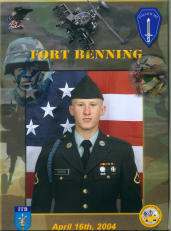 mber 2004. Spc. Dustin R. Donica, 22, of Spring, Texas, was killed Thursday by small arms fire in Baghdad, the Defense Department said Sunday, making him the 3000th to die.
Donica was assigned to the 3rd Battalion, 509th Parachute Infantry Regiment, 4th Airborne Brigade Combat Team, 25th Infantry Division.
David Donica said he learned his son's death was the 3,000th for the U.S. military in Iraq after logging on to the Internet, not long after declining to be interviewed by reporters who had come to the family's home.
"We had no idea why we were getting, within an hour almost, eight or nine people at the door," he said later Sunday. "That was a surprise to us because none of them mentioned why they were there. Perhaps, they were embarrassed. One guy was standing there shaking like a leaf."
Dustin Donica's unit was conducting counter-insurgency operations in Karmah, in Iraq's al-Anbar province, when he was fatally struck by small-arms fire from enemy forces, an Army spokesman said.
"They are trying to create a safe and secure environment for the people of Iraq (and are) working with Iraqi security forces to get them able to take over the security mission," said Maj. Kirk Gohlke.
Reached later by phone, Donica declined to talk about his son, saying, "That would be hard for me to do."
But in an e-mail sent to news organizations, he said, "Dustin had a tremendous sense of duty, both to his family, and his country. He will be missed by his family, and all those that knew him."
Born and raised in Houston, Dustin Donica was a 2002 graduate of Klein High School. He enlisted in 2003 after a stint at the University of Texas at Austin. He completed basic training at Fort Benning, Ga., where he received the coveted airborne wings of an Army paratrooper.
The photo from the Houston Chronicle is a courtesy photo from Klein High School where he was a 2002 graduate. Fort Benning (GA) is the Infantry Center where paratroopes receive their training..
A detailed breakdown on casualties can be found in Editor & Publisher
The story quoting Donica’s father is by Mike Glenn in the Houston Chronicle.
There were 130 Ohioans killed.
More Americans have died this month -- at least 110 -- than in any month since Nove
 mber 2004. Spc. Dustin R. Donica, 22, of Spring, Texas, was killed Thursday by small arms fire in Baghdad, the Defense Department said Sunday, making him the 3000th to die.
Donica was assigned to the 3rd Battalion, 509th Parachute Infantry Regiment, 4th Airborne Brigade Combat Team, 25th Infantry Division.
David Donica said he learned his son's death was the 3,000th for the U.S. military in Iraq after logging on to the Internet, not long after declining to be interviewed by reporters who had come to the family's home.
"We had no idea why we were getting, within an hour almost, eight or nine people at the door," he said later Sunday. "That was a surprise to us because none of them mentioned why they were there. Perhaps, they were embarrassed. One guy was standing there shaking like a leaf."
Dustin Donica's unit was conducting counter-insurgency operations in Karmah, in Iraq's al-Anbar province, when he was fatally struck by small-arms fire from enemy forces, an Army spokesman said.
"They are trying to create a safe and secure environment for the people of Iraq (and are) working with Iraqi security forces to get them able to take over the security mission," said Maj. Kirk Gohlke.
Reached later by phone, Donica declined to talk about his son, saying, "That would be hard for me to do."
But in an e-mail sent to news organizations, he said, "Dustin had a tremendous sense of duty, both to his family, and his country. He will be missed by his family, and all those that knew him."
Born and raised in Houston, Dustin Donica was a 2002 graduate of Klein High School. He enlisted in 2003 after a stint at the University of Texas at Austin. He completed basic training at Fort Benning, Ga., where he received the coveted airborne wings of an Army paratrooper.
The photo from the Houston Chronicle is a courtesy photo from Klein High School where he was a 2002 graduate. Fort Benning (GA) is the Infantry Center where paratroopes receive their training..
A detailed breakdown on casualties can be found in Editor & Publisher
The story quoting Donica’s father is by Mike Glenn in the Houston Chronicle.
There were 130 Ohioans killed.
Sunday, December 31, 2006
Giffels takes leave to write memoir
Beacon Journal columnist David Giffels announced today that he is taking a leave of absence to write his memoir. The book is being publlished by William Morrow/HarperCollins and is scheduled for release in spring 2008.
Click on the headline to read the Giffels column.
Saturday, December 30, 2006
Blog visits increased dramatically in 2006
Visits to the BJ Retirees blog increased dramatically in 2006 with the sale of Kinght Ridder which was approved in June, the subsequent sale of the Beacon Journal and the big staff cuts at the newspaper.
Visits to the blog increased from 8,883 at the beginning of the year to 32,245 on our December report. The average number of visits increased from 36 a day at the beginning of the year to 73 the week ending December 27. There were 129 the week ending November 8.
The number of visits each week increased from 245 at the beginning of the year to 508 the week ending Decemvber 27. The highest was 900 the week ending November 8,
In the 29 months since the blog was established in July, 2004, there have been 824 articles posted or an average of more than 28 a month. The number probably will top 1,000 in the next couple of months.
A web site was opened September 18, 2006 to allow use of articles too long for the blog and for storage of informatin files such as our list of postal addresses of retirees. A Commentary section also was added. There are links on the web site and on the blog so you can jump easily from one to the other.
A Christmas bedtime story
You won’t want to miss a nice story by Nick Coleman of the Minneapolis Star-Tribune about the sale of the newspaper.
Some quotes from the story:
When the McClatchy Co. got the keys to the Star Tribune in 1998, McClatchy's patriarch hailed the merger. James McClatchy called it a wedding of two newspaper traditions that shared "a deep-rooted commitment to building a just society." You now are permitted to laugh derisively.
Eight years later, hardly anyone in the newspaper business talks about anything other than building profit margins that would choke a robber baron.
Mercifully, Mr. McClatchy passed away in May and did not live to see the Sacramento-based company that bore his name disgrace his legacy by dumping its largest newspaper -- the most important one between Chicago and the West Coast, the one that serves 5 million Minnesotans and that can be a conscience, a scold, a cheerleader and an interpreter of life on the tundra.
On the day after Christmas, the McClatchy Co. took the Star Tribune to the return window and sold us to a company that removes medical wastes, drills for oil and (quoting its website) "operates four off-shore jack-ups, three mobile off-shore production units and one self-propelled completion and work over rig" in the Gulf of Mexico. Not to mention a newspaper in flyoverland.
Maybe we're an on-shore jack-up.
There are two possibilities:
1) A private equity firm with no newspaper experience will show the newspaper industry how to save itself, or
2) A privateer thinks the Star Tribune, with 2,000-plus workers, is ripe for plucking and pillaging.
Despite lip service to the cause of quality journalism, in the end McClatchy folded like a cheap lawn chair under a steady gale of Wall Street demands.
McClatchy CEO Gary Pruitt did not bother to come to Minneapolis on Tuesday to say he surreptitiously had sold the paper and to kiss us goodbye.
"The Star Tribune is one of the best newspapers in this country," Pruitt said in 1998. "The Twin Cities is one of the most attractive newspaper markets in the country. And it was a near-perfect fit in terms of values and traditions."
We didn't change. But you, Mr. Pruitt? We don't recognize you anymore. So long.
Don't bother to write.
Nick Coleman ● ncoleman@startribune.com
Click on the headline to go to the story
Thursday, December 28, 2006
Black closes King County Journal
The King County (WA) Journal, purchased by Black Papers Ltd. in November, will put out its last issue on Jan. 21, the newspaper's new owners told employees at a meeting Thursday.
Black Press bought the Journal and its nine sister publications in November from Kent-based Horvitz Newspapers Inc. Circulation of the Journal, which has been losing money since 1994, has fallen to 39,100. It is the region's fifth-largest daily paper.
Don Kendall, general manager of Black's newly created King County Publications Ltd. division, made the announcement in the newsroom in Kent, reading from a prepared statement. Forty full-time employees will be laid off.
Kendall, vice president of Sound Publishing, said in a report published on this blog November 28 that he sees "virtually unlimited potential" in seven local non-daily sister publications of the Journal, and plans to expand them next year. They include; two weeklies, the Mercer Island Reporter and Snoqualmie ValleyRecord; and seven papers published twice monthly and distributed by mail: the Auburn Reporter, Bellevue Reporter, Bothell/Kenmore Reporter, Covington/Maple Valley Reporter, Kent Reporter, Redmond Reporter and Renton Reporter.
Employees were encouraged in December to apply for about a dozen jobs at the Journal's weekly sister publications. The Journal Newspapers employ about 330 people.
"I am saddened by the closure of the King County Journal and by the loss of valuable employees," Kendall wrote in a letter that was handed to staff. "I wish you the very best in your pursuit of other job opportunities."
Doug Margeson, a 24-year veteran reporter at the paper, said before the announcement that he hopes to become a reporter at one of the sister publications. He will take a more than 11 percent pay cut.
"On the other hand it's either that or unemployment, take your pick," he said. "What can you say about the death of a newspaper? It's never good."
Click on the headline to read a story by Andrea James in the Seattle Post Intelligencer.
Harte gets new role in Minneapolis
Former Beacon Journal publisher Chris Harte, who becomes the new chairman of the Minneapolis Star-Tribune, says he's driven by public service.
Harte, a resident of Texas and Maine, will be advising an investment group that has never owned a daily newspaper.
A day after McClatchy announced the sale of the Star Tribune to Avista, a New York private equity group, there are more questions than answers about how the deal will reshape the newspaper and its community, and whether it will serve as a template for an industry in transition.
Harte says he's still trying to figure it all out himself.
"This whole transaction came together so fast, really in just the last week or so," Harte said. "At this point we just don't know about things like my schedule."
Harte will be diving into a media market that, in less than a year, has become emblematic of the uncertainty facing the newspaper industry.
Minnesota's oldest newspaper, the St. Paul Pioneer Press, was sold this year after the McClatchy Co., the California-based owner of the Star Tribune, bought Knight Ridder. The Star Tribune, meanwhile, will be sold for $530 million less than half of what McClatchy paid for it in 1998.
[Like other papers sold by McClatchy, the Pioneer Press is also a Guild newspaper.]
Avista has promised to invest in the Star Tribune and to retain its publisher, Keith Moyer, and its top management. But industry observers worry that it might have to cut costs if advertising or circulation revenue don't improve.
"I would expect nothing to change right away, and we will have to look at all of this stuff and see what makes the most sense going forward. We want the product to stay at least as it is today and, if possible, improve. Our objective isn't to cut things out of the paper, it is to increase things in the paper."
Though this is Avista's first newspaper investment, Harte brings some media credentials. He's part owner of Current Publishing, which publishes eight weekly newspapers in Maine. He's a director and large shareholder of Harte-Hankes Inc., a San Antonio-based publisher and direct-marketing firm founded by his grandfather, Houston Harte.
Ford's daughter as a photo intern
In all of the coverage of President Ford’s death, one of the nice stories is about his daughter Susan as a photography intern at the Topeka Capital-Journal. The other photo intern the summer of 1975 was Chris Johns, who is now editor of the National Geographic. Rich Clarkson, then director of photography for The Capital-Journal, said from his office in Denver on Wednesday that he still sees Johns occasionally and still calls him "the other intern."
Click on the headline to read the Capital-Journal story by Mike Hall.
Click on the headline to read the Capital-Journal story by Mike Hall.
Wednesday, December 27, 2006
McClatchy sells Star-Tribune
The McClatchy Co. capped a year of dramatic changes in the newspaper industry Tuesday by announcing the surprise sale of the Star Tribune, its largest newspaper, to a private investment group.
McClatchy Co. said Tuesday it will sell the Star Tribune newspaper to the private equity firm Avista Capital Partners for $530 million, a sharp drop from the $1.2 billion it paid to acquire the flagship property just eight years ago.
Former Akron Beacon Jouranl publisher Chris Harte will be chairman of a board of directors who will oversee the newspaper for Avista.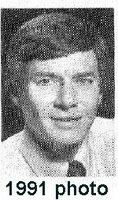
The $530 million sale will place the future of Minnesota's dominant newspaper in the hands of Avista Capital Partners, a New York-based partnership of former investment bankers. It also continues a trend that accelerated this year in which large newspaper companies, such as McClatchy, Knight Ridder and Tribune, either winnowed their holdings or put themselves up for sale. Private owners have emerged to bid for many of the big-city papers that have come into play as a result.
McClatchy has played a major role in that change, agreeing to buy all of Knight Ridder Inc. last spring. Sacramento, Calif.-based McClatchy then sold a number of the Knight Ridder papers it considered to be less desirable, including the St. Paul Pioneer Press, which is now run by privately held MediaNews Group Inc. of Denver.
While the sale price is far less than McClatchy paid in 1998, the company will also realize $160 million in tax benefits as a result, making the total benefit to McClatchy closer to $700 million.
The sale, which is expected to close in the first quarter of 2007, will mark the entry of Avista into the newspaper business. The private equity firm, which has holdings in media, health care and energy businesses, was among the firms that had been interested in the Philadelphia Inquirer and the Philadelphia Daily News before McClatchy sold the former Knight Ridder papers to another group earlier this year.
The Avista partners did not disclose any specific plans for the Star Tribune, saying those discussions have not yet been held. Speaking to a handful of reporters after the announcement, Harte said the sale came about quickly.
We just saw an opportunity here to take a historically strong asset in an industry that's clearly out of favor right now," Harte said. "The long-term goal is to provide great content."
Some observers of the industry believe that newspaper readers will continue to migrate to the Internet, leaving fewer readers to support the printed product that remains the main source of revenue for publishers, although most are aggressively beefing up their Web content and advertising.
However, Harte indicated that his group believes the printed product will remain in demand and profitable for many years.
"We believe strongly that there will be a Star Tribune printed and delivered to hundreds of thousands of customers every morning for decades to come, probably for generations, maybe for centuries."
The Star Tribune has a paid circulation of 361,172 daily copies and 596,333 on Sunday.
While layoffs and other staff reductions have occurred among a number of the papers that have been bought by private groups this year, Avista officials said they are not eyeing major staff reductions or a quick sale.
Click on the headline to read coverage in the Star-Tribune which includes a number of related articles and history of the newspaper.
McClatchy Co. said Tuesday it will sell the Star Tribune newspaper to the private equity firm Avista Capital Partners for $530 million, a sharp drop from the $1.2 billion it paid to acquire the flagship property just eight years ago.
Former Akron Beacon Jouranl publisher Chris Harte will be chairman of a board of directors who will oversee the newspaper for Avista.

The $530 million sale will place the future of Minnesota's dominant newspaper in the hands of Avista Capital Partners, a New York-based partnership of former investment bankers. It also continues a trend that accelerated this year in which large newspaper companies, such as McClatchy, Knight Ridder and Tribune, either winnowed their holdings or put themselves up for sale. Private owners have emerged to bid for many of the big-city papers that have come into play as a result.
McClatchy has played a major role in that change, agreeing to buy all of Knight Ridder Inc. last spring. Sacramento, Calif.-based McClatchy then sold a number of the Knight Ridder papers it considered to be less desirable, including the St. Paul Pioneer Press, which is now run by privately held MediaNews Group Inc. of Denver.
While the sale price is far less than McClatchy paid in 1998, the company will also realize $160 million in tax benefits as a result, making the total benefit to McClatchy closer to $700 million.
The sale, which is expected to close in the first quarter of 2007, will mark the entry of Avista into the newspaper business. The private equity firm, which has holdings in media, health care and energy businesses, was among the firms that had been interested in the Philadelphia Inquirer and the Philadelphia Daily News before McClatchy sold the former Knight Ridder papers to another group earlier this year.
The Avista partners did not disclose any specific plans for the Star Tribune, saying those discussions have not yet been held. Speaking to a handful of reporters after the announcement, Harte said the sale came about quickly.
We just saw an opportunity here to take a historically strong asset in an industry that's clearly out of favor right now," Harte said. "The long-term goal is to provide great content."
Some observers of the industry believe that newspaper readers will continue to migrate to the Internet, leaving fewer readers to support the printed product that remains the main source of revenue for publishers, although most are aggressively beefing up their Web content and advertising.
However, Harte indicated that his group believes the printed product will remain in demand and profitable for many years.
"We believe strongly that there will be a Star Tribune printed and delivered to hundreds of thousands of customers every morning for decades to come, probably for generations, maybe for centuries."
The Star Tribune has a paid circulation of 361,172 daily copies and 596,333 on Sunday.
While layoffs and other staff reductions have occurred among a number of the papers that have been bought by private groups this year, Avista officials said they are not eyeing major staff reductions or a quick sale.
Click on the headline to read coverage in the Star-Tribune which includes a number of related articles and history of the newspaper.
Saturday, December 23, 2006
David Bonar dies at 81
[Bonar was the former husband of Nancy Yockey Bonar, a former BJ staff member]
David Troyer Bonar, 81, born in Akron, Ohio, October 13, 1925, to Boyd and Lula (Troyer) Bonar, died peacefully Friday, December 22, at Bath Manor Special Care Centre, Akron, from Alzheimer's complications.
Among survivors are his loving and caring son and daughter, Timothy C. Bonar of Bath Township, and Julie Bonar Baughman (John) of West Palm Beach, Fla. He's also survived by former wife, Nancy Yockey Bonar of Granger Township, Medina.
Arrangements by the Ohio Cremation and Memorial Society. Details to come.
[Akron Beacon Journal, Akron, OH, Saturday, December 22, 2006, page B7, col. 2]
Friday, December 22, 2006
BJ shrine in John Olesky's den
John Olesky got three lights and a brick from the old Beacon Journal tower in the Layoff Raffle for those who lost jobs at the Beacon Journal. He also got two "courtesy of Fran Murphey" matchbooks and a "Frances B. Murphey" bookmark. John used photos of the BJ tower and building as a backdrop for a BJ shrine in his den. The years 1966-2005 and RIP are on the tower.
You can find photos on the retirees web site at http://www.acorn.net/bjretirees or just click on the headline to go straight to the shrine photos.
Knight Ridder is No. 1, not No. 3, Potts says
Mark Potts who writes a blog he calls "Recovering Journalist" is taking issue with the choice of Editor & Publisher Joe Strupp's picks for the top 10 stories in the news media in 2006, Here's his dig:
Strupp's pick for the top development affecting the newspaper industry in 2006: "The Web Comes of Age." Uh, it did? In 2006? Nope. Certainly not in the rest of the wired (and wireless) world, where the Web came of age years ago—and has been pounding newspapers ever since. And it's not even true in the newspaper industry, where most of the Web trends that Strupp heralds (24/7 Web newsrooms, substantial gains in online audiences) have been happening for years. I'd argue that there are a LOT of things newspapers still aren't doing on the Web (Citizens' media? Social networking? Google mapping? Liberal use of video?), but that's not the problem with Strupp's No. 1 pick.
No, the problem with Strupp's list is that the biggest story of the year in the newspaper industry is that everybody in the industry seems finally to have figured out that the industry is in very serious trouble, and the upheaval that's resulted from that realization in the past year has been nothing short of massive. Hints of that upheaval, in fact, are all over Strupp's list: The dissolution of Knight Ridder, continued job cuts, Tribune Co.'s problems—all of those are symptoms of the greater story, which is an overall decline in the industry's fortunes.
Click on the headline to go to Potts blog. See Stroup's list in post below.
Thursday, December 21, 2006
Questions, Comments on health coverage
From Dave White:
How is it possible that the Beacon Journal can just ignore the retirement letters that were given to retirees guaranteeing their benefits for life??
And how can they force the retirees to use Aetna for their Medicare provider? I signed up for my Medicare without any help or advice from the Beacon Journal. What is this all about?
Dave White
Venice, FL
From Regina White:
When we sign up for this Aetna to be the Medicare provider, does that do away with our supplemental insurance? Now, we submit a claim to Medicare and then resubmit the balance due to United Healthcare? How is that going to work under this new plan????
Also, does this effect our life insurance?
Also from Regina:
I talked to Aaron Burr's assistant Lisa yesterday, and from what she said I don't believe there is going to be any supplemental insurance. The example I gave here was that if there was a $100,000 hospital bill, and Medicare paid $80,000 who would pay the other $20,000. And she didn't have an answer.
So, if you would, please ask in the meeting if there is any supplemental insurance? And even though, the BJ is paying the prescription cost, there is still the donut hole after $2500 where only generic drugs would be paid for. That is from Aaron Burr.
======
I talked to Aaron Burr yesterday and he did confirm that there will be no supplemental insurance once this change takes place. I don't know about anyone else but I think this is a big deal! That means they are taking away Dave's $2 prescription card, forcing him into a different Medicare provider and also taking away the supplemental insurance.
I don't know what the answer is but surely there must be some recourse???????
From Ott Gangl:
Quoting from letter: "Second, the Beacon Journal's retiree medical plan is changing from the PPO plan administered by United Healthcare to the Medicare Advantage Plan administered by Aetna. This means that Aetna will administer your Medicare Part A and Part B plans instead of Medicare. Retirees must continue to pay their Medicare Part B premium. The new plan will be effective February 1, 2007. More details of this new plan is also enclosed. "
Now after I switched my Medicare A and B to the Aetna Medicare, what happens if Aetna closes up or something else happens, will the US government take me back into their Medicare?
Also from Gangl:
One reason, actually the main reason I decided in 1992 to retire at age 60, two years before I was eligible for Social Security and 5 years before Medicare was that I could retire WITHOUT any co-pay. I believe the following contract had 5% co-pay.
The life insurance was halved to $15,000 which is OK with me. I thought I read somewhere that there will be a difference in the new Aetna plan depending on when you retired, I may be wrong and all of us get the same deal.
From John Olesky:
The premiums listed $52 for prescription coverage and $11-something for medical coverage. I guess the $11-something will be a de facto secondary coverage.
I looked at the Aetna Medicare plan for the Akron Beacon Journal and I saw these things listed for "employee." I hope that includes "retirees":
$250 deductible per calendar year, which is a heckuva lot better than the $2,000 deductible under United Health Care.
Coinsurance of 15% on all medical expenses unless otherwise stated (there are things covered 100%).
Payment limit per calendar year, however, is $5,000. That would be about two days in the hospital, if that long.
Lifetime maximum is unlimited except where otherwise indicated.
Routine physical exams are covered 100%, which is an improvement over UHC.
100% also applies to gynecological care exams, routine mammograms, routine digital rectal exams and prostate specific antigen tests (PSAs), colorectal cancer screening for those 50 or older, bone density testing.
And 100% for routine eye exam (retirees lost vision and dental coverage when they retired) and routine hearing screening.
Up to $500 every 36 months for hearing air reimbursement.
But 15% co-pay for primary care physician visits, allergy testing treatments.
And a bunch of other stuff.
Including diabetic supplies covered 100%.
We really need someone to go to the meeting and ask questions and find out what's really happening. I would go, but I'll be in China when the meetings are held.
Until we find out what's what from the Canadian, it's hard to have a strategy.
32 journalists die in Iraq in 2006
With murder the leading cause, at least 32 journalists have been killed in Iraq in 2006, the highest one-year toll ever in a single country, the Committee to Protect Journalists said in a report Wednesday.
The Middle East nation, torn by war and bloody sectarian violence, was the world's most dangerous for the news media for the fourth straight year, according to CPJ, a New York-based advocacy group.
The committee said its latest yearly count brings to 93 the total killed in Iraq since the U.S. invasion in 2003, with another 37 drivers, messengers and other press "support staff" also slain.
Source: Richard Pyle. AP via Yahoo! News
Demise of Knight Ridder is No. 3
Editor and Pubisher senior editor Joe Strupp's ranked the demise of Knight Ridder as No. 3 on his Top 10 Newspaper Industry Stories of 2006. Continued job cuts was No. 5
Here is the summary for No. 3
3. Knight Ridder Dissolves: We knew it was coming, but when the McClatchy Company took over Knight Ridder it set in motion one of the biggest cross-chain effects yet of a major news paper deal. While McClatchy held on to 20 of the 32 former KR dailies, it sold off a handful to MediaNews Group, which in turn brought Hearst, Gannett and Stephens Media into the deal. Meanwhile, other buyers took over the Philadelphia Inquirer and Daily News, Akron Beacon-Journal, and the remaining properties from South Dakota to Pennsylvania. It seemed everyone short of Charles Foster Kane and Donald Trump were in the mix. But don't think this is the last of the big chain buyouts, with Tribune likely to make a move in 2007.
The others:
10. Loss of Stock Listings and TV Books (Among Other Things): There was a time when some people bought newspapers just for these specials. But with Internet competition and space cutbacks mounting, the traditional stock tables and TV grids are becoming less and less relevant.
9. Upheaval at The Miami Herald: It wasn't enough that the South Florida daily changed hands with the sale of Knight Ridder to McClatchy this year. But the longtime circulation leader also got into a tussle with sister paper, El Nuevo Herald, over coverage of the Spanish-language daily's semi-scandal involving some staffers' paid appearances on a government-supported broadcast outlet. When the dust settled, Publisher Jesus Diaz was out and Editor Tom Fiedler soon announced his retirement
8. Jill Carroll: A year ago she was a little-known freelancer covering Iraq for The Christian Science Monitor. But when the brave correspondent was kidnapped in Baghdad and held for 82 days, her abduction sparked an international movement to free her, while also drawing some controversy when major U.S. news outlets agreed to a news blackout of the kidnapping for the first 48 hours.
7. The New York Times Reveals Bank Records Monitoring Program: Reporter James Risen, who months earlier had uncovered the Bush Administration domestic wiretapping program, teamed with staffer Eric Lichtblau to expose the federal government's SWIFT program that kept watch on thousands of banking records.
6. Subpoenas: That ugly word continues to rear its head, most prominently in San Francisco where San Francisco Chronicle reporters Lance Williams and Mark Fainaru-Wada were found in contempt for failing to reveal their source in the award-winning BALCO steroid scandal coverage. They face a possible jail cell in February.
5. Continued Job Cuts: The year continued a downward trend in job security, with papers from the Los Angeles Times to The Washington Post either announcing such cuts or implementing them. The same old causes, declining ads, circulation and growing competition, were the usual culprits.
4. Labor Battles: Newspaper unions felt the brunt of management angst more than ever in 2006, with contract battles at the Philadelphia Inquirer and Daily News, The Boston Globe, Pittsburgh Post-Gazette, and even the York (Pa.) Daily Record, among others.
2. Dean Baquet Firing/Tribune Problems: It seems like it was just a year ago that the hiring of Dean Baquet, the first black editor of the Los Angeles Times, was big news. That's because it was just a year ago. When Baquet and former publisher Jeff Johnson stood up to Tribune Company calls for even further cutbacks, they received praise, accolades and platitudes. Unfortunately, Tribune honchos did not see the courage in their convictions, dumping both in a matter of weeks.
1. The Web Comes of Age: Hands down, the online growth, both for and against newspapers, was the dominant story in 2006. The daily miracle became less daily and more, well, minute by minute. Not only did numerous papers, from USA Today to Chicago Tribune, either combine their print and Web newsrooms or establish a "24-hour news cycle," but nearly every paper saw their online audience surpass their print readers.
Blogs exploded, with dozens sprouting at many papers' sites. Podcasts became common. Amid Youtube mania, sites feverishly added more and more video.
Click on the headline to read the full story.
Here is the summary for No. 3
3. Knight Ridder Dissolves: We knew it was coming, but when the McClatchy Company took over Knight Ridder it set in motion one of the biggest cross-chain effects yet of a major news
 paper deal. While McClatchy held on to 20 of the 32 former KR dailies, it sold off a handful to MediaNews Group, which in turn brought Hearst, Gannett and Stephens Media into the deal. Meanwhile, other buyers took over the Philadelphia Inquirer and Daily News, Akron Beacon-Journal, and the remaining properties from South Dakota to Pennsylvania. It seemed everyone short of Charles Foster Kane and Donald Trump were in the mix. But don't think this is the last of the big chain buyouts, with Tribune likely to make a move in 2007.
The others:
10. Loss of Stock Listings and TV Books (Among Other Things): There was a time when some people bought newspapers just for these specials. But with Internet competition and space cutbacks mounting, the traditional stock tables and TV grids are becoming less and less relevant.
9. Upheaval at The Miami Herald: It wasn't enough that the South Florida daily changed hands with the sale of Knight Ridder to McClatchy this year. But the longtime circulation leader also got into a tussle with sister paper, El Nuevo Herald, over coverage of the Spanish-language daily's semi-scandal involving some staffers' paid appearances on a government-supported broadcast outlet. When the dust settled, Publisher Jesus Diaz was out and Editor Tom Fiedler soon announced his retirement
8. Jill Carroll: A year ago she was a little-known freelancer covering Iraq for The Christian Science Monitor. But when the brave correspondent was kidnapped in Baghdad and held for 82 days, her abduction sparked an international movement to free her, while also drawing some controversy when major U.S. news outlets agreed to a news blackout of the kidnapping for the first 48 hours.
7. The New York Times Reveals Bank Records Monitoring Program: Reporter James Risen, who months earlier had uncovered the Bush Administration domestic wiretapping program, teamed with staffer Eric Lichtblau to expose the federal government's SWIFT program that kept watch on thousands of banking records.
6. Subpoenas: That ugly word continues to rear its head, most prominently in San Francisco where San Francisco Chronicle reporters Lance Williams and Mark Fainaru-Wada were found in contempt for failing to reveal their source in the award-winning BALCO steroid scandal coverage. They face a possible jail cell in February.
5. Continued Job Cuts: The year continued a downward trend in job security, with papers from the Los Angeles Times to The Washington Post either announcing such cuts or implementing them. The same old causes, declining ads, circulation and growing competition, were the usual culprits.
4. Labor Battles: Newspaper unions felt the brunt of management angst more than ever in 2006, with contract battles at the Philadelphia Inquirer and Daily News, The Boston Globe, Pittsburgh Post-Gazette, and even the York (Pa.) Daily Record, among others.
2. Dean Baquet Firing/Tribune Problems: It seems like it was just a year ago that the hiring of Dean Baquet, the first black editor of the Los Angeles Times, was big news. That's because it was just a year ago. When Baquet and former publisher Jeff Johnson stood up to Tribune Company calls for even further cutbacks, they received praise, accolades and platitudes. Unfortunately, Tribune honchos did not see the courage in their convictions, dumping both in a matter of weeks.
1. The Web Comes of Age: Hands down, the online growth, both for and against newspapers, was the dominant story in 2006. The daily miracle became less daily and more, well, minute by minute. Not only did numerous papers, from USA Today to Chicago Tribune, either combine their print and Web newsrooms or establish a "24-hour news cycle," but nearly every paper saw their online audience surpass their print readers.
Blogs exploded, with dozens sprouting at many papers' sites. Podcasts became common. Amid Youtube mania, sites feverishly added more and more video.
Click on the headline to read the full story.
Wednesday, December 20, 2006
Holiday letter from the Hertz family
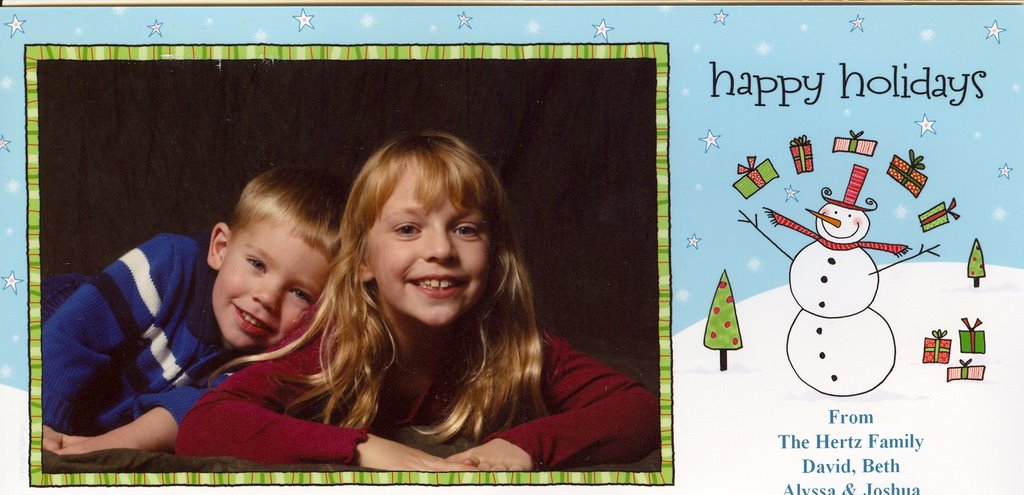
This letter came in a card from the Hertz family: (click to enlarge the photo)
Merry Christmas, Happy Hanukkah and Happy 2007! Hope all is well. Weare good - we had one of those hectic but fun-filled, kids-growing-up years that busy people everywhere know causes gray hair.
The big news is that David left the Akron Beacon Journal on Sept. 29 (his 45th birthday!).Yes, he crossed over into the "dark side," also known as public relations, accepting a position as vice president of media relations at the downtown Cleveland firm of Dix & Eaton. He's finding he has a lot to learn but is enjoying it immensely. He misses daily journalism but the Beacon was looking to reduce staff at the same time this opportunity came up, so he decided it was time to try something new.
Beth continues to work in the communications department at the Cleveland Clinic, and her favorite part is the work she does supporting the Cole Eye Institute. In fact, she availed herself of their services in October when she got LASIK. She still reaches up to take off her glasses every night but they aren't there! She also is active as a Girl Scout leader and with the BG News Alumni Society board, and is in deep denial about the impending arrival of her 40th birthday in 2007.
Alyssa is doing great in second grade. She loves art and music and is becoming such a good little reader. She does gymnastics, swim lessons and Girl Scouts, and recently got her own e-mail address.She’d be thrilled if you dropped her a line: alyssaart221@aol.com
Joshua has blossomed into little Mr. Personality and enjoys most everything about life.
He's 3 1/2 and idolizes his sister, unless she has something he wants. He likes super heroes and trains. "All aboard!"
The highlight of our summer vacation was a trip to Niagara Falls. The kids LOVED it.
Everyone in our families is doing pretty well. Beth's mom moved to Dallas in May and is still recovering from being hit by a truck last year. She lives near Beth's sister now.
Well, we know everyone's busy so we'll stop here! Hope all is well with you and that you have a peaceful, blessed holiday!
Love, David, Beth, Alyssa and Joshua Hertz
Reporter gives up politics for food
Lisa Abraham will replace Jane Snow.
In her first Food section front column, Abraham says covering government prepared her for new role. But she never really says how.

Her personal collection, however, contains the recipe for hamloaf that Nancy Petro used to woo her husband, Ohio Attorney General Jim Petro.
‘’Writing about government and politics has been my job for more than 20 years. Food has been my passion.” Lisa writes. “For me, the chance to turn my passion into my career is one of those heady, once-in-a-lifetime-did-I-just-win-the-lottery experiences.
“Most of all, I feel so privileged to be given the opportunity.
“Look for me to get cooking shortly after the first of the year. And tie on your aprons, Akron, because cooking, like politics, can be sticky business.”
Click on the headline to read Lisa’s nice column.
Blogger addend: Perhaps to be politically correct, Lisa refers to herself as food writer. When Food editor Jane Snow left the Beacon Journal, she reported (Oct 29) that there would be an open house with her the following month to introduce the new food editor. She also said she would continue to write her BJ e-mail newsletter, Second Helpings. Is anyone getting it? Neither Snow nor Mickey Porter left the BJ happily.
In her first Food section front column, Abraham says covering government prepared her for new role. But she never really says how.
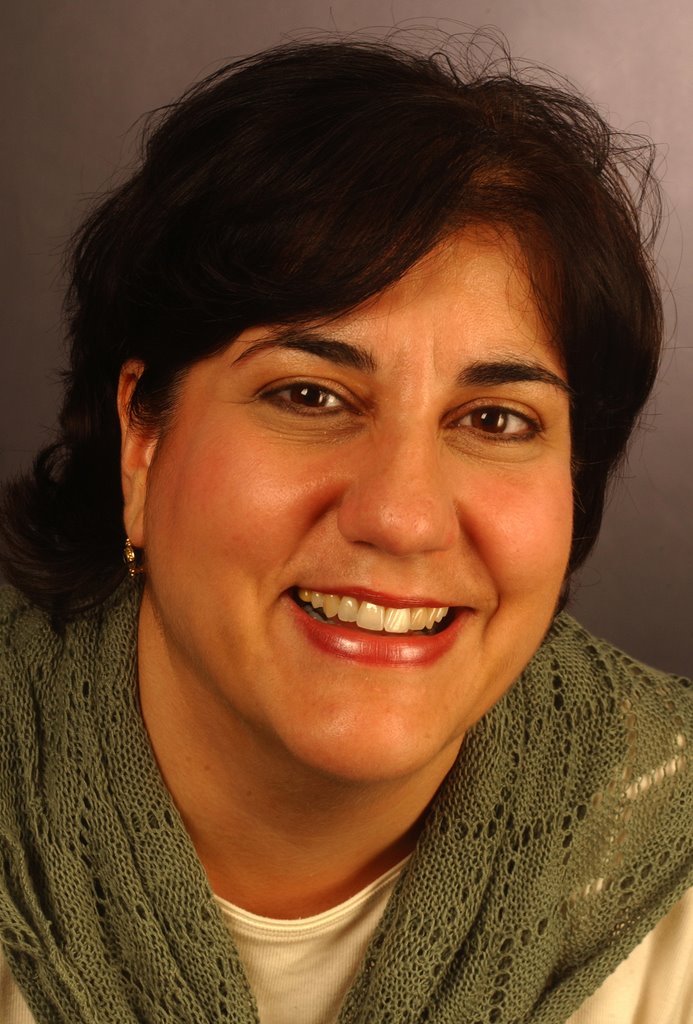
Her personal collection, however, contains the recipe for hamloaf that Nancy Petro used to woo her husband, Ohio Attorney General Jim Petro.
‘’Writing about government and politics has been my job for more than 20 years. Food has been my passion.” Lisa writes. “For me, the chance to turn my passion into my career is one of those heady, once-in-a-lifetime-did-I-just-win-the-lottery experiences.
“Most of all, I feel so privileged to be given the opportunity.
“Look for me to get cooking shortly after the first of the year. And tie on your aprons, Akron, because cooking, like politics, can be sticky business.”
Click on the headline to read Lisa’s nice column.
Blogger addend: Perhaps to be politically correct, Lisa refers to herself as food writer. When Food editor Jane Snow left the Beacon Journal, she reported (Oct 29) that there would be an open house with her the following month to introduce the new food editor. She also said she would continue to write her BJ e-mail newsletter, Second Helpings. Is anyone getting it? Neither Snow nor Mickey Porter left the BJ happily.
Craig Wilson back in hospital
Craig Wilson is back in Barberton Citizens Hospital for his fifth time in 2006. Must be some kind of record.
[Report from Craig's wife, Elizabeth]
Contract violation?
What the Guild contract states
Guild contract covering July 23, 1993 to July 22, 1996.
Article 25 Insurance and Pension Provisions:
Section 3. Retired employees of the Beacon Journal newsroom will be
provided with group hospitalization-medical and life insurance to the
extent in existence on December 31, 1989. This provision shall apply to
any employees who retired during the life of this contract.
So how is it that the Beacon Journal can change our insurance coverage, including drastically changing prescription coverage which will cost me hundreds of dollars more a year? Isn't this a violation of the Guild contract? For the moment the BJ, and its Canadian owner, will pay the retirees' Medicare Part D premium, but we all know that will change down the road. We had no premium payments and $2 co-pay for prescriptions when I retired and, indeed, till the Beacon was sold to Black Press. And the medical deductibles have been changed, even under United Health Care, from $300 to $2,000 a year out-of-pocket, for one thing. I certainly don't have the same hospitalization-medical coverage that I did the day I retired, which was pegged to "usual and customary care."
John Olesky
Tuesday, December 19, 2006
Sharyn Surface dies at 68
It was in December two years ago that we told of the plight of Sharon Surface who was gravely ill in a West Virgnia nursing home.
We got an e-mail today from her sister, Shelva Pettit, that Sharon died. Here is her obitu tary:
Sharyn L. Surface, 68, of Richwood, died on Dec. 10, 2006, in Richwood Area Community Hospital after a long illness.
Before her illness, she lived in Akron, Ohio. She was a typist for Firestone Tire and Rubber Company from 1963 until 1970. She worked from 1970 until 1983 at the Akron Beacon Journal. She later worked from 1983 until 1999 at the First National Bank of Ohio where she was a secretary from which she retired and later moved to Richwood. She volunteered at the Children's Hospital for five years, for political candidates, and the United Fund through Summit County Medical Society. She was of the Methodist faith.
She was preceded in death by her parents, Gayle J. and Dosha Russell Surface; sister, Gail Diana Surface; and brother, Russell J. Surface.
She is survived by two sisters, Shelva Pettit and husband, Joe, of Sutton, Hallie Moose and husband, Roy, of Fenwick, three nephews, and three nieces.
Graveside service will be held at a later date.
Arrangements by Simons-Coleman Funeral Home, Richwood.
Blogger Notes:
Sharon Surface came to the BJ when we changed from the Linotype keyboard to a typewriter keyboard. She came about the same time as Regina White, Rita Stapleton and Ruth West, along with a couple of others.
In a note to retired printer Bob Bell in December, 2004, Shelva wrote:
Sharon is in bad shape. She can't walk or feed herself or care for herself in any way.
Our sister Hallie and I don't think she knows us every time we see her, but there are times she seems to know me . She doesn't talk...other than to answer a question with "yes" or "no ". She started having small strokes and then a massive one. This all started happening around 1990, beginning with uterine cancer. She is cancer free. It's the stroke that is the cause of her condition. The doctors told us about 5 years ago that she would not improve but get steadily worse which has been the case. It's hard on us to see her as she is and remember the way she was.
Send condolences to:
Shelva Pettit
625 Appalachian Corridor
Sutton, WV 26601
We got an e-mail today from her sister, Shelva Pettit, that Sharon died. Here is her obitu
 tary:
Sharyn L. Surface, 68, of Richwood, died on Dec. 10, 2006, in Richwood Area Community Hospital after a long illness.
Before her illness, she lived in Akron, Ohio. She was a typist for Firestone Tire and Rubber Company from 1963 until 1970. She worked from 1970 until 1983 at the Akron Beacon Journal. She later worked from 1983 until 1999 at the First National Bank of Ohio where she was a secretary from which she retired and later moved to Richwood. She volunteered at the Children's Hospital for five years, for political candidates, and the United Fund through Summit County Medical Society. She was of the Methodist faith.
She was preceded in death by her parents, Gayle J. and Dosha Russell Surface; sister, Gail Diana Surface; and brother, Russell J. Surface.
She is survived by two sisters, Shelva Pettit and husband, Joe, of Sutton, Hallie Moose and husband, Roy, of Fenwick, three nephews, and three nieces.
Graveside service will be held at a later date.
Arrangements by Simons-Coleman Funeral Home, Richwood.
Blogger Notes:
Sharon Surface came to the BJ when we changed from the Linotype keyboard to a typewriter keyboard. She came about the same time as Regina White, Rita Stapleton and Ruth West, along with a couple of others.
In a note to retired printer Bob Bell in December, 2004, Shelva wrote:
Sharon is in bad shape. She can't walk or feed herself or care for herself in any way.
Our sister Hallie and I don't think she knows us every time we see her, but there are times she seems to know me . She doesn't talk...other than to answer a question with "yes" or "no ". She started having small strokes and then a massive one. This all started happening around 1990, beginning with uterine cancer. She is cancer free. It's the stroke that is the cause of her condition. The doctors told us about 5 years ago that she would not improve but get steadily worse which has been the case. It's hard on us to see her as she is and remember the way she was.
Send condolences to:
Shelva Pettit
625 Appalachian Corridor
Sutton, WV 26601
Monday, December 18, 2006
Pruitt to earn $1.1 million next year
The McClatchy Co. chief executive officer Gary Pruitt will earn $1.1 million next year, a 4.8 percent increase from his salary this year, according to documents filed this week with the Securities and Exchange Commission.
Pruitt, the highest-paid chief executive of a publicly traded company in the Sacramento region, could earn another $1.38 million from an annual bonus if he reaches specific performance goals that have not been determined.
The Sacramento-based company bought Knight-Ridder this past summer, adding 20 newspapers -- and selling off a dozen others, including the Akron Beacon Journal, San Jose Mercury-News and the Philadelphia Inquirer.
The deal made McClatchy the nation's second-largest newspaper chain. Its publications include The Sacramento Bee, Star Tribune of Minneapolis and the Miami Herald.
McClatchy's compensation board also detailed the base salary and maximum bonuses for other senior executives this week. Vice presidents of operations Bob Weil and Frank Whittaker will each earn $600,000 next year, with a 60 percent of base salary as a maximum bonus -- or $360,000 each. Vice president and chief financial officer Pat Talamantes' salary is $500,000 with a 55 percent maximum bonus, while vice president of news Howard Weaver will earn $400,000 with a 50 percent of salary bonus target.
Shares of McClatchy inched up 4 cents to $41.20 in trading Friday.
[Source: Sacramento Business Journal]
John Zajac, father of Andy, dies
John Zajac, a former linotype operator at the Plain Dealer and father of Andy, died Thursday. Here is the notice in the PD
JOHN F. ZAJAC. Beloved husband of Theodosia (nee Lada). Loving father of Mary and Andrew (Barbara, nee Hueter). Dear brother of Elizabeth English (PA). Family will receive friends at the KOLODIY-SOBCZYK FUNERAL HOME, 3136 WEST 14 ST., where funeral services will be held on Monday, Dec. 18 at 9:30 a.m. and at St. John Cantius Catholic Church at 10 a.m. Interment Holy Cross Cemetery. VISITATION SUNDAY 4-8 P.M.
Published in The Plain Dealer on December 16, 2006
Craig needs help
Interested in the inner workings of government.
The Akron Beacon Journal is now looking for qualified candidates to bolster its paid corespondents ranks.
Openings are now available in many areas, including Fairlawn, Bath Township and Norton.
If interested, send a resume to Craig Webb, Night Metro Editor, Akron Beacon Journal, 44 East Exchange Street, Akron, Ohio 44328 or by email to cwebb@thebeaconjournal.com.
[Published in the Akron Beacon Journal, Akron, OH, Monday, December 18, 2006, page B4, col. 2]
Sunday, December 17, 2006
An answer for Virginia O'Hanlon
Outside the Nativity story, there is no better sentiment on Christmas than the answer Francis Pharcellus Church wrote in the New York Sun on September 21, 1897 in answer to the question from 8-year old reader Virginia O’Hanlon.
Click on the headline above to see Church’s answer on our web site:
Yes, Virginia there is a Santa Claus.
A copy of the Sun nameplate, the original letter from Virginia, a photo of Church and the clipping from the Sun are included.
Merry Christmas
from me and Helen,

Click on the headline above to see Church’s answer on our web site:
Yes, Virginia there is a Santa Claus.
A copy of the Sun nameplate, the original letter from Virginia, a photo of Church and the clipping from the Sun are included.
Merry Christmas
from me and Helen,

Saturday, December 16, 2006
Recalling recycle plant explosions


Sidebar, the old BJ employee publication, ran a series of articles called “We Were There” in which staffers recalled some news event. The December 1993 issue featured an account by Ed Suba
An interrupted party
Ed Suba, staff photographer, recalls deserting his first Beacon Journal newsroom holiday party to cover the explosions at the Akron Recycle Energy System plant on December 20, 1984.
“I had just come to the Beacon Journal from the Charleston, West Virginia, Gazette, so this was my first Christmas party. There were a lot of people from the newsroom and everyone brought covered dishes, so there was a lot of food.
We had just started eating when one of our reporters heard about the explosion at the Akron Recycle Energy plant and called the newsroom with the news. The odd thing was that exactly one week prior, at the same exact time, I had been in the plant for a media tour. So my first thought when I heard about it was, man, I was just there.
Everyone on the whole staff dropped their food and took off--we all ran out to the site and went in different directions. We were in constant communication with the newsroom and each other by radio, but I remember spending the whole day out there.
It had been a really bright, sunny day, without a cloud in the sky, which made the heavy black smoke from the explosion even more prominent and ominous.
The damage and the smoke was really overwhelming. I remember circling the place several times looking for the best shot, and running into the authorities who were trying to keep us away. It was definitely an interesting introduction to the Beacon Journal.
Toward the end of the day we all went back to the Beacon. We were all in the dark room printing stuff like crazy. It was so crowded, everyone was walking all over everyone else.
I never did get back to the food. Someone brought in food for us later that night, . but I don't know if it was left over from the party or what.”
Blog Notes: Two persons were killed and seven injured by the two explosions and fire. Ohio EPA tests confirmed that waste containing three volatile paint-related chemicals – xylene, toluene and methyl ethyl ketone – was dumped at the plant the day of the explosions. O.H. Materials submitted a bioll of $37,000 for the cleanup. Until the plant’s boilers were fired up on December 31, steam customers got their heat from a temporary system provided by B.F. Goodrich.
Printer Marvin Hunt dies
Marvin R. Hunt, 71, born March 29, 1935, passed away November 20, 2006.
Marvin was a veteran of the United States Marine Corps. He graduated from Manchester High School in 1953 and retired from the Akron Beacon Journal [composing room]..
He was preceded in death by his parents, Albert and Mona and his son, Gerald. He is survived by his loving wife, Deanna and his daughter, April Hunt of Florida.
A military honors service will be held Tuesday, December 19, 2 p.m. at the Ohio Western Reserve National Cemetery, 10175 Rawiga Rd., Rittman, Ohio 44270. A wake will be at the American Legion Post 611, 657 N. Howard St., Akron, Ohio 44310 at 4 p.m., Tuesday, December 19.
(CREMATION SOCIETY OF OHIO, 330-535-1012.)
[Published in the Akron Beacon Journal December 16, 2006, page B6, col. 6]
Publisher lays out vision
Beacon plans `hyper local' coverage, with full page of bites
of news from communities to add readers
Beacon Journal staff report
Local, local, local.
That will be the Akron Beacon Journal's focus in the new year, Publisher Ed Moss told the Akron Press Club on Friday.
The newspaper will roll out its ``Neighborhood Express'' initiative in January, which includes a full page devoted to bites of news from as many communities as will fit.
The new community-news page will appear on Page B3 five times a week, Moss said, with the editorial and op-ed pages returning to the newspaper's A section. There will be related advertising and circulation efforts as well.
``It's a block-by-block, neighborhood-by-neighborhood approach to growing our readership and growing our advertisers,'' he said.
Moss said he'll work internally to ``break down the walls between departments'' so that all staffers are focused on providing ``hyper local'' news coverage and ``outstanding customer service.''
Moss acknowledged that the Beacon Journal has been through difficult times. Profit has fallen 60 percent in six years, he said, and to align the company with that new reality, the staff was cut from 715 to 630.
But he disagreed with one questioner who suggested that cutting the newsroom staff by a fourth hurts the quality of coverage.
``We still have 130 people in our news operation. One hundred and thirty people,'' Moss said. ``I will tell you there are newspapers all over the country with that kind of staffing level that put out outstanding quality newspapers... and I believe we're doing it today.''
He added that he is less interested in winning state or national awards for journalism than in adding circulation, which is a more important ``win'' for the Beacon because it indicates reader satisfaction.
Just as reporting beats had to be redesigned and redistributed among the newspaper's remaining reporters after the staff reductions, the Beacon must rethink every aspect of the business, Moss said. ``We need to evaluate each and every thing we do and ask ourselves, `Is there a better way?' '' he said.
The paper's recent partnership with Monster.com is an example of something that would never have happened a year ago, he said. The mega job-search Web site, once seen as a major drain on newspaper classified advertising revenue, has been turned into a ``win-win'' situation for the Beacon, Moss said, as it combines the Beacon's local resources with Monster's national reach.
Meanwhile, Ohio.com, the Beacon's Internet site, will be reinvented over the next year to make it a ``true destination point'' for all of Ohio, Moss said.
Ohio.com's success will be key to the Beacon's future, he said. In 2006, it generated more than $10 million in advertising revenue and is growing at 38 percent a year.
Moss wouldn't define a specific profit goal sought by the Beacon's new owner, David Black, but he said that clearly the decline of recent years needs to be reversed so the company will be around to serve the community for years to come.
He said more layoffs ``are not in the plans at this point.''
Moss said he's optimistic about the industry and the Beacon Journal, despite the ``gloom and doom'' coming from Wall Street.
He also emphasized that although circulation has declined in recent years, the Beacon still reaches 44 percent of homes in its readership area daily, and 56 percent on Sundays. That's a solid market to build on, he said.
``We are committed to being at the forefront of innovation and change in our industry,'' he said. ``We believe the key is to understand what our customers need and want, and to be the best at providing information and solutions that meet or exceed their expectations.''
[Akron Beacon Journal, Akron, OH, Saturday, December 16, page D1 business front]
Blogger Note: There was no byline. Click on the headline to see story on Ohio.com
of news from communities to add readers
Beacon Journal staff report
Local, local, local.
That will be the Akron Beacon Journal's focus in the new year, Publisher Ed Moss told the Akron Press Club on Friday.
The newspaper will roll out its ``Neighborhood Express'' initiative in January, which includes a full page devoted to bites of news from as many communities as will fit.

The new community-news page will appear on Page B3 five times a week, Moss said, with the editorial and op-ed pages returning to the newspaper's A section. There will be related advertising and circulation efforts as well.
``It's a block-by-block, neighborhood-by-neighborhood approach to growing our readership and growing our advertisers,'' he said.
Moss said he'll work internally to ``break down the walls between departments'' so that all staffers are focused on providing ``hyper local'' news coverage and ``outstanding customer service.''
Moss acknowledged that the Beacon Journal has been through difficult times. Profit has fallen 60 percent in six years, he said, and to align the company with that new reality, the staff was cut from 715 to 630.
But he disagreed with one questioner who suggested that cutting the newsroom staff by a fourth hurts the quality of coverage.
``We still have 130 people in our news operation. One hundred and thirty people,'' Moss said. ``I will tell you there are newspapers all over the country with that kind of staffing level that put out outstanding quality newspapers... and I believe we're doing it today.''
He added that he is less interested in winning state or national awards for journalism than in adding circulation, which is a more important ``win'' for the Beacon because it indicates reader satisfaction.
Just as reporting beats had to be redesigned and redistributed among the newspaper's remaining reporters after the staff reductions, the Beacon must rethink every aspect of the business, Moss said. ``We need to evaluate each and every thing we do and ask ourselves, `Is there a better way?' '' he said.
The paper's recent partnership with Monster.com is an example of something that would never have happened a year ago, he said. The mega job-search Web site, once seen as a major drain on newspaper classified advertising revenue, has been turned into a ``win-win'' situation for the Beacon, Moss said, as it combines the Beacon's local resources with Monster's national reach.
Meanwhile, Ohio.com, the Beacon's Internet site, will be reinvented over the next year to make it a ``true destination point'' for all of Ohio, Moss said.
Ohio.com's success will be key to the Beacon's future, he said. In 2006, it generated more than $10 million in advertising revenue and is growing at 38 percent a year.
Moss wouldn't define a specific profit goal sought by the Beacon's new owner, David Black, but he said that clearly the decline of recent years needs to be reversed so the company will be around to serve the community for years to come.
He said more layoffs ``are not in the plans at this point.''
Moss said he's optimistic about the industry and the Beacon Journal, despite the ``gloom and doom'' coming from Wall Street.
He also emphasized that although circulation has declined in recent years, the Beacon still reaches 44 percent of homes in its readership area daily, and 56 percent on Sundays. That's a solid market to build on, he said.
``We are committed to being at the forefront of innovation and change in our industry,'' he said. ``We believe the key is to understand what our customers need and want, and to be the best at providing information and solutions that meet or exceed their expectations.''
[Akron Beacon Journal, Akron, OH, Saturday, December 16, page D1 business front]
Blogger Note: There was no byline. Click on the headline to see story on Ohio.com
Friday, December 15, 2006
Ibarguen named Newseum chairman
Alberto Ibarguen, president and CEO of the John S. and James L. Knight Foundation, will become of chairman of the Newseum Jan.1, 2007 and four nationally known people will join the Newseum board.
The new trustees include three media executives and a former director of the National Park Service:
-- Gary L. Ginsberg, executive vice president, corporate affairs, News Corp.
-- George B. Irish, president, Hearst Newspapers and senior vice president, Hearst Corp.
-- Robert Stanton, former director, National Park Service
-- David Westin, president, ABC News
"These moves broaden the base of active support for the Newseum," said Charles L. Overby, who continues as chief executive officer. "When we open in the fall of 2007, the Newseum will have the benefit of both a strong management team and an outstanding board of directors."
Other Newseum trustees include educators, authors, and business and civic leaders.
The Freedom Forum's largest-funded program is the Newseum, a museum of news nearing completion at Pennsylvania Avenue and 6th Street in Washington. The $435-million project is expected to open in September 2007.
Ibarguen leads one of the nation's largest private independent foundations. With assets of $1.9 billion, the Knight Foundation makes grants of more than $90 million annually to promote excellence in journalism. Ibarguen has been a newspaper executive for more than 20 years, first at the Hartford (Conn.) Courant and then at Newsday in New York before joining Knight Ridder. He was publisher of The Miami Herald and El Nuevo Herald until July, when he assumed his current position at the Knight Foundation. During his tenure at The Miami Herald, the newspaper won three Pulitzer Prizes.
Ibarguen is on the Trustee's Council of the National Gallery of Art, the Advisory Council of the Public Accounting Oversight Board and is a member of the board of directors of the Council on Foreign Relations. He is former chairman of the board of the Public Broadcasting Service and has served on the boards of the Lincoln Center for the Performing Arts, the Committee to Protect Journalists and other nonprofit organizations and educational institutions.
A graduate of Wesleyan University and the University of Pennsylvania Law School, he served as a Peace Corps volunteer in Venezuela's Amazon territory and in Colombia.
Click on the headline to read the news release.
The Newseum web site provides a daily look at the front pages of a large number of newspapers
The new trustees include three media executives and a former director of the National Park Service:

-- Gary L. Ginsberg, executive vice president, corporate affairs, News Corp.
-- George B. Irish, president, Hearst Newspapers and senior vice president, Hearst Corp.
-- Robert Stanton, former director, National Park Service
-- David Westin, president, ABC News
"These moves broaden the base of active support for the Newseum," said Charles L. Overby, who continues as chief executive officer. "When we open in the fall of 2007, the Newseum will have the benefit of both a strong management team and an outstanding board of directors."
Other Newseum trustees include educators, authors, and business and civic leaders.
The Freedom Forum's largest-funded program is the Newseum, a museum of news nearing completion at Pennsylvania Avenue and 6th Street in Washington. The $435-million project is expected to open in September 2007.
Ibarguen leads one of the nation's largest private independent foundations. With assets of $1.9 billion, the Knight Foundation makes grants of more than $90 million annually to promote excellence in journalism. Ibarguen has been a newspaper executive for more than 20 years, first at the Hartford (Conn.) Courant and then at Newsday in New York before joining Knight Ridder. He was publisher of The Miami Herald and El Nuevo Herald until July, when he assumed his current position at the Knight Foundation. During his tenure at The Miami Herald, the newspaper won three Pulitzer Prizes.
Ibarguen is on the Trustee's Council of the National Gallery of Art, the Advisory Council of the Public Accounting Oversight Board and is a member of the board of directors of the Council on Foreign Relations. He is former chairman of the board of the Public Broadcasting Service and has served on the boards of the Lincoln Center for the Performing Arts, the Committee to Protect Journalists and other nonprofit organizations and educational institutions.
A graduate of Wesleyan University and the University of Pennsylvania Law School, he served as a Peace Corps volunteer in Venezuela's Amazon territory and in Colombia.
Click on the headline to read the news release.
The Newseum web site provides a daily look at the front pages of a large number of newspapers
Thursday, December 14, 2006
Youngest 'Ann Hill' yet
The reading of the Ann Hill letter, which has been a hallmark of Guild Christmas parties for more than three decades, had its youngest practioner this year. Rhebbekah Yoder, 10, step-niece of the newsroom's Paula Schleis, did an expressive reading of the outraged Ann Hill.

In the audience of two dozen or so, fittingingly, was Ted Schneider, who has done the Ann Hill letter in nun habit and in rap style and who is the most memorable Ann Hill letter performer.
For those new to BJ lore, Ann Hill was an Ohio State University magna cum laude graduate with a masters in journalism/PR who came to the Beacon for a one-day tryout. After wading through enough work to bog down Woodward and Bernstein, the last straw was being sent to cover a Canton sewers meeting. The only thing Ann wrote was her memo to Managing Editor Bob Giles complaining of the Army-like discipline and "shitwork" and reminding B.G. that she was a superstar at OSU. And thus the legend began.
Ted met Ann Hill in California and tried unsuccessfully to persuade Ann to return for the Guild Christmas party and do the 25th anniversary reading in person.
Ann's biography says that she was a feature writer and investigative reporter with the Dayton Daily News and other daily newspapers and founded her first marketing and public relations agency, Hill & Zoog, in Columbus in 1978, primarily as a political consultant for Ohio politicians.
Ann went to California and started the Ann Hill Communications company in 1985 in San Rafael. She is the principal owner.
As he has for years, after the reading of the Ann Hill letter John Olesky stood up in reference to the Canton sewers assignment and exclaimed: "Englehart made me do it!"
For those who are really out of the loop, that would be another legend, the late Patrick T. Englehart of Mogadore, who was State Desk Editor when Ann Hill strolled into and stormed out of the Beacon Journal.
Wednesday, December 13, 2006
18 at retirees' lunch
There were 18 at Papa Joe's for the BJ retirees' lunch today, the most in a while. Attending were Tom Moore, Cal Deshong, Sandy Levenson, Bill Canterbury, Don Roese, Carl Nelson, Dick Gresock, Bob Pell, Art Cullison, William Byrd, Gene McClellan, Watson Blanton and wife Rosetta, Ed Hanzel and wife Norma, Tim Hayes, Al Hunsicker and John Olesky.
As you might expect, the main topic of conversation was the Beacon Journal’s changes in prescription coverage.
Click on the headline to view an album of luncheon photos. You will have to give your e-mail address and choose a password for the site.
As you might expect, the main topic of conversation was the Beacon Journal’s changes in prescription coverage.
Click on the headline to view an album of luncheon photos. You will have to give your e-mail address and choose a password for the site.
BJ to pick up monthly premium.
A fact not made clear in the Beacon Journal letter about health benefits coverage:
The Beacon Journal will pay the monthly premium which is about $52.
This fact should ease some of our concerns about the changeover from United Health Care to Aetna. The information was provided by Karen Jones of the HR department of the Beacon Journal to at least two of us who have called for information.
Phila Guild reaches tentative pact
The Philadelphia Inquirer and Philadelphia Daily News and The Newspaper Guild of Greater Philadelphia reached a three-year deal on all issues Tuesday night. The union announced the deal in a statement, while the company reported the agreement on its Web site.
The union planned to discuss details at a membership meeting Wednesday night. Under union rules, a ratification vote would not come before the weekend.
"It's a package requiring a lot of sacrifice from our members," said Diane Mastrull, the unit chairwoman who led the Guild's negotiating team. "But it is a package that is far less devastating than what the company originally proposed."
The three-year pact, which extends until Aug. 31, 2009, includes no pay increase for the 900-member Guild in the first year. Employees will get a $1,500 bonus, paid in two parts, in the second year, and receive a $25 per week raise in the final year of the contract.
"There's no sugar coating this contract. It is a disappointing, giveback deal," Mastrull said.
Philadelphia Media Holdings bought the dailies from McClatchy Co. in June in a deal valued at $562 million.
From 1975 to 1990, the Inquirer won 17 Pulitzers, the Daily News two.
Click on the headline to read the full story by AP
Monday, December 11, 2006
Send your questions on letter
Send us your questions on the letter and we will try to see that the publisher gets them before the meeting. We will put them in a post here and/or non the web site. Please make the questions brief and specific.
Send to hliggett@sbcglobal.net
Send to hliggett@sbcglobal.net
Should we discuss the BJ health care shift on this blog?
I am so unclear about everything after receiving THE LETTER, I wonder if we should discuss OUR understanding of what is going on. For instance: I thought that the Federal Government was my Medicare provider and now I am asked to change that to Aetna, what are the advantages of that? As to the drug program, United Health Care was our provider and the BJ advised in a letter to stick with UC instead of going with Medicare D, now Aetna wants us to join Plan D and pay for that just to pay $5 for generic drugs when we can buy them for $4 at Walmart, and some of the stuff starts Jan. 1 and the form are to be in Jan. 15, etc. etc.
....Ott
....Ott
Saturday, December 09, 2006
Iraqi Study (Baker) Report
The Iraqi Study Group (Baker report) is now available at the Penn State University documents site in an 84-page PDF file. Click on the headline or paste the following url in your browser
http://www2.hn.psu.edu/faculty/jmanis/document.htm
http://www2.hn.psu.edu/faculty/jmanis/document.htm
Media News to run Daily Breeze
The Copley Press Inc. plans to sell the Daily Breeze in Torrance, CA, to Hearst Corp., which would in turn allow MediaNews to operate the newspaper, according to a court filing.
Hearst, which owns the San Francisco Chronicle and other media holdings, will pay $25 million for the Breeze, according to a report in the San Jose Mercury News, which is owned by MediaNews. Harold Fuson, Copley senior vice president, confirmed that Hearst is the expected buyer of the Breeze, and MediaNews would operate the paper after the sale. The paper’s real estate will be sold separately.
[Source: The Breeze and San Jose Mercury News]
Friday, December 08, 2006
You thought you got benefits for life?
The first of the “Dear John” letters (or substitute your own first name to make it sound cozy) are arriving from new BJ publisher Ed Moss–or to be formal–Mr. Edward R. Moss.
The crux of the message is “your retiree medical benefits were not vested for life and can be changed:” Your prescription benefits under United Health Care have been dropped. The publisher suggests you become a ward of Aetna.
The BJ, the letter indicates, is offering you a new prescription card under Aetna.
Coverage may vary, depending on when you retired, but you will pay $50 plus a month for the plan. Then after a $250 deductible, you will get generic drugs for $5, drugs on Aetna’s preferred list for $20, and “non-preferred drugs” for $40. But that’s until you reach an initial coverage limit of $2,400 and then you pay all until you reach another plateau of $3,850.
Please do not ask us to explain the technical jargon written by the publisher or Aetna. If you have questions, call 1-800-307-4830 Monday throguh Friday, 8 a.m. to 6 p.m. EST and listen to some elevator music.
Also you apparently you will be able to ask questions at information sessions in the John S. Knight room at the Beacon Journal at 2 p.m. Wednesdaty, January 3, or at 10 a.m. on Thursday, January 4. Please call 330-996-3181 to reserve your seat.
If you have other questions, call Aaron Burr at 330-996-3184 or Karen Jones at 330-996-3183.
Remember, though, the forms you got must be returned no later than January 15.
Subscribe to:
Posts (Atom)
