Three billionaires hoping to buy the Los Angeles Times expressed their interest in separate letters this month to the paper's owner, Tribune Co. But each was told The Times was not for sale — at least for now, according to several people who have seen the letters.
Since a schism in June on the Tribune board put the company's future into question, reports have circulated that philanthropist Eli Broad, music and movie mogul David Geffen and former supermarket magnate Ron Burkle would like to buy the newspaper.
A purchase by any of the three Los Angeles billionaires would put the newspaper under local ownership for the first time since 2000, when the Chandler family agreed to sell the paper's then-owner, Times Mirror Co., to Chicago-based Tribune. Relations between the newsroom in Los Angeles and the corporate office have grown increasingly strained since then, especially as Tribune has squeezed the budget and cut staff in response to declining revenue.
Tribune's directors considered the three letters at a July 19 board meeting. Tribune Chairman and Chief Executive Dennis J. FitzSimons has since replied in writing to each of the prospective suitors, informing them that the board "unanimously asked me to advise you that at this time we are not prepared to discuss the possible transaction described in your letter," according to someone who saw the correspondence.
Geffen, 63, made a fortune buying and selling record companies in the 1970s and 1980s before launching DreamWorks in 1994 with Steven Spielberg and Jeffrey Katzenberg. Geffen, worth $4.4 billion, according to Forbes magazine, has told people that he envisions The Times as a national newspaper.
Broad, whose real estate and insurance fortune Forbes has put at $5.9 billion, has said he would like to use his Broad Foundation to buy The Times in combination with other local institutions. He was mentioned as a likely buyer of the Los Angeles Dodgers when News Corp. put the team on the market several years ago, but the team went to Frank McCourt of Boston.
Burkle, 53, who has discussed teaming up with Broad in a purchase of The Times, made an unsuccessful bid for 12 Knight Ridder Corp. newspapers when that company was broken up this year. He said last month that "the chance for the L.A. Times to be locally owned again is an opportunity not to be missed."
Burkle multiplied his fortune by buying, merging and selling supermarket chains including Ralphs Grocery Co. and Food4Less. Forbes has estimated his wealth at $2.3 billion.
Click on the headline above to read the article by L.A. Times staffers Thomas S. Mulligan and James Rainey
Monday, July 31, 2006


Sunday, July 30, 2006
Blantons mark 50th anniversary
 Watson Blanton, a 1992 retiree of the BJ engraving department, and wife, Rosetta, are celebrating their 50th wedding anniversary. Watson and Rosetta were married at Calvary Baptist Church on July 21, 1956. Watson served in the U.S. Navy during World War II, in the SouthPacific. He retired from ;the Akron Beacon Journal on January 1, 1992, having served for 22 years. Rosetta retired from the Defense Logestic Agency in Cleveland with 44 years of service. A family dinner will be given for the couple and a Carribean cruise has been planned for a later date.They look forward to many more happy years with God's blessings. The annivesary article appeared on page E7, col. 2 of the Beacon Journal on Sunday, July 30, 2006.
Saturday, July 29, 2006
Guess what? BJ job cuts coming
David Black, the new BJ owner, and his new publisher, Edward R. Moss, were in town to meet with the staff on Friday. BJ reporter Jim Mackinnon reported on the visit in a story on the business front on Saturday..
They said job cuts will be made throughout the building in coming months, but did not say how many. Sale of the BJ which was expected to close on Friday has been delayed until Tuesday, Black said.
Moss, 51, a former newspaper publisher and an executive with Media General in Richmond, Va., will succeed James N. Crutchfield, publisher since 2001. Moss has an industry reputation for improving newspaper finances, Black said.
Moss said he expects to be heavily involved in the community. ``While I want to reach out to the community, and I will, I need to get my arms around the business,'' Moss said. ``I have always reached out to the community. I enjoy doing it.''
Moss and Black told staffers that they expect the Beacon Journal to heavily focus on local news coverage and to carry advertising that reflects the local scene.
BJ ad revenues had been flat for several years, until the end of 2005, when they dropped sharply, particularly in the automotive and employment categories.
``We need to be growing this business. We need to be growing readership. We need to be growing advertising. And that's got to be the focus,'' Moss told employees. ``And so there will have to be a lot of hard decisions over the next several months. We are going to study what needs to be done.... We are going to focus on growing the company.''
``We've got to do something about costs as well as grow the revenue,'' Black said. ``The good news from everybody's point of view here is, Ed and I are builders. That's how I built my business. That's how Ed made his way in the industry. We're going to do that here.''
The Beacon Journal, which sells an average of 135,000 papers weekdays, has about 720 full- and part-time employees. The newspaper will become the largest-circulation newspaper in Black Press Ltd. The paper will operate under the company's Washington-based U.S. subsidiary, Sound Publishing Holdings Inc.
Click on the headline to read the full story by Mackinnon. Two photos were published with the story..
They said job cuts will be made throughout the building in coming months, but did not say how many. Sale of the BJ which was expected to close on Friday has been delayed until Tuesday, Black said.
Moss, 51, a former newspaper publisher and an executive with Media General in Richmond, Va., will succeed James N. Crutchfield, publisher since 2001. Moss has an industry reputation for improving newspaper finances, Black said.
Moss said he expects to be heavily involved in the community. ``While I want to reach out to the community, and I will, I need to get my arms around the business,'' Moss said. ``I have always reached out to the community. I enjoy doing it.''
Moss and Black told staffers that they expect the Beacon Journal to heavily focus on local news coverage and to carry advertising that reflects the local scene.
BJ ad revenues had been flat for several years, until the end of 2005, when they dropped sharply, particularly in the automotive and employment categories.
``We need to be growing this business. We need to be growing readership. We need to be growing advertising. And that's got to be the focus,'' Moss told employees. ``And so there will have to be a lot of hard decisions over the next several months. We are going to study what needs to be done.... We are going to focus on growing the company.''
``We've got to do something about costs as well as grow the revenue,'' Black said. ``The good news from everybody's point of view here is, Ed and I are builders. That's how I built my business. That's how Ed made his way in the industry. We're going to do that here.''
The Beacon Journal, which sells an average of 135,000 papers weekdays, has about 720 full- and part-time employees. The newspaper will become the largest-circulation newspaper in Black Press Ltd. The paper will operate under the company's Washington-based U.S. subsidiary, Sound Publishing Holdings Inc.
Click on the headline to read the full story by Mackinnon. Two photos were published with the story..
Friday, July 28, 2006
McClatchy pays big bonuses
(Honest: We did not mean this post to fall just above the one on reporter pay.)
NEW YORK — McClatchy Co., the second-largest newspaper publisher in the country, disclosed in a regulatory filing Friday that it paid several of its top executives bonuses following the completion of the company's acquisition of Knight Ridder Inc.
Gary Pruitt, McClatchy's chairman and CEO, received a bonus of $1 million, while Patrick Talamantes, the chief financial officer, got a bonus of $250,000.
Howard Weaver, the vice president of news, got $125,000 and two vice presidents of operations, Robert Weil and Frank Whittaker, each received $100,000, the company said in a filing with the Securities and Exchange Commission.
In the filing, McClatchy said the compensation committee of its board of directors approved the payments on July 24 in connection with the successful completion of McClatchy's acquisition of Knight Ridder, which had previously been the second-largest newspaper company.
[Source: Associated Press in Houston Chronicle]
NEW YORK — McClatchy Co., the second-largest newspaper publisher in the country, disclosed in a regulatory filing Friday that it paid several of its top executives bonuses following the completion of the company's acquisition of Knight Ridder Inc.
Gary Pruitt, McClatchy's chairman and CEO, received a bonus of $1 million, while Patrick Talamantes, the chief financial officer, got a bonus of $250,000.
Howard Weaver, the vice president of news, got $125,000 and two vice presidents of operations, Robert Weil and Frank Whittaker, each received $100,000, the company said in a filing with the Securities and Exchange Commission.
In the filing, McClatchy said the compensation committee of its board of directors approved the payments on July 24 in connection with the successful completion of McClatchy's acquisition of Knight Ridder, which had previously been the second-largest newspaper company.
[Source: Associated Press in Houston Chronicle]
Thursday, July 27, 2006
The wages: never enough
A report on small wages for journalists by Mark Fitzgerald in Editor & Publisher prompted a look back at a 1974 Beacon Journal contract.
Here’s the report on today’s salaries:
On average, the E&P report said, cub reporters at daily newspapers make less than $30,000 their first year, according to the most comprehensive industry report on salaries and compensation.
The 2006 Newspaper Industry Compensation Survey found that the average entry-level salary last year for the 521 dailies participating in the study is up 17.3% from 2001, but is still a humble $29,048, or 558.62 a week.
They'd be better off moving to the classified department, where the average salary for an inside sales rep last year was $36,077.
Newsroom raises are slowing down, the report suggests. While the base pay of beginning reporters increased by double digits since 2001, the raise between 2004 and 2005 was just 2.1%, well under the inflation rate of 3.4% last year.
So, how does this comare with the BJ in 1974?
Would you believe top minimum pay of $290.50 a week for reporters at the Beacon Journal after five years of service, and $157 for library clerks and secretaires and $108 for copy runners after three years of service? Beginning reporters received $164, second year $181, third year $198 and fourth year $236.
This is not much compared to $1,046 today, but it seemed like fairly good pay at the time. The salaries were listed in a contract signed January 8, 1974, effective November 1, 1973.
Who approved these miserly wages? Check out the actual signatures of Harry Liggett, Guild president; James R. Ricci, Guild vice president; William A. Ott, BJ general manager and Richard A. Williams, personnel manager. Robert W. Page, now a minister, was also a member of the negotiating committee, but was smart enough to keep his signature off the document. Ricci is proably making a little more now at the LA Times and even Liggett’s Social Security check is a wee bit bigger.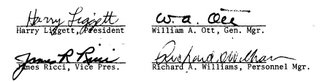
Here’s the report on today’s salaries:
On average, the E&P report said, cub reporters at daily newspapers make less than $30,000 their first year, according to the most comprehensive industry report on salaries and compensation.
The 2006 Newspaper Industry Compensation Survey found that the average entry-level salary last year for the 521 dailies participating in the study is up 17.3% from 2001, but is still a humble $29,048, or 558.62 a week.
They'd be better off moving to the classified department, where the average salary for an inside sales rep last year was $36,077.
Newsroom raises are slowing down, the report suggests. While the base pay of beginning reporters increased by double digits since 2001, the raise between 2004 and 2005 was just 2.1%, well under the inflation rate of 3.4% last year.
So, how does this comare with the BJ in 1974?
Would you believe top minimum pay of $290.50 a week for reporters at the Beacon Journal after five years of service, and $157 for library clerks and secretaires and $108 for copy runners after three years of service? Beginning reporters received $164, second year $181, third year $198 and fourth year $236.
This is not much compared to $1,046 today, but it seemed like fairly good pay at the time. The salaries were listed in a contract signed January 8, 1974, effective November 1, 1973.
Who approved these miserly wages? Check out the actual signatures of Harry Liggett, Guild president; James R. Ricci, Guild vice president; William A. Ott, BJ general manager and Richard A. Williams, personnel manager. Robert W. Page, now a minister, was also a member of the negotiating committee, but was smart enough to keep his signature off the document. Ricci is proably making a little more now at the LA Times and even Liggett’s Social Security check is a wee bit bigger.

McClatchy-KRI exchange for tax purposes
I got my check from McClatchy for $40 cash per share and 0.5118
a share of McClatchy stock for each share of KRI stock, plus McClatchy bought the fractional share of KRI at the prevailing price on June 27, 2006.
However, I don't have a regular stock broker since I handle my own portfolio, and I'm not sure how much of the KRI tax basis to assign to McClatchy, how much I owe or lost on the fractional KRI share and where to put the $40 per share at IRS time.
A simple swap of shares would have been simple: The tax basis for KRI stock would have transferred in its entirety to the new stock. But the $40 adds to the confusion. And McClatchy's web site says that it paid $59.98 per KRI share (the 0.5118 McClatchy share plus the $40 cash) for "cash and other considerations," but I thought McClatchy had agreed to pay nearer to $65 in total.
Any tax experts out there for those of us who do not have brokers?
Is there anyone at the BJ or what once was KRI who can help the BJ retirees on this one?
Thank for any accurate information.
a share of McClatchy stock for each share of KRI stock, plus McClatchy bought the fractional share of KRI at the prevailing price on June 27, 2006.
However, I don't have a regular stock broker since I handle my own portfolio, and I'm not sure how much of the KRI tax basis to assign to McClatchy, how much I owe or lost on the fractional KRI share and where to put the $40 per share at IRS time.
A simple swap of shares would have been simple: The tax basis for KRI stock would have transferred in its entirety to the new stock. But the $40 adds to the confusion. And McClatchy's web site says that it paid $59.98 per KRI share (the 0.5118 McClatchy share plus the $40 cash) for "cash and other considerations," but I thought McClatchy had agreed to pay nearer to $65 in total.
Any tax experts out there for those of us who do not have brokers?
Is there anyone at the BJ or what once was KRI who can help the BJ retirees on this one?
Thank for any accurate information.
Wednesday, July 26, 2006
BJ ad chief to leave
The head of the Akron Beacon Journal's advertising department is leaving for a job as vice president of advertising at a daily newspaper in Corpus Christi, Texas.
Bradford S. Hagstrom, vice president of advertising, will leave the Beacon Journal next month for the Corpus Christi Caller-Times, an E.W. Scripps newspaper. His last day at the paper will be Aug. 18. A successor has not been named.
Hagstrom joined the Beacon Journal in October 2005 from the Fort Worth (Texas) Star-Telegram. He and his wife, Priscilla, have two daughters, Sophia and Olivia.
``It's all about going home,'' Hagstrom said.
[Akron Beacon Journal, Akron, OH, Wednesday, July 26, 2006, page D1, col. 1, Business front ]
Bradford S. Hagstrom, vice president of advertising, will leave the Beacon Journal next month for the Corpus Christi Caller-Times, an E.W. Scripps newspaper. His last day at the paper will be Aug. 18. A successor has not been named.
Hagstrom joined the Beacon Journal in October 2005 from the Fort Worth (Texas) Star-Telegram. He and his wife, Priscilla, have two daughters, Sophia and Olivia.
``It's all about going home,'' Hagstrom said.
[Akron Beacon Journal, Akron, OH, Wednesday, July 26, 2006, page D1, col. 1, Business front ]
2006 Knight-Batten Awards
Seven new ways to connect people with news - from showing every Congressional vote, to warning where hurricanes will strike, to blogging the world - are the winners of this year's Knight-Batten Awards for Innovations in Journalism.
"The hallmark of this year's entries was the use of basic technology to add value to the process of journalism and not just the packaging," said Jan Schaffer, executive director of J-Lab, which administers the awards program.
A national panel of judges chose winners for a $10,000 Grand Prize, five $1,000 Awards of Distinction, and, new this year, a $1,000 Wild Card Award.
The top winner will be announced Sept. 18 at the National Press Club in Washington, D.C. Highlighting that event will be a keynote address by Alberto Ibargüen, president and chief executive of the John S. and James L. Knight Foundation, which funds the awards. To attend the awards symposium and luncheon, RSVP to news@j-lab.org.
The Knight-Batten Awards spotlight the creative use of new information ideas and technologies to involve citizens in public issues. They are administered by J-Lab: The Institute for Interactive Journalism at the University of Maryland.
You can view the winners as well as many other notable entries at www.j-lab.org.
The Knight-Batten Awards for Innovations in Journalism honor the late James K. Batten, former CEO of Knight Ridder newspapers and a pioneer in exploring ways journalism could better connect with audiences.
Click on headline above to read the full news release.
"The hallmark of this year's entries was the use of basic technology to add value to the process of journalism and not just the packaging," said Jan Schaffer, executive director of J-Lab, which administers the awards program.
A national panel of judges chose winners for a $10,000 Grand Prize, five $1,000 Awards of Distinction, and, new this year, a $1,000 Wild Card Award.
The top winner will be announced Sept. 18 at the National Press Club in Washington, D.C. Highlighting that event will be a keynote address by Alberto Ibargüen, president and chief executive of the John S. and James L. Knight Foundation, which funds the awards. To attend the awards symposium and luncheon, RSVP to news@j-lab.org.
The Knight-Batten Awards spotlight the creative use of new information ideas and technologies to involve citizens in public issues. They are administered by J-Lab: The Institute for Interactive Journalism at the University of Maryland.
You can view the winners as well as many other notable entries at www.j-lab.org.
The Knight-Batten Awards for Innovations in Journalism honor the late James K. Batten, former CEO of Knight Ridder newspapers and a pioneer in exploring ways journalism could better connect with audiences.
Click on headline above to read the full news release.
Saturday, July 22, 2006
They were old-timers in 1971
 “A lot of newspapering know-how is represented in this luncheon group,” the caption in the April/May 1971 issue of Tower Topics proclaimed. Getting together for a retirement reunion at the Falls Brown Derby were (seated from left) Jim Schlemmer, ex-sports editor; Ray C. Sutliff, former city editor and editorial writer, and Murray Powers, retired managing editor. Standing (from left) were William V. Wallace, Courthouse reporter; Harold J. Taylor, ex-makeup editor, and William J. Murty, former state editor and copy desk editor.
Friday, July 21, 2006
Take me home, country roads!

By John Olesky (BJ 1969-96)
Paula and I put 750 miles on the Odyssey minivan in three days July 18-20 as I showed her some of my native state of West Virginia.
 We saw Blackwater Falls, with the water tumbling as if from two separate spigots of nature.
And Seneca Caverns, with its myriad of underground formations.
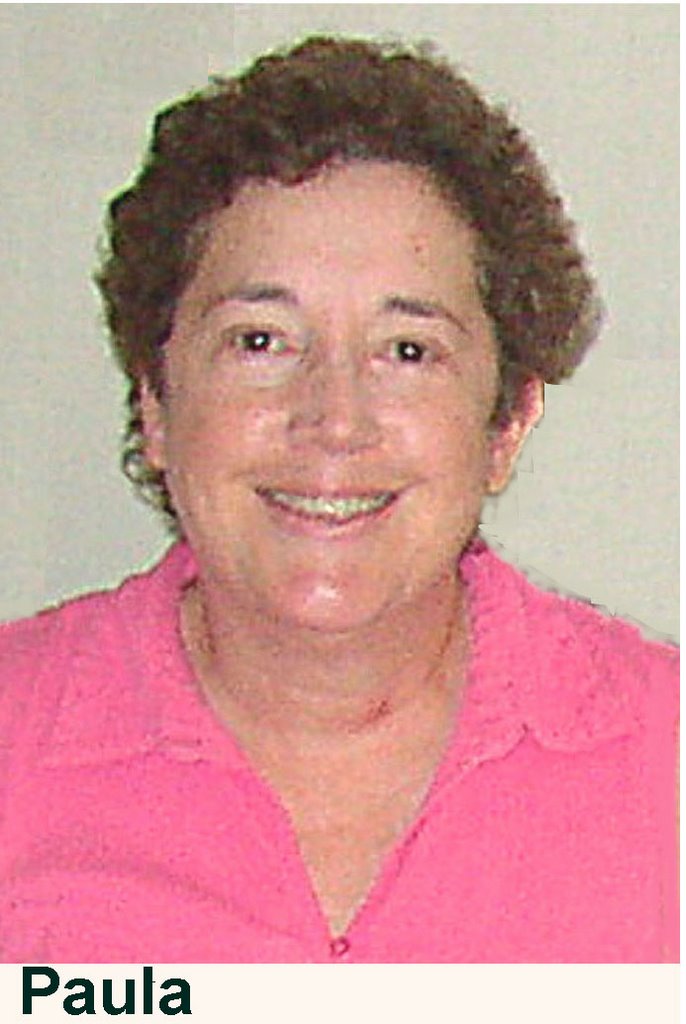
We rode the 11 miles from Cass to the top of Bald Knob, the highest elevation in West Virginia at 4,700 feet, on an old logging train. It took five hours for the round trip, with several switchbacks. As all the passengers re-boarded the train after a picnic atop Bald Knob, a deer came out to check every picnic table for leavings. It was her daily 1:45 p.m. check.
We also visited the National Radio Astronomy in Green Bank, where the Sen. Robert C. Byrd telescope, the largest in the nation, checks for sounds from outer space. WAY outer space. No. E.T. yet.
The scenery is breathtaking, as usual. Europe and West Virginia on the same break from work for Paula. Excellent combination.
Send in those stock certificates
I am sending in my newspaper stock certificates by insured, registered mail and have kept copies of the certificates. No need to worry because you do not have certificates for stock held by ChaseMellon Stock Services for which no paper certificates were issued to you. McClatchy stock plus a check already is being processed for that portion of your stock held by ChaseMellon. Mellon will exchange each share of your KR stock for $40 in cash and .5118 share of McClatchy stock. Mellon will send you a check for the cash in seven to 10 business days after receiving your certificates, I am told.
Thursday, July 20, 2006
AP reveals Israel censorship
Here's some news you may never hear about Israel's war against Hezbollah: a missile falls into the sea, a strategic military installation is hit, a Cabinet minister plans to visit the front lines.
All these topics are subject to review by Israel's chief military censor, who has -- in her own words -- "extraordinary power." She can silence a broadcaster, block information and put journalists in jail.
"I can, for example, publish an order that no material can be published. I can close a newspaper or shut down a station. I can do almost anything," Col. Sima Vaknin said Wednesday.
Israel believes that as a small country in a near constant state of conflict, having a say over what information gets out to the world is vital to its security. Critics say the policy is a slippery slope not fit for a democracy.
The range of issues subject to censorship in the latest conflict with Lebanese guerrillas are all related to the goal of preventing Hezbollah from using the media to help it better aim rockets at Israel.
The Associated Press has agreed, like other organizations, to abide by the rules of the censor, which is a condition for receiving permission to operate as a media organization in Israel.
[Source: The Associated Press via Editor & Publisher]
All these topics are subject to review by Israel's chief military censor, who has -- in her own words -- "extraordinary power." She can silence a broadcaster, block information and put journalists in jail.
"I can, for example, publish an order that no material can be published. I can close a newspaper or shut down a station. I can do almost anything," Col. Sima Vaknin said Wednesday.
Israel believes that as a small country in a near constant state of conflict, having a say over what information gets out to the world is vital to its security. Critics say the policy is a slippery slope not fit for a democracy.
The range of issues subject to censorship in the latest conflict with Lebanese guerrillas are all related to the goal of preventing Hezbollah from using the media to help it better aim rockets at Israel.
The Associated Press has agreed, like other organizations, to abide by the rules of the censor, which is a condition for receiving permission to operate as a media organization in Israel.
[Source: The Associated Press via Editor & Publisher]
Wednesday, July 19, 2006
New York Times to reduce page size
The New York Times is planning to reduce the size of the newspaper, making it narrower by one and a half inches, and to close its printing operation in Edison, N.J., company officials said yesterday.
The changes, to go into effect in April 2008, will be accompanied by a phased-in redesign of the paper and will mean the loss of 250 production-related jobs.
Several other American broadsheets reduced their size a few years ago, and many are planning further shrinkage to cut costs as the price of newsprint climbs and newspapers lose readers and advertisers to the Internet.
The Times, which made the announcement last night on the eve of its quarterly earnings report, said it would sublet its plant in Edison and consolidate its regional printing facilities at its newer plant in College Point, in Queens.
That consolidation will mean the loss of about a third of the total production work force of 800.
Source: Katharine Q. Seelye, The New York Times
The changes, to go into effect in April 2008, will be accompanied by a phased-in redesign of the paper and will mean the loss of 250 production-related jobs.
Several other American broadsheets reduced their size a few years ago, and many are planning further shrinkage to cut costs as the price of newsprint climbs and newspapers lose readers and advertisers to the Internet.
The Times, which made the announcement last night on the eve of its quarterly earnings report, said it would sublet its plant in Edison and consolidate its regional printing facilities at its newer plant in College Point, in Queens.
That consolidation will mean the loss of about a third of the total production work force of 800.
Source: Katharine Q. Seelye, The New York Times
Monday, July 17, 2006
Edward R. Moss named BJ publisher
By Mary Ethridge
Beacon Journal business writer
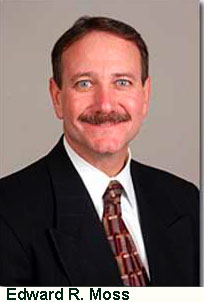
Edward R. Moss, an executive at a Virginia media company, was named the new publisher of the Akron Beacon Journal, effective Aug. 7.
Moss replaces James N. Crutchfield, who has been publisher of the Beacon Journal ince April 2001.
Moss was named to the position by David Black, president of Black Press Ltd. and its subsidiary Sound Publishing Holdings Inc., who will become the newspaper's owner on or about July 28.
Moss is vice president of sales and marketing for Media General, based in Richmond, Va. It is
the owner of 25 daily and 100 weekly newspapers. He has also been a publisher of newspapers
in California, Pennsylvania, Louisiana and Michigan.
‘‘He has a good track record of growing revenue and circulation,’’ Crutchfield said this morning during a meeting with the Beacon Journal staff.
Crutchfield said he will stay at the Beacon Journal for another six weeks to ease the transition.
‘‘It's been good, and I thank you for it,’’ Crutchfield told staffers. ‘‘This is a perfect time for
me and a good thing for David Black.’’
Crutchfield said he plans to take some time off to relax and think about the next phase of his
life.
Moss, 51, a graduate of Virginia Commonwealth University, will relocate to Akron with his wife,
Chris. The Mosses have six grown children.
Click on the headline above for the updated story by Mary Ethridge
Beacon Journal business writer
Edward R. Moss, an executive at a Virginia media company, was named the new publisher of the Akron Beacon Journal, effective Aug. 7.
Moss replaces James N. Crutchfield, who has been publisher of the Beacon Journal ince
 April 2001.
Moss was named to the position by David Black, president of Black Press Ltd. and its subsidiary Sound Publishing Holdings Inc., who will become the newspaper's owner on or about July 28.
Moss is vice president of sales and marketing for Media General, based in Richmond, Va. It is
the owner of 25 daily and 100 weekly newspapers. He has also been a publisher of newspapers
in California, Pennsylvania, Louisiana and Michigan.
‘‘He has a good track record of growing revenue and circulation,’’ Crutchfield said this morning during a meeting with the Beacon Journal staff.
Crutchfield said he will stay at the Beacon Journal for another six weeks to ease the transition.
‘‘It's been good, and I thank you for it,’’ Crutchfield told staffers. ‘‘This is a perfect time for
me and a good thing for David Black.’’
Crutchfield said he plans to take some time off to relax and think about the next phase of his
life.
Moss, 51, a graduate of Virginia Commonwealth University, will relocate to Akron with his wife,
Chris. The Mosses have six grown children.
Click on the headline above for the updated story by Mary Ethridge
Sunday, July 16, 2006







Subscribe to:
Posts (Atom)
