On Nov. 1, a $1,000 check was sent to each of four former Akron Beacon Journal newsroom employees. The criteria for receiving a check was 1) those who were among the original employees targeted for layoff and 2) were still unemployed as of Nov. 1. It did not matter if the employees declined an opportunity to return, especially since the company has repeatedly asserted there could be more layoffs in 2007 and these people would be at risk yet
again.
There is roughly $2,500 remaining in the fund, which collected a total of about $6,500, including about $750 from an auction of Beacon Journal memorabilia. The Layoff Fund Committee will contact the four employees again on Dec. 1 and make a decision as to how to distribute the remaining funds.
See the Beacon Journal Retirees web site for a list of auction winners. The winners' list will be removed from the web site next week.
Tuesday, November 14, 2006


Lillian Petraitis was BJ secretary
Lillian Petraitis, 85, went home to be with the Lord on November 13th, at MetroHealth Medical Center in Cleveland.
Born in Barberton in 1921, Lillian had been an area resident her entire life. She was a mem ber of Immaculate Conception Church in Kenmore. Lillian had been employed as a secretary by both The Firestone Tire & Rubber Co. for 15 years and by The Akron Beacon Journal for eight years.
Mrs. Petraitis was preceded in death by her parents, Theodore and Anna Suie, son, Byron and brother, Ted Suie. She is survived by her husband, John of Barberton; son and daughter-in-law, John and Michelle Petraitis of Columbus; and daughter and son-in-law, Roberta and Tom Anderson of Brecksville; sister, Mary Driesbaugh of Michigan; grandchildren, Sarah, Rachel, and Amanda Petraitis and Erik, Evan, and Kurt Anderson.
The family will receive friends Wednesday from 5 to 8 p.m. at The Kucko-Anthony-Kertesz Funeral Home, 95 W. Waterloo Rd. Funeral services will begin Thursday at 10 a.m. at the funeral home and will continue with a Mass of Christian Burial at 10:30 a.m. at Immaculate Conception Catholic Church. Interment at Holy Cross Cemetery. Donations in Lillian's memory may be made to The Interval Brotherhood Home, 3445 S. Main St., Akron, OH 44319. (Kucko-Anthony-Kertesz, 330-724-1281, www.kakfh.com)
[The Beacon Journal,, Akron, OH, November 14, 2006 ]
[Note: You may not recognize her from the photo published with her obituary which is evidently one in her younger years. We could not locate a recent photo.]
Born in Barberton in 1921, Lillian had been an area resident her entire life. She was a mem
 ber of Immaculate Conception Church in Kenmore. Lillian had been employed as a secretary by both The Firestone Tire & Rubber Co. for 15 years and by The Akron Beacon Journal for eight years.
Mrs. Petraitis was preceded in death by her parents, Theodore and Anna Suie, son, Byron and brother, Ted Suie. She is survived by her husband, John of Barberton; son and daughter-in-law, John and Michelle Petraitis of Columbus; and daughter and son-in-law, Roberta and Tom Anderson of Brecksville; sister, Mary Driesbaugh of Michigan; grandchildren, Sarah, Rachel, and Amanda Petraitis and Erik, Evan, and Kurt Anderson.
The family will receive friends Wednesday from 5 to 8 p.m. at The Kucko-Anthony-Kertesz Funeral Home, 95 W. Waterloo Rd. Funeral services will begin Thursday at 10 a.m. at the funeral home and will continue with a Mass of Christian Burial at 10:30 a.m. at Immaculate Conception Catholic Church. Interment at Holy Cross Cemetery. Donations in Lillian's memory may be made to The Interval Brotherhood Home, 3445 S. Main St., Akron, OH 44319. (Kucko-Anthony-Kertesz, 330-724-1281, www.kakfh.com)
[The Beacon Journal,, Akron, OH, November 14, 2006 ]
[Note: You may not recognize her from the photo published with her obituary which is evidently one in her younger years. We could not locate a recent photo.]
Friday, November 10, 2006
End of Hagenbush era in 1991
Since this has been the end of an era year at the Beacon Journal, it seems appropriate to recall another end of an era. This article is from the July / August 1991 issue of Sidedar, then the employee publication. A recent photo of Hagenbush was provided by Bill Hunter. Here is the article:
The Beacon Journal has experienced many changes since the 1920's, but from June 15, 1923 to July 1, 1991 there's been one constant- a Hagenbush working at the paper. But o n July 1,1991, Frank A. Hagenbush retired, marking the first time in 68 years that there hasn't been a Hagenbush employed at the Akron Beacon Journal.
With the cooperation of Bill Hunter. who is married to Jean Hagenbush, we have put together a list of the Hagenbush history with the company.
It all began with Jesse E. Hagenbush, who worked at the company from June 15, 1923 and retired July 1, 1971. At the time he was hired the Beacon Journal was located at the corners of East Market and Broadway Streets. Jesse worked in Circulation and the Mailing Room. He retired as foreman in the Mailing Room.
Then came brother Harry R. Hagenbush, now deceased, who started on October 10, 1924 and retired in 1968. He replaced Jesse in the Mailing Room and transferred to apprentice pressman.
Joining them was another brother Frank 1. Hagenbush, now deceased, who worked from 1935 to 1944 when he enlisted in the Army.
Now there are four as John H. Hagenbush joined his brothers in 1946 and worked until Aug, 1979. He started as a paperhandler and retired as a mechanic in the Mailing Room.
And the next generation began with Frank A. Hagenbush, son of Jesse, who began in October, 1947 and retired this year. He began as a paper handler and retired as assistant foreman of the pressroom.
In addition, Jean E. Hagenbush Hunter, daughter of Jesse, began at the Beacon in 1951 and worked to 1960. She worked in the Circulation Department and Sara Ann Sipe Hagenbush, wife of Frank A. Hagenbush, worked in Circulation Accounting from June 1953 to October, 1956.
In the 68 years of Hagenbush involvement at the Beacon Journal. the pressroom and mailing room production facility was moved three times and expanded once.
In 1923 it was located at East Market and Broadway Streets, then was moved in 1929 to E. Market and Summit Streets. In 1938 it moved to the facility at East Exchange and High Streets and in 1952 was moved to a new facility across Wheeler Alley. In 1988, the Mailing Room expanded into the new addition.
Frank, the last of the Hagenbush dynasty, was honored by nearly fifty of his friends, retirees and co-workers at a retirement party along with his long-time friend and co-worker, Jim Darr, at the Jednota Club on July 8, 1991.
He received a portrait done by Diane Heinbuch, wife of the Pressroom's Bill Heinbuch, and a cash envelope from his co-workers.
After all the tributes were finished, Frank made a very brief farewell speech to his friends which just about sums up the Hagenbush family's philosophy.
Frank said, "You won't hear me saying anything bad about the Beacon Journal. Every meal my family has eaten was paid for by a check from the Beacon Journal."
It's been a long run - you will be missed.
[Hagenbush lives in Tallmadge, OH]
The Beacon Journal has experienced many changes since the 1920's, but from June 15, 1923 to July 1, 1991 there's been one constant- a Hagenbush working at the paper. But o
 n July 1,1991, Frank A. Hagenbush retired, marking the first time in 68 years that there hasn't been a Hagenbush employed at the Akron Beacon Journal.
With the cooperation of Bill Hunter. who is married to Jean Hagenbush, we have put together a list of the Hagenbush history with the company.
It all began with Jesse E. Hagenbush, who worked at the company from June 15, 1923 and retired July 1, 1971. At the time he was hired the Beacon Journal was located at the corners of East Market and Broadway Streets. Jesse worked in Circulation and the Mailing Room. He retired as foreman in the Mailing Room.
Then came brother Harry R. Hagenbush, now deceased, who started on October 10, 1924 and retired in 1968. He replaced Jesse in the Mailing Room and transferred to apprentice pressman.
Joining them was another brother Frank 1. Hagenbush, now deceased, who worked from 1935 to 1944 when he enlisted in the Army.
Now there are four as John H. Hagenbush joined his brothers in 1946 and worked until Aug, 1979. He started as a paperhandler and retired as a mechanic in the Mailing Room.
And the next generation began with Frank A. Hagenbush, son of Jesse, who began in October, 1947 and retired this year. He began as a paper handler and retired as assistant foreman of the pressroom.
In addition, Jean E. Hagenbush Hunter, daughter of Jesse, began at the Beacon in 1951 and worked to 1960. She worked in the Circulation Department and Sara Ann Sipe Hagenbush, wife of Frank A. Hagenbush, worked in Circulation Accounting from June 1953 to October, 1956.
In the 68 years of Hagenbush involvement at the Beacon Journal. the pressroom and mailing room production facility was moved three times and expanded once.
In 1923 it was located at East Market and Broadway Streets, then was moved in 1929 to E. Market and Summit Streets. In 1938 it moved to the facility at East Exchange and High Streets and in 1952 was moved to a new facility across Wheeler Alley. In 1988, the Mailing Room expanded into the new addition.
Frank, the last of the Hagenbush dynasty, was honored by nearly fifty of his friends, retirees and co-workers at a retirement party along with his long-time friend and co-worker, Jim Darr, at the Jednota Club on July 8, 1991.
He received a portrait done by Diane Heinbuch, wife of the Pressroom's Bill Heinbuch, and a cash envelope from his co-workers.
After all the tributes were finished, Frank made a very brief farewell speech to his friends which just about sums up the Hagenbush family's philosophy.
Frank said, "You won't hear me saying anything bad about the Beacon Journal. Every meal my family has eaten was paid for by a check from the Beacon Journal."
It's been a long run - you will be missed.
[Hagenbush lives in Tallmadge, OH]
Thursday, November 09, 2006
Unlikely pair bid for LA Times
Eli Broad made his fortune building affordable homes for Southern Californians, while Ron Burkle made his by filling their pantries with groceries.
On Wednesday, they joined in a bid to buy the Los Angeles Times' parent, Tribune Co. If successful, the two billionaires with no newspaper experience might pull off one of their most audacious deals yet.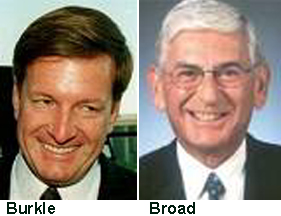
Broad and Burkle have spent millions cutting separate swaths across the landscape of Southern California arts, culture and philanthropy. Their bid is likely to be countered by another local billionaire, David Geffen, who is expected to make a separate offer for the newspaper.
Like Geffen, who made his fortune in music and movies, Broad and Burkle have egos to match their accomplishments. Some who know them question whether they could work well together as partners, prompting speculation they would divvy Tribune's holdings of newspapers, broadcast outlets and the Chicago Cubs baseball team.
"The obvious question on everyone's mind is where does the L.A. Times end up in all this? In whose hands and under whose direction?" said Steve Soboroff, president of Playa Vista, a former Los Angeles mayoral candidate and one of 20 community leaders who in September wrote to Tribune Co. protesting its plans for cutbacks at The Times. "There are all kinds of possibilities."
Former Los Angeles Mayor Richard Riordan, who is an acquaintance of Burkle's and hikes with Broad in the Santa Monica Mountains almost every Sunday, said he was not surprised to hear about the pair's proposal.
Buying Tribune would be "an interesting game," said Riordan, a multimillionaire venture capitalist who restructured Mattel Co. before going into politics.
"The part that would be fun would be selling off the parts of Tribune and being left with the L.A. Times," he said. "But then what would you do?"
Riordan doubts that Broad and Burkle, both of whom have strong personalities, would be interested in running The Times as co-owners.
Two people who know both men in business and civic circles agreed. They described Broad and Burkle as "control freaks" but asked that their names not be used because they didn't want to antagonize the billionaires.
"There is no way they are gonna live together running that newspaper," said one, who described them as "not friends but not enemies" either.
Click on the headline for an L.A. Times story on the Chicago Tribune Co. bidding.
On Wednesday, they joined in a bid to buy the Los Angeles Times' parent, Tribune Co. If successful, the two billionaires with no newspaper experience might pull off one of their most audacious deals yet.
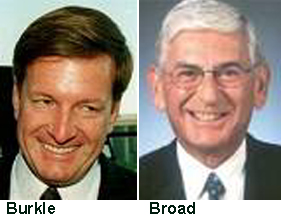
Broad and Burkle have spent millions cutting separate swaths across the landscape of Southern California arts, culture and philanthropy. Their bid is likely to be countered by another local billionaire, David Geffen, who is expected to make a separate offer for the newspaper.
Like Geffen, who made his fortune in music and movies, Broad and Burkle have egos to match their accomplishments. Some who know them question whether they could work well together as partners, prompting speculation they would divvy Tribune's holdings of newspapers, broadcast outlets and the Chicago Cubs baseball team.
"The obvious question on everyone's mind is where does the L.A. Times end up in all this? In whose hands and under whose direction?" said Steve Soboroff, president of Playa Vista, a former Los Angeles mayoral candidate and one of 20 community leaders who in September wrote to Tribune Co. protesting its plans for cutbacks at The Times. "There are all kinds of possibilities."
Former Los Angeles Mayor Richard Riordan, who is an acquaintance of Burkle's and hikes with Broad in the Santa Monica Mountains almost every Sunday, said he was not surprised to hear about the pair's proposal.
Buying Tribune would be "an interesting game," said Riordan, a multimillionaire venture capitalist who restructured Mattel Co. before going into politics.
"The part that would be fun would be selling off the parts of Tribune and being left with the L.A. Times," he said. "But then what would you do?"
Riordan doubts that Broad and Burkle, both of whom have strong personalities, would be interested in running The Times as co-owners.
Two people who know both men in business and civic circles agreed. They described Broad and Burkle as "control freaks" but asked that their names not be used because they didn't want to antagonize the billionaires.
"There is no way they are gonna live together running that newspaper," said one, who described them as "not friends but not enemies" either.
Click on the headline for an L.A. Times story on the Chicago Tribune Co. bidding.
Phila editor steps down
Amanda Bennett, the editor of The Philadelphia Inquirer, stepped down yesterday and was succeeded by William K. Marimow, a former Pulitzer-Prize-winning reporter for The Inquirer and top news executive with NPR. He takes over as the newspaper faces lay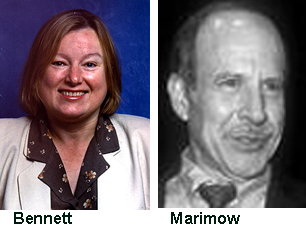 offs, sinking advertising revenue and declining circulation.
Brian P. Tierney, who acquired the paper early in the summer, said in an interview that while Ms. Bennett was “loyal and hard working,” he wanted his own team in place. He said he had been discussing the situation with her for several months and concluded that “in terms of where I wanted to go, she wasn’t the best fit.”
At the same time, Mr. Marimow, 59, had come to Mr. Tierney’s attention. Mr. Marimow had written him a note in August to say that if Mr. Tierney were ever looking for a new editor, he would like to be considered. The note went astray, both men said, and Mr. Tierney never saw it. But a mutual friend put them in touch, and they began to talk.
Then last month, Mr. Marimow lost his job as NPR’s vice president for news and became the radio network’s ombudsman. At that point, Mr. Tierney said, “I saw an opportunity to step up the pace of our conversations and Amanda was winding down.”
Ms. Bennett, 54, said in an interview, “It came time to go and it was right for everybody.” She said she was sad but relieved, because of the “relentless pressures” on the newspaper industry, but with Mr. Marimow, “the paper is in good hands.”
Click on headline to read full story by Mike Mergen in the New York Times.
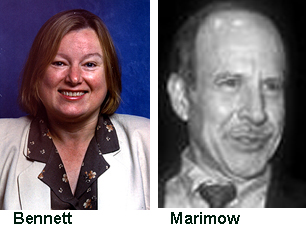 offs, sinking advertising revenue and declining circulation.
Brian P. Tierney, who acquired the paper early in the summer, said in an interview that while Ms. Bennett was “loyal and hard working,” he wanted his own team in place. He said he had been discussing the situation with her for several months and concluded that “in terms of where I wanted to go, she wasn’t the best fit.”
At the same time, Mr. Marimow, 59, had come to Mr. Tierney’s attention. Mr. Marimow had written him a note in August to say that if Mr. Tierney were ever looking for a new editor, he would like to be considered. The note went astray, both men said, and Mr. Tierney never saw it. But a mutual friend put them in touch, and they began to talk.
Then last month, Mr. Marimow lost his job as NPR’s vice president for news and became the radio network’s ombudsman. At that point, Mr. Tierney said, “I saw an opportunity to step up the pace of our conversations and Amanda was winding down.”
Ms. Bennett, 54, said in an interview, “It came time to go and it was right for everybody.” She said she was sad but relieved, because of the “relentless pressures” on the newspaper industry, but with Mr. Marimow, “the paper is in good hands.”
Click on headline to read full story by Mike Mergen in the New York Times.
Wednesday, November 08, 2006
John Olesky's 74th birthday trip
Retired TV editor John Olesky turned 74 recently and Paula treated him to a three-day weekend in Toronto with a stop at Niagara Falls. Photos and John's account of the trip are on the BJ Retirees web site--but you can just click on the headline to go to the layout.
Give your browser time to load the large montage.
Give your browser time to load the large montage.
L.A. Times Ousts Top Editor
Dean Baquet, the editor of The Los Angeles Times, who defied orders from his corporate bosses to cut jobs, was forced out of his own job yesterday, shocking the newsroom just as it was gearing up to cover election returns.
He is to leave his post Friday and be succeeded by James O’Shea, the managing editor of The Chicago Tribune, who will start Monday.
Mr. Baquet’s departure follows that of the paper’s publisher, Jeffrey M. Johnson, who openly objected to cuts ordered by the Tribune Company in September and was fired last month.
David Hiller, who succeeded Mr. Johnson as publisher, said in a statement yesterday that he had had discussions with Mr. Baquet about staffing levels. While the company maintained its position that further cuts might be necessary, Mr. Baquet still considered them excessive.
“After considerable discussion during the past several weeks,” Mr. Hiller said, “Dean and I concluded that we have significant differences on the future direction of The Times.”
Colleagues of Mr. Baquet said the firing had less to do with a dispute over job cuts than his vocal resistance to them, made plain in a speech last month in New Orleans, in which he encouraged editors at other newspapers to “push back” against owners who wanted to cut newsroom staffs. In fact, when Mr. Hiller addressed the newsroom yesterday, he said he expected no job cuts, at least for the rest of the year, and he told editors it was still possible that any further cuts could be reached through attrition, according to people at the paper.
[Source: NY Times by Katharine Q. Seelye via SPJ Press Notes]

He is to leave his post Friday and be succeeded by James O’Shea, the managing editor of The Chicago Tribune, who will start Monday.
Mr. Baquet’s departure follows that of the paper’s publisher, Jeffrey M. Johnson, who openly objected to cuts ordered by the Tribune Company in September and was fired last month.
David Hiller, who succeeded Mr. Johnson as publisher, said in a statement yesterday that he had had discussions with Mr. Baquet about staffing levels. While the company maintained its position that further cuts might be necessary, Mr. Baquet still considered them excessive.
“After considerable discussion during the past several weeks,” Mr. Hiller said, “Dean and I concluded that we have significant differences on the future direction of The Times.”
Colleagues of Mr. Baquet said the firing had less to do with a dispute over job cuts than his vocal resistance to them, made plain in a speech last month in New Orleans, in which he encouraged editors at other newspapers to “push back” against owners who wanted to cut newsroom staffs. In fact, when Mr. Hiller addressed the newsroom yesterday, he said he expected no job cuts, at least for the rest of the year, and he told editors it was still possible that any further cuts could be reached through attrition, according to people at the paper.
[Source: NY Times by Katharine Q. Seelye via SPJ Press Notes]
Happy 64th wedding anniversary
Attending November’s lunch for BJ retirees at Papa Joe's were Art Cullison and wife Helen, who were celebrating their 64th wedding anniversary that day.
Others among the 13 attending were Watson Blanton and wife Rosetta, who celebrated their 50th wedding anniversary in July; Gene Daniels, Ed Hanzel and wife Norma, Carl Nelson, Cal Deshong, Tim Hayes, Sandy Levenson, Bill Canterbury and John Olesky.
Others among the 13 attending were Watson Blanton and wife Rosetta, who celebrated their 50th wedding anniversary in July; Gene Daniels, Ed Hanzel and wife Norma, Carl Nelson, Cal Deshong, Tim Hayes, Sandy Levenson, Bill Canterbury and John Olesky.
How donkey, elephant became symbols
This old cartoon by Thomas Nast in Harper's Weekly on January 6, 1870 se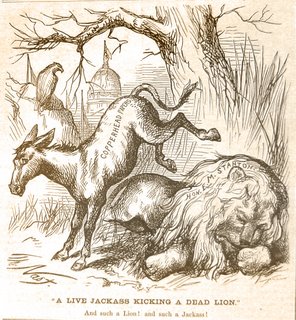 ems appropriate today. The cartoon titled "A live jackass kicking a dead lion" was the first time Nast used the donkey as a symbol of the Democratic Party although it was first used in the 1830s by Andrew Jackson. However, it was Nast, a Republican who popularized the donkey as the Democratic symbol and who chose the elephant as the Republican symbol.
A little known fact about Nast: He could not read or write. He started drawing with old crayons given to him by a neighbor.
For information on two famous Nast cartoons featuring the poltical symbols, see the Commentary section of our web site or click on the headline. The article contains links to Democratic and Republican accounts of how their symbols originated and a link to a nice biography of Nast. For other Nast cartoons, just Google "Thomas Nast."
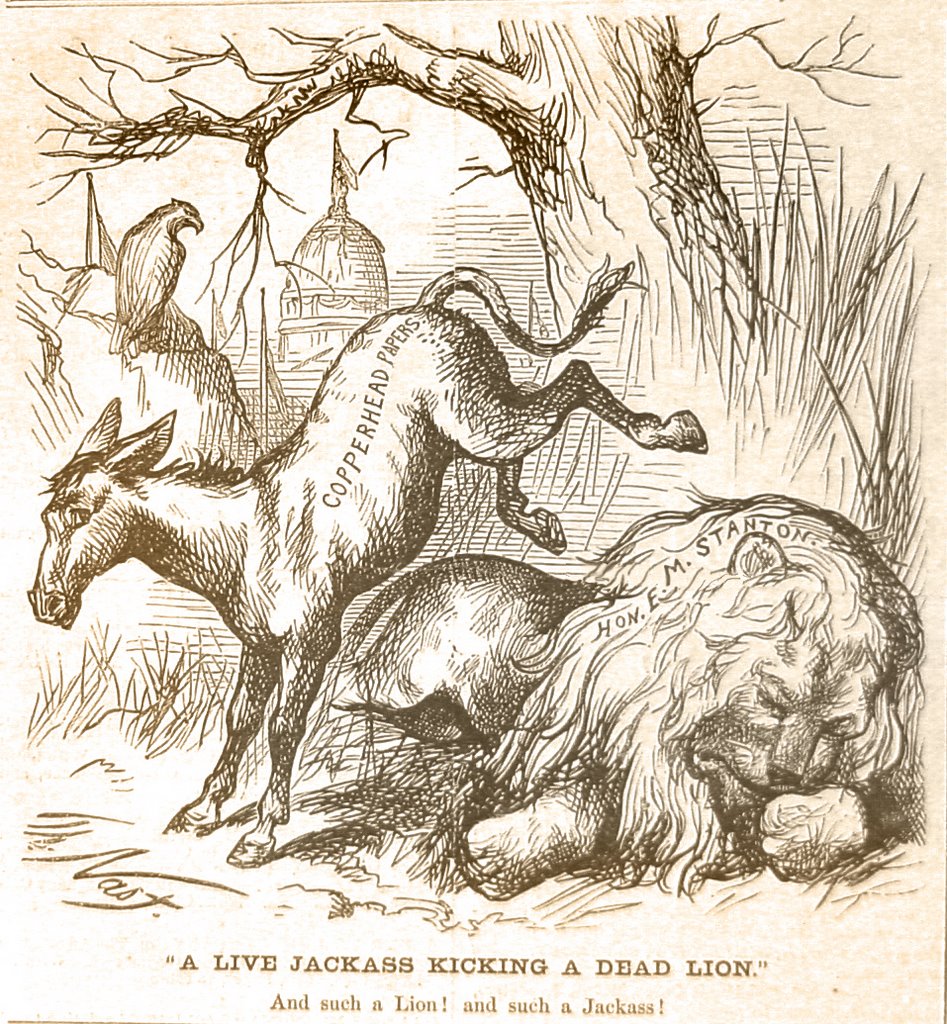 ems appropriate today. The cartoon titled "A live jackass kicking a dead lion" was the first time Nast used the donkey as a symbol of the Democratic Party although it was first used in the 1830s by Andrew Jackson. However, it was Nast, a Republican who popularized the donkey as the Democratic symbol and who chose the elephant as the Republican symbol.
A little known fact about Nast: He could not read or write. He started drawing with old crayons given to him by a neighbor.
For information on two famous Nast cartoons featuring the poltical symbols, see the Commentary section of our web site or click on the headline. The article contains links to Democratic and Republican accounts of how their symbols originated and a link to a nice biography of Nast. For other Nast cartoons, just Google "Thomas Nast."
Beacon Bombers get down
This story of the famed Beacon Bombers, reprinted from the June / July, 1978 issue of Tower Topics, is in fond remembrance of the late Jim Derendal. Click on the headline to see a photo album. You will need to list your name and e-mail address.
By CHARLES BUFFUM
Once again, the newsroom's Beacon Bombers softball team showed the difference between ordinary teams and the pits.
In a season marred only by a couple victories, the Bombers once again tested and proved the Third Law of baseball physics - that what goes down usually stays there.
Coach Jim "Why Me?" Derendal left town before the season was over, but that didn't change the Bomber's luck: The other teams kept showing up.
Not that it was all bad. Among the highlights were ... urn ... er ...
Never mind. The guys who showed up had fun fantasizing about being ball players, and the Boulevard Tavern in Cuyahoga Falls, where the Bombers did their thing, made lots of post-game money from a team that was not only from hunger, but. from thirst.
Among team standouts were Paul Tople, who stood out most of each game; B. D. Downing, who had two stolen bases but was ordered to give them back, and George Sillia, who went 4-for-4 in one game. That's errors, not hits.
Also disgracing themselves and journalism for still another season were Larry Pantages, Mickey Porter, Jim Dettling, Charles Buffum, Rick "The Ripper" Reiff, Chuck Ayers, Jim Ricci, Roger Mezger, D. Booth Cooper, Bill Hershey, Tim Hayes and probably others who played with such mediocrity that they are already lost in the mists of baseball history.
Frantic to win, Derendal also imported ringers Bill Chaney, John Richardson and Joe Balazowich. Alas, they quickly became acclimated to the Bomber system.
Cooper, incidentally, won the GoBack Player of the Year
Award for his efforts to make a pitching comeback. Wearing the lucky socks former teammate Satchel Paige gave him when they were both in Uttle League, Cooper dazzled the opposition with his timely buying of pitchers at the tavern after the game.
Unlike locusts, Bombers come back every year, and plans already are underway for next season's schedule. So far, Derendal has lined up the Erie Island Elementary School junior varisty and the Spanish Amerian War Vets - both of which have thumped the Bombers in the past.
The Bombers steadfastly refuse to play the Ladies of the Knight.
By CHARLES BUFFUM
Once again, the newsroom's Beacon Bombers softball team showed the difference between ordinary teams and the pits.
In a season marred only by a couple victories, the Bombers once again tested and proved the Third Law of baseball physics - that what goes down usually stays there.
Coach Jim "Why Me?" Derendal left town before the season was over, but that didn't change the Bomber's luck: The other teams kept showing up.
Not that it was all bad. Among the highlights were ... urn ... er ...
Never mind. The guys who showed up had fun fantasizing about being ball players, and the Boulevard Tavern in Cuyahoga Falls, where the Bombers did their thing, made lots of post-game money from a team that was not only from hunger, but. from thirst.
Among team standouts were Paul Tople, who stood out most of each game; B. D. Downing, who had two stolen bases but was ordered to give them back, and George Sillia, who went 4-for-4 in one game. That's errors, not hits.
Also disgracing themselves and journalism for still another season were Larry Pantages, Mickey Porter, Jim Dettling, Charles Buffum, Rick "The Ripper" Reiff, Chuck Ayers, Jim Ricci, Roger Mezger, D. Booth Cooper, Bill Hershey, Tim Hayes and probably others who played with such mediocrity that they are already lost in the mists of baseball history.
Frantic to win, Derendal also imported ringers Bill Chaney, John Richardson and Joe Balazowich. Alas, they quickly became acclimated to the Bomber system.
Cooper, incidentally, won the GoBack Player of the Year
Award for his efforts to make a pitching comeback. Wearing the lucky socks former teammate Satchel Paige gave him when they were both in Uttle League, Cooper dazzled the opposition with his timely buying of pitchers at the tavern after the game.
Unlike locusts, Bombers come back every year, and plans already are underway for next season's schedule. So far, Derendal has lined up the Erie Island Elementary School junior varisty and the Spanish Amerian War Vets - both of which have thumped the Bombers in the past.
The Bombers steadfastly refuse to play the Ladies of the Knight.
Tuesday, November 07, 2006
Deep cuts to hit Inquirer
The Philadelphia Inquirer newsroom has received a request from Philadelphia Media Holdings CEO Brian Tierney.
"We've been asked to plan for as many as 150 people to be laid off," says Inquirer managing editor Anne Gordon. That figure represents more than a third of the newspaper's editorial staff.
At the end of last week Inquirer columnist Tom Ferrick had issued a memo cautioning the staff not to panic and reminding them the layoff threat had arrived during tough contract negotiations.
The Newspaper Guild, which represents Inquirer and Daily News editorial employees, is refusing to accept several of management's contract proposals, including a plan to convert the current pension system into an employee-funded retirement plan. The two sides are now in their second 30-day extension of the old contract, which is set to expire at the end of this month.
[Source: SPJ Press Notes]
"We've been asked to plan for as many as 150 people to be laid off," says Inquirer managing editor Anne Gordon. That figure represents more than a third of the newspaper's editorial staff.
At the end of last week Inquirer columnist Tom Ferrick had issued a memo cautioning the staff not to panic and reminding them the layoff threat had arrived during tough contract negotiations.
The Newspaper Guild, which represents Inquirer and Daily News editorial employees, is refusing to accept several of management's contract proposals, including a plan to convert the current pension system into an employee-funded retirement plan. The two sides are now in their second 30-day extension of the old contract, which is set to expire at the end of this month.
[Source: SPJ Press Notes]
Sun names Tony Ridder to board
Sun Microsystems Names Former Knight Ridder Chairman to Board
SAN JOSE, Calif. (AP) -- Server and software maker Sun Microsystems Inc. said Monday that Tony Ridder, former chairman of newspaper publisher Knight Ridder Inc., was elected to the company's board of directors.
Ridder, who led the nation's second-largest newspaper publisher until a shareholder rebellion forced its sale to McClatchy Co. earlier this year, will serve on Sun's Leadership Development and Compensation Committee, the company said.
Santa Clara-based Sun also said that Peter Currie, a corporate finance veteran, was elected to the board.
"Tony Ridder and Peter Currie each bring a unique perspective in publishing, internet economics, corporate governance and finance to Sun's corporate board," Jonathan Schwartz, Sun's chief executive officer, said in a statement.
Sun is in the midst of a slow but steady turnaround after its gutting in the dot-com collapse. The company has amassed more than $5 billion in net losses since 2002, but revenues have been climbing and analysts have praised its cost-cutting measures and overall strategy.
Ridder's own cost-cutting efforts at Knight Ridder were not enough to save the company from the wrath of some of its largest shareholders, who confronted the board last year about the company's sliding stock price and eventually forced the sale, which was approved in June.
[Monday November 6, 2006]
SAN JOSE, Calif. (AP) -- Server and software maker Sun Microsystems Inc. said Monday that Tony Ridder, former chairman of newspaper publisher Knight Ridder Inc., was elected to the company's board of directors.
Ridder, who led the nation's second-largest newspaper publisher until a shareholder rebellion forced its sale to McClatchy Co. earlier this year, will serve on Sun's Leadership Development and Compensation Committee, the company said.
Santa Clara-based Sun also said that Peter Currie, a corporate finance veteran, was elected to the board.
"Tony Ridder and Peter Currie each bring a unique perspective in publishing, internet economics, corporate governance and finance to Sun's corporate board," Jonathan Schwartz, Sun's chief executive officer, said in a statement.
Sun is in the midst of a slow but steady turnaround after its gutting in the dot-com collapse. The company has amassed more than $5 billion in net losses since 2002, but revenues have been climbing and analysts have praised its cost-cutting measures and overall strategy.
Ridder's own cost-cutting efforts at Knight Ridder were not enough to save the company from the wrath of some of its largest shareholders, who confronted the board last year about the company's sliding stock price and eventually forced the sale, which was approved in June.
[Monday November 6, 2006]
Monday, November 06, 2006
Gannett and news 24/7
Have your heard about Gannett"s plans for a 24/7 Information Center?
You can click on the headline to read a FAQ on the information. Here's the first item:
Q. What is an Information Center?
A. The Information Center is a new way of transforming the process of gathering and disseminating news and information. It is the evolution of the newsroom, focused on gathering the information our readers and viewers want using words, images and video and distributing it across multiple platforms: the daily newspaper, online, mobile, non-daily publications and any other media possible to meet our readers’ needs. Creating an Information Center means retooling the newsroom, expanding into multimedia, embracing community interaction, shifting resources and rethinking the way a community is covered. Gannett’s Newspaper Division, which has conducted a series of pilot programs to create and test the Information Center concept, organized the Center around seven key information gathering areas: digital; public service; community conversation; local; custom content; data; and multimedia. (More about each desk below). Information Centers can be tailored to fit the needs of the individual operations in each division.
And what skills are needed for online news staffs? For report by the Online News Association about skills needed, you can find another short article on our web site with a link to a PDF file on the study.
Or click here.
You can click on the headline to read a FAQ on the information. Here's the first item:
Q. What is an Information Center?
A. The Information Center is a new way of transforming the process of gathering and disseminating news and information. It is the evolution of the newsroom, focused on gathering the information our readers and viewers want using words, images and video and distributing it across multiple platforms: the daily newspaper, online, mobile, non-daily publications and any other media possible to meet our readers’ needs. Creating an Information Center means retooling the newsroom, expanding into multimedia, embracing community interaction, shifting resources and rethinking the way a community is covered. Gannett’s Newspaper Division, which has conducted a series of pilot programs to create and test the Information Center concept, organized the Center around seven key information gathering areas: digital; public service; community conversation; local; custom content; data; and multimedia. (More about each desk below). Information Centers can be tailored to fit the needs of the individual operations in each division.
And what skills are needed for online news staffs? For report by the Online News Association about skills needed, you can find another short article on our web site with a link to a PDF file on the study.
Or click here.
Sunday, November 05, 2006
Check out our web site
If you have not checked it out yet, click on the link at the left to go to the BJ Retirees web site which has been provided to us by the Akron-Summit County Public Library.
The web site provides a place for information lists, articles that are too long for this blog and some articles that need to be in a separate section plainly listed as commentary.
The first column of the menu lists the Blog Wall of Honor, Commentary and Addresses of Retirees. The middle is for links to this blog, to the Beacon Journal online (Ohio.com) and to the Akron Guild web site. In the final column are some BJ phone numbers, The Blog Corner and one labeled Contact Us that you can click on to send us e-mail. .
The Blog Corner has news about the blog and a weekly list of the number of visitors and number of posts to date. The Commentary section, which is new, has one old commentary, “Where do we go from here?” and two just added: One is about hometown papers and asks “What is a good newspaper?” The other is an editorial about hating those election ads. If you want to comment on any of them or if you have your own commentary you would like us to consider, just send e-mail to hliggett@sbcglobal.net
Finally, below the menu are special items you might want to see:
Comparing milliion census years
Layoff status list
Recollection: Lifetime Job Guarantee (by Leo Osmar)
Analysis: TV election coverage
U.S. drops to 53rd on presss freedom
Quiz on the fabulous 15
Layoff auction nets $735
The web site provides a place for information lists, articles that are too long for this blog and some articles that need to be in a separate section plainly listed as commentary.
The first column of the menu lists the Blog Wall of Honor, Commentary and Addresses of Retirees. The middle is for links to this blog, to the Beacon Journal online (Ohio.com) and to the Akron Guild web site. In the final column are some BJ phone numbers, The Blog Corner and one labeled Contact Us that you can click on to send us e-mail. .
The Blog Corner has news about the blog and a weekly list of the number of visitors and number of posts to date. The Commentary section, which is new, has one old commentary, “Where do we go from here?” and two just added: One is about hometown papers and asks “What is a good newspaper?” The other is an editorial about hating those election ads. If you want to comment on any of them or if you have your own commentary you would like us to consider, just send e-mail to hliggett@sbcglobal.net
Finally, below the menu are special items you might want to see:
Comparing milliion census years
Layoff status list
Recollection: Lifetime Job Guarantee (by Leo Osmar)
Analysis: TV election coverage
U.S. drops to 53rd on presss freedom
Quiz on the fabulous 15
Layoff auction nets $735
Saturday, November 04, 2006
Ann will take a swing at it
Enough of the posts about our dearly departed--those tired and timid veterans who decided to resign for whatever reason. With a trimmed-down newsroom staff, those remaining will have to spread their talent over a wider area. One of those remaining who has more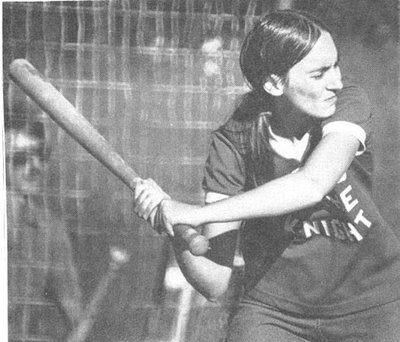 than one talent is Ann Sheldom Metzger. Even though this photo does not reproduce well on the blog, you can tell Ann is ready to take a swing at it.
The photo of Ann squinting into the sun is one of seven printed in a double truck feature in the June/July 1978 issue of Tower Topics with a story by Ann about “Ladies of the Knight” having a winning season.
But let Ann tell it:
By ANN SHELDON MEZGER
The ladies of the Knight were off to another winning summer with a record of 6-4 at midseason and a good chance for making the playoffs and bringing a trophy home to the Beacon Journal for the second year in a row.
Ably coached by Jim Derendal and John Richardson, the Ladies managed to beat the two undefeated, first-place teams before losing a few games themselves.
Except for Mary Grace Dobrzeniecki's skinned knees (from frequently sliding into second, third and home) there were no injuries. There were, however, a few near drownings at a memorable game played against Centran Bank during one of the worst thunderstorms of the summer.
[Photos for the article were taken during one of the Ladies' more glorious games - a 15-2 win over Red's bar. ]
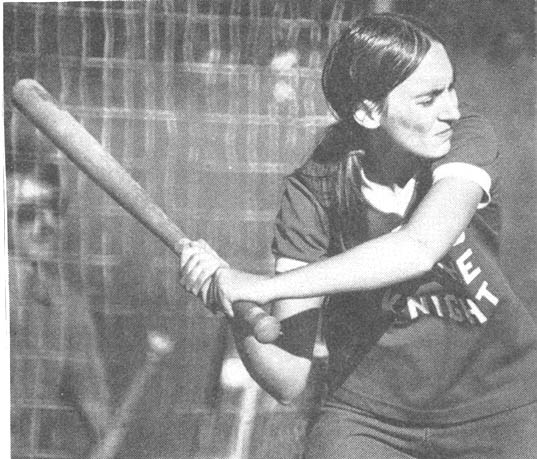 than one talent is Ann Sheldom Metzger. Even though this photo does not reproduce well on the blog, you can tell Ann is ready to take a swing at it.
The photo of Ann squinting into the sun is one of seven printed in a double truck feature in the June/July 1978 issue of Tower Topics with a story by Ann about “Ladies of the Knight” having a winning season.
But let Ann tell it:
By ANN SHELDON MEZGER
The ladies of the Knight were off to another winning summer with a record of 6-4 at midseason and a good chance for making the playoffs and bringing a trophy home to the Beacon Journal for the second year in a row.
Ably coached by Jim Derendal and John Richardson, the Ladies managed to beat the two undefeated, first-place teams before losing a few games themselves.
Except for Mary Grace Dobrzeniecki's skinned knees (from frequently sliding into second, third and home) there were no injuries. There were, however, a few near drownings at a memorable game played against Centran Bank during one of the worst thunderstorms of the summer.
[Photos for the article were taken during one of the Ladies' more glorious games - a 15-2 win over Red's bar. ]
Friday, November 03, 2006
Business editor who knows score
In case you have not noticed the 6 point type, Larry Pantages is now the Beacon Journal Business Editor.
The first hint came after Larry moved back over to his old haunts about October 16. Sometime about then the “How to reach us” newsroom listing on page A2 listed Business news Larry Pantages at the top of the list. Then this week, in the same old 6pt. type on the bottom left corner of the Business Section front was a line which said;
Business Editor Larry Pantages, 330-996-3810 and added his e-mail and FAX.
That phone number is the same one Larry had when he was on the sports desk, but when we called to ask Larry the score, his answering machine said something about business desk. On the next call, we got the live Larry who said he has been busy with business now for a couple of weeks.
Larry was deputy business editor under Debbie VanTassel in 1990-91 but then was named sports editor. Then Rich Desrosiers was named sports editor and Larry was sort of co-sports editor–or maybe that was deputy again. He is now, however, the Business Editor who knows the score.
Maybe the m.e. can use some of this for a Sunday column.
The first hint came after Larry moved back over to his old haunts about October 16.
 Sometime about then the “How to reach us” newsroom listing on page A2 listed Business news Larry Pantages at the top of the list. Then this week, in the same old 6pt. type on the bottom left corner of the Business Section front was a line which said;
Business Editor Larry Pantages, 330-996-3810 and added his e-mail and FAX.
That phone number is the same one Larry had when he was on the sports desk, but when we called to ask Larry the score, his answering machine said something about business desk. On the next call, we got the live Larry who said he has been busy with business now for a couple of weeks.
Larry was deputy business editor under Debbie VanTassel in 1990-91 but then was named sports editor. Then Rich Desrosiers was named sports editor and Larry was sort of co-sports editor–or maybe that was deputy again. He is now, however, the Business Editor who knows the score.
Maybe the m.e. can use some of this for a Sunday column.
Tribune sells $84 million in assets
The Tribune Company, contemplating the sale of itself or its various units, has agreed to sell $84 million worth of assets, according to a regulatory filing Thursday.
Tribune sold its corporate jet as well as real estate last month and agreed to sell a stake in the human resources software company BrassRing, it reported in the filing with the Securities and Exchange Commission.
The company, which is based in Chicago, has said it is considering the sale of other assets like The Los Angeles Times and the Chicago Cubs baseball team, after initial bids for the entire company came in lower than expected. In Thursday's filing, Tribune said it sold the jet for net proceeds of about $32 million.
Read the Reuters story via The New York Times by clicking on headline.
Tribune sold its corporate jet as well as real estate last month and agreed to sell a stake in the human resources software company BrassRing, it reported in the filing with the Securities and Exchange Commission.
The company, which is based in Chicago, has said it is considering the sale of other assets like The Los Angeles Times and the Chicago Cubs baseball team, after initial bids for the entire company came in lower than expected. In Thursday's filing, Tribune said it sold the jet for net proceeds of about $32 million.
Read the Reuters story via The New York Times by clicking on headline.
Thursday, November 02, 2006
Moving on, moving up
Beacon Journal Vice President and Editor Debra Adams Simmons will leave the newspaper at the end of the month.
In a meeting with the newsroom staff Wednesday afternoon, publisher Edward R. Moss said the decision to eliminate the position of editor was made after an analysis of the ma nagement structure and because of the need to reduce staff.
After the meeting, Moss said the company has eliminated a layer of top management involving four vice presidents in the last year.
Overall, the Beacon Journal has eliminated 85 positions in the last three months but plans no further reductions, Moss said. The Beacon Journal now employs 640, including about 120 in the newsroom.
Managing Editor Mizell Stewart III will continue to oversee day-to-day responsibilities of the newsroom and take on some of Adams Simmons' duties. Stewart may take on the title of editor at a later date, he and Moss said.
Stewart also announced that Bruce Winges, a 24-year veteran of the newspaper, would become deputy managing editor. Winges, 51, will be assisting Stewart in day-to-day operations.
Moss said he and other members of the newspaper's senior management will increase their involvement in the community.[His name was on an add today urging passage of the Akron school levy.]
Click on the headline to read the full story by Betty Lin-Fisher on the Business section front.
In a meeting with the newsroom staff Wednesday afternoon, publisher Edward R. Moss said the decision to eliminate the position of editor was made after an analysis of the ma
 nagement structure and because of the need to reduce staff.
After the meeting, Moss said the company has eliminated a layer of top management involving four vice presidents in the last year.
Overall, the Beacon Journal has eliminated 85 positions in the last three months but plans no further reductions, Moss said. The Beacon Journal now employs 640, including about 120 in the newsroom.
Managing Editor Mizell Stewart III will continue to oversee day-to-day responsibilities of the newsroom and take on some of Adams Simmons' duties. Stewart may take on the title of editor at a later date, he and Moss said.
Stewart also announced that Bruce Winges, a 24-year veteran of the newspaper, would become deputy managing editor. Winges, 51, will be assisting Stewart in day-to-day operations.
Moss said he and other members of the newspaper's senior management will increase their involvement in the community.[His name was on an add today urging passage of the Akron school levy.]
Click on the headline to read the full story by Betty Lin-Fisher on the Business section front.
Wednesday, November 01, 2006
Comparing the million census years
Our nation’s population reached 300 million t this year. To help spotlight this occasion, the Census Bureau steps back in time by comparing contemporary life and statistics to those in the time periods in which the nation reached other noteworthy population milestones in 1967 (when the population reached 200 million) and in the year 1915 (when it reached 100 million).
Click on the headline to read the interesting facts.
Click on the headline to read the interesting facts.
Repository, other Copley papers for sale
The Canton Repository and three other Copley Ohio newspapers will be sold by The Copley Press as a reaction to contractions in the newspaper business and debt resulting from the taxes on the estate of Helen K. Copley, who died in 2004.
Announcement of the likely sale of the Ohio and Illinois newspapers was made simultaneously Tuesday afternoon [Oct 31] at all Copley newspapers.
The other daily papers in Copley Ohio are The Independent in Massillon and The Times-Reporter in Dover-New Philadelphia, Ohio. The weekly paper is The Suburbanite in Green.
Copley’s four Illinois daily newspapers, in Springfield, Peoria, Lincoln and Galesburg, are also subject to sale, though a Copley spokesman said the Ohio and Illinois papers also could be part of “possible mergers” or other transactions. Copley announced earlier this year that its Torrance, Calif., paper was for sale.
The Copley Press, a privately held company headquartered in San Diego, will retain the San Diego Union-Tribune, the 21st largest newspaper in the United States with daily circulation of 304,334 papers.
“It has to be disappointing to our employees that an outstanding owner like The Copley Press would decide to sell its Midwestern newspaper holdings,” said David J. Greenfield, publisher of The Repository and president of Copley Ohio Newspapers. “They have been exceptional, concerned with both quality journalism and community service. David Copley has been wonderful to work for.
“But the newspaper business is changing with astounding speed, and our revenue base is not what it used to be. Newspapers are in a period where their business model is going to have to transform quickly and that will promote ownership changes in some instances. Another factor in our case was something that often cripples family-owned businesses as they pass through generations, and that is the inheritance tax. The bill was steep indeed,” said Greenfield.
“In any event, we will expect Copley ownership to continue into next year and are hopeful that any new owners will appreciate the value of The Repository’s 191 years of service to its readers and community, as well as the strong position of the other excellent newspapers in our Ohio group. It is a good company, a strong business and it has more than 570 fine employees. So we will see what the future brings,” Greenfield concluded.
“The newspaper business has been very good to my family and me for over a century” said David C. Copley, CEO of The Copley Press. “The flagship remains San Diego and the moves we are announcing secure our ability to keep The San Diego Union-Tribune as an independent locally owned newspaper for many years into the future.”
The Repository is considered Canton's oldest continuous business, dating back to 1815 when John Saxton published the first edition of the Ohio Repository.
Reader comments in Canton were swift and plentiful. Check them out along with these other stories.:
History of the Canton Repository
Canton Repository news story and comments from readers on sale
Canton Repository editorial
Times-Reporter news story
Massillon Independent news story
Beacon Journal report by Paula Schleis
Announcement of the likely sale of the Ohio and Illinois newspapers was made simultaneously Tuesday afternoon [Oct 31] at all Copley newspapers.
The other daily papers in Copley Ohio are The Independent in Massillon and The Times-Reporter in Dover-New Philadelphia, Ohio. The weekly paper is The Suburbanite in Green.
Copley’s four Illinois daily newspapers, in Springfield, Peoria, Lincoln and Galesburg, are also subject to sale, though a Copley spokesman said the Ohio and Illinois papers also could be part of “possible mergers” or other transactions. Copley announced earlier this year that its Torrance, Calif., paper was for sale.
The Copley Press, a privately held company headquartered in San Diego, will retain the San Diego Union-Tribune, the 21st largest newspaper in the United States with daily circulation of 304,334 papers.
“It has to be disappointing to our employees that an outstanding owner like The Copley Press would decide to sell its Midwestern newspaper holdings,” said David J. Greenfield, publisher of The Repository and president of Copley Ohio Newspapers. “They have been exceptional, concerned with both quality journalism and community service. David Copley has been wonderful to work for.
“But the newspaper business is changing with astounding speed, and our revenue base is not what it used to be. Newspapers are in a period where their business model is going to have to transform quickly and that will promote ownership changes in some instances. Another factor in our case was something that often cripples family-owned businesses as they pass through generations, and that is the inheritance tax. The bill was steep indeed,” said Greenfield.
“In any event, we will expect Copley ownership to continue into next year and are hopeful that any new owners will appreciate the value of The Repository’s 191 years of service to its readers and community, as well as the strong position of the other excellent newspapers in our Ohio group. It is a good company, a strong business and it has more than 570 fine employees. So we will see what the future brings,” Greenfield concluded.
“The newspaper business has been very good to my family and me for over a century” said David C. Copley, CEO of The Copley Press. “The flagship remains San Diego and the moves we are announcing secure our ability to keep The San Diego Union-Tribune as an independent locally owned newspaper for many years into the future.”
The Repository is considered Canton's oldest continuous business, dating back to 1815 when John Saxton published the first edition of the Ohio Repository.
Reader comments in Canton were swift and plentiful. Check them out along with these other stories.:
History of the Canton Repository
Canton Repository news story and comments from readers on sale
Canton Repository editorial
Times-Reporter news story
Massillon Independent news story
Beacon Journal report by Paula Schleis
Subscribe to:
Posts (Atom)
