I don't know if any of you have checked to see if your doctors are on this new Medicare Plan that we're being forcibly enrolled in, but in checking with the doctors and hospitals in the Sarasota/Venice area, there are no doctors or hospitals that accept this plan.
When I called Aetna's Medicare Provider services, I was advised that this was a brand new plan effective January 2007 and that there were no doctors enrolled. And then was given an 800 number for the doctors too call so that they could review the plan and enroll.
I encourage all of you to check with your doctors and/or hospital to see if they are on this Aetna plan.
Gina White
Wednesday, January 31, 2007


Remember the Coliseum?
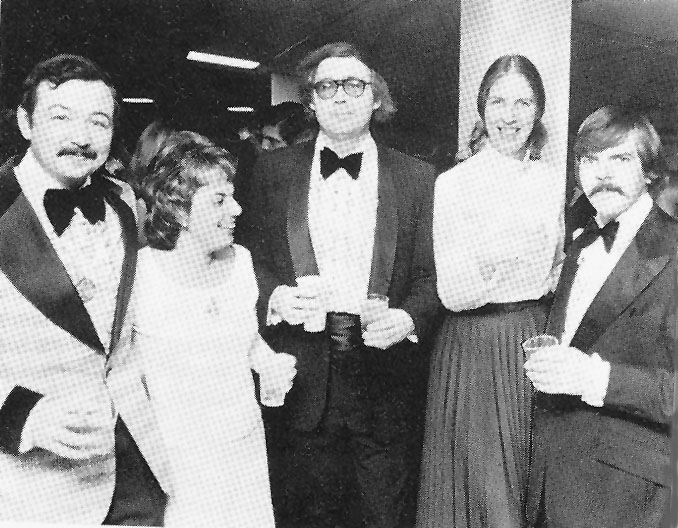
Here’s the caption for this photo in the November/December 1974 Tower Topics for the opening of the Richfield Coliseum:
RESPLENDENT in rented finery, these Beacon Journal luminaries turned out for the biggest social event in Northeastern Ohio (with the possible exception of Super Desk) to hobnob with the crowd at the grand opening of Nick Mileti's Coliseum in Richfield. Or maybe this IS the gra
 nd opening of Super Desk. Anyway, Tom and Kay Suchan, Mickey and Suzanne Porter, and dapper photographer Tom Marvin quickly muscled their way to the front of the drink line and pestered the photographer in hopes of making Betty Jaycox's society column. The photog, who shall remain nameless, was thoughtful enough to aim his box camera so as not to reveal Suchan's sneakers, Porter's pointy-toed cowboy boots, or Marvin's sandals. Afterwards, Frank Sinatra asked for Mickey's autograph. Porter told him to (expletive deleted) off. .
Click on the photo to enlarge.
[ The Coliseum at 2923 Streetsboro Road, Richfileld, OH, seated 20,000.. The same issue of Tower Topics had an article on the combination of the city and state desks.]
Tuesday, January 30, 2007
Challenging prescription changes
Retired printer Bob Abbott is hoping to challenge the change in health benefits for Beacon Journal retirees. Here's Bob's plea:
What I would like to do is find out if the other unions involved in this latest prescription card mess have agreements that are similar to the Typographical Union's. I suspect that they are but I have no way of finding out. What would be best if somebody (anybody) in the other crafts (Guild, Paperhandlers, Pressmen) would find out who is affected and if the agreements are similar.
Ultimately I'm hoping to be able to get together a slush fund of sorts to be able to have a lawyer go forward and challenge the company's position. I can't afford to do this by myself. There are at least several directions to go, according to counsel.
Without anybody making a commitment, if we can get enough people together we might be able at a cost of maybe $50 each or even less, to at least check this out. The putting together of this approach won't be easy to make sure everything is above board and transparent. But...what choice do we have other than rolling over and taking this crap.
So I guess I'm asking to send up a trial balloon to see if anybody is willing to start something like this. If there are enough people interested we can start organizing the process to proceed. While this will be time consuming initially we have to start somewhere, sometime. Feel free to give out my e-mail address and advise them to put in the subject line BJ Prescriptions so I won't dump their contact as spam.
Pleass send e-mail to Bob Abbott rabbott@mindspring.com
What I would like to do is find out if the other unions involved in this latest prescription card mess have agreements that are similar to the Typographical Union's. I suspect that they are but I have no way of finding out. What would be best if somebody (anybody) in the other crafts (Guild, Paperhandlers, Pressmen) would find out who is affected and if the agreements are similar.
Ultimately I'm hoping to be able to get together a slush fund of sorts to be able to have a lawyer go forward and challenge the company's position. I can't afford to do this by myself. There are at least several directions to go, according to counsel.
Without anybody making a commitment, if we can get enough people together we might be able at a cost of maybe $50 each or even less, to at least check this out. The putting together of this approach won't be easy to make sure everything is above board and transparent. But...what choice do we have other than rolling over and taking this crap.
So I guess I'm asking to send up a trial balloon to see if anybody is willing to start something like this. If there are enough people interested we can start organizing the process to proceed. While this will be time consuming initially we have to start somewhere, sometime. Feel free to give out my e-mail address and advise them to put in the subject line BJ Prescriptions so I won't dump their contact as spam.
Pleass send e-mail to Bob Abbott rabbott@mindspring.com
Monday, January 29, 2007
Newspaper in classroom: Flunking out
Teachers are using more online sources to discuss news-related issues in the classroom, with less use of newspapers -- particularly local daily publications -- according to a new survey from the Carnegie-Knight Task Force at Harvard University.
Findings of the survey were announced in an article by Joe Strupp in Editor & Publisher.
The findings, which are drawn from surveys of both newspaper executives and classroom teachers, could have sharp implications for the many Newspapers In Education (NIE) programs sponsored by newspapers nationwide, which many of the dailies use to help boost circulation.
"In America's schools, local newspapers are losing out to the Internet," said Alex S. Jones, director of the Shorenstein Center and a member of the Task Force. "We need to start rethinking how the NIE program can be most effective and how to bolster local media in the classroom."
The study notes that "teachers, as they have moved to the Internet, have switched from using hundreds of local news outlets to making use of a small number of national ones. Internet-based news in the classroom is dominated by the websites of a few top news organizations including CNN, PBS, and The New York Times. In fact, the classroom use of non-U.S. websites, such as BBC's, even exceeds the use of local TV or newspaper sites."
The survey polled 1,262 social studies, civics, and government teachers, who were asked about their use of news in the classroom, as well as 253 Newspapers-in-Education directors at daily papers.
See Strupp in E&P or
Full report : The 20-page report titled “The Internet and the Threat It Poses to Local Media” is a report: from the Carnegie-Knight Task Force on the Future of Journalism Education. It can be downloaded in PDF format.
Findings of the survey were announced in an article by Joe Strupp in Editor & Publisher.
The findings, which are drawn from surveys of both newspaper executives and classroom teachers, could have sharp implications for the many Newspapers In Education (NIE) programs sponsored by newspapers nationwide, which many of the dailies use to help boost circulation.
"In America's schools, local newspapers are losing out to the Internet," said Alex S. Jones, director of the Shorenstein Center and a member of the Task Force. "We need to start rethinking how the NIE program can be most effective and how to bolster local media in the classroom."
The study notes that "teachers, as they have moved to the Internet, have switched from using hundreds of local news outlets to making use of a small number of national ones. Internet-based news in the classroom is dominated by the websites of a few top news organizations including CNN, PBS, and The New York Times. In fact, the classroom use of non-U.S. websites, such as BBC's, even exceeds the use of local TV or newspaper sites."
The survey polled 1,262 social studies, civics, and government teachers, who were asked about their use of news in the classroom, as well as 253 Newspapers-in-Education directors at daily papers.
See Strupp in E&P or
Full report : The 20-page report titled “The Internet and the Threat It Poses to Local Media” is a report: from the Carnegie-Knight Task Force on the Future of Journalism Education. It can be downloaded in PDF format.
Sunday, January 28, 2007
Prison Break: the Akron connection
There always seems to be an Akron connection. The latest is revealed by Rich Heldenfels in the lead item of HeldenFiles on page A2 on the Sunday’s Beacon Journal.
The Akron connection comes in an episode of Prison Break on Fox at 8 p.m. on Monday. Karyn Usher, the writer producer, is a former Akron resident and daughter of Brian Usher, a Beacon Journal, reporter and columnist from 1975 to 1984 when he became press secretary to then-Gov. Richard Celeste. He currently operates his own public relations firm in Columbus.
His daughter was involved in film production in Cleveland before going to Hollywood.
St. Thomas Hospital is included in the episode. The hospital was a pioneer in the treatment of alcoholics thanks in Alcoholics Anonymous co-founder Dr. Bob and Sister Ignatia Gavin. The episode, however, was shot in the Dallas area.
“I don’t know how much it looks like the actual hospital,” Usher said.
Her father, incidentally was co-editor of Ohio Politics, with Alexander P. Lamis, an associate professor of political science at Case Western Reserve University in Cleveland. The book, first published in 1994 and revised in 2006, is a comprehensive survey of the state’s post–World War II politics. It is a collaborative effort by a team of journalists and political scientists,
The Akron connection comes in an episode of Prison Break on Fox at 8 p.m. on Monday. Karyn Usher, the writer producer, is a former Akron resident and daughter of Brian Usher, a Beacon Journal, reporter and columnist from 1975 to 1984 when he became press secretary to then-Gov. Richard Celeste. He currently operates his own public relations firm in Columbus.
His daughter was involved in film production in Cleveland before going to Hollywood.
St. Thomas Hospital is included in the episode. The hospital was a pioneer in the treatment of alcoholics thanks in Alcoholics Anonymous co-founder Dr. Bob and Sister Ignatia Gavin. The episode, however, was shot in the Dallas area.
“I don’t know how much it looks like the actual hospital,” Usher said.
Her father, incidentally was co-editor of Ohio Politics, with Alexander P. Lamis, an associate professor of political science at Case Western Reserve University in Cleveland. The book, first published in 1994 and revised in 2006, is a comprehensive survey of the state’s post–World War II politics. It is a collaborative effort by a team of journalists and political scientists,
Saturday, January 27, 2007
It's Proctor's newsroom
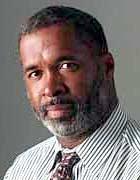
Glenn Proctor is a self-professed hard-ass, a man who makes no apologies for his tough-guy style and compares himself to the famed and infamous basketball coach Bobby Knight--he's about winning, not making anyone happy. And he was not about to conform to the genteel ways of  Richmond when he marched into the Times-Dispatch newsroom and staked his claim. "This is my newsroom," he told staffers.
Proctor, a former Beacon Journal staffer, is the subject of a 4,800 word (91 graphs) article by Lori Robertson in the December/January 2007 issue of American Journalism Reviow
Robertson, a senior editor for the magazine, says an aggressive management team with a top-down approach and a penchant for reader-friendly journalism has shaken things up at the once comfortable and traditional Richmond Times-Dispatch.
She writes:
In November, a year after Glenn Proctor took the helm of the Richmond Times-Dispatch as vice president and executive editor, he didn't so much appear the part of a Marine--bright fuchsia tie; gold stud earring in his left ear; soft-spoken demeanor. But once he got to talking about the changes he has made in the newsroom--and responding to some criticism of his actions--he sure sounded like it.
Proctor, who served six years in the Marines and is apt to remind people of that fact, is not the type of guy who takes no for an answer. When asked what change he wanted to make at the Virginia paper had provoked the most resistance, he scolds: "Read the bio. Resistance? Me? What resistance?"
No smirk accompanied that comment--not a hint of one. He wasn't kidding.
Proctor, 60, spent 10 years in editing positions at Newark's Star-Ledger, lastly as associate editor, and is the first Times-Dispatch executive editor to be hired from outside since the position was created in 1968. He's also the first top African American editor at a paper whose editorial page supported massive resistance, an effort in the 1950s to block the racial integration of public schools.
Proctor says there are staffers in his newsroom who are simply change averse. "There are a lot of people here--not a lot--but there are some people here that just don't like change. Don't like change. And they hate it, and they hate it, and they hate it, and they hate it, and they hate it, and they hate it. It's going to change anyway, because the industry is changing."
Staffers interviewed for this story say the paper needs to change--the sticking point is in what ways. Bill McKelway, a reporter on the metro staff, joined the Times-Dispatch's composing room 36 years ago and bluntly describes the paper as one that rarely in its history "reached beyond the mediocre." But McKelway is worried that today business interests may outweigh journalistic goals. "I have the greatest hopes that the paper's going to be much better than it was, and I think there's that possibility," he says. "But it's money, money, money."
[graphs skipped]
One of the big stories in the Times-Dispatch in 2006 was that of Elliott Yamin, a local boy who made it big thanks to the reality show "American Idol." (Yamin didn't win; he came in third.) And it's his appearances on the front page of the paper that most dramatically show how a capital city paper, once a gray lady of officialdom, has turned more to entertainment and features. Last year, Yamin stories ran on page one 13 times, seven of those in May.
The prominent play attracted criticism, Proctor says, but "people bought the paper." Months before his success on the show, Yamin was working in a drugstore. It was a local-kid-makes-good story, just like a special section the paper ran on Denny Hamlin, NASCAR's rookie of the year, who's from nearby Chesterfield County. "I believe it is imperative for us as the major media in this area to play up our local heroes," Proctor says, "whether they're entertainers, whether they're sports kids, whether they're NASCAR drivers, so that's what we're doing. Local news, local news is our way right now."
[graphs sklipped]
Last October, Proctor announced a long-anticipated reorganization that further defines the Times-Dispatch's local focus. Always a state paper, with 10 bureaus, the paper will pull staffers in from two of those but increase its coverage of 16 counties and four cities, including Richmond.
[graphs skipped]
Unlike many other papers, the Times-Dispatch has not experienced large buyout programs or layoffs. In some ways, this paper has been lucky, and [publisher Michael A.] Silvestri and Proctor were hoping for a little more credit for staving off staff reductions.
There was some applause for that when the reorganization was announced. But one reporter asked about morale, says Michael Martz, the union president, specifically mentioning that the paper was short-staffed. Martz recalls Proctor saying that he would not consider asking for more resources until he thought everybody was giving 80 to 100 percent. Proctor recalls something slightly different: "I said, 'Don't talk to me about hiring new people until all my editors can guarantee that every single person in here is giving us 80 to 100 percent performance.'.. That sounds equitable to me."
There is much more in the article. Click on the headline.
 Richmond when he marched into the Times-Dispatch newsroom and staked his claim. "This is my newsroom," he told staffers.
Proctor, a former Beacon Journal staffer, is the subject of a 4,800 word (91 graphs) article by Lori Robertson in the December/January 2007 issue of American Journalism Reviow
Robertson, a senior editor for the magazine, says an aggressive management team with a top-down approach and a penchant for reader-friendly journalism has shaken things up at the once comfortable and traditional Richmond Times-Dispatch.
She writes:
In November, a year after Glenn Proctor took the helm of the Richmond Times-Dispatch as vice president and executive editor, he didn't so much appear the part of a Marine--bright fuchsia tie; gold stud earring in his left ear; soft-spoken demeanor. But once he got to talking about the changes he has made in the newsroom--and responding to some criticism of his actions--he sure sounded like it.
Proctor, who served six years in the Marines and is apt to remind people of that fact, is not the type of guy who takes no for an answer. When asked what change he wanted to make at the Virginia paper had provoked the most resistance, he scolds: "Read the bio. Resistance? Me? What resistance?"
No smirk accompanied that comment--not a hint of one. He wasn't kidding.
Proctor, 60, spent 10 years in editing positions at Newark's Star-Ledger, lastly as associate editor, and is the first Times-Dispatch executive editor to be hired from outside since the position was created in 1968. He's also the first top African American editor at a paper whose editorial page supported massive resistance, an effort in the 1950s to block the racial integration of public schools.
Proctor says there are staffers in his newsroom who are simply change averse. "There are a lot of people here--not a lot--but there are some people here that just don't like change. Don't like change. And they hate it, and they hate it, and they hate it, and they hate it, and they hate it, and they hate it. It's going to change anyway, because the industry is changing."
Staffers interviewed for this story say the paper needs to change--the sticking point is in what ways. Bill McKelway, a reporter on the metro staff, joined the Times-Dispatch's composing room 36 years ago and bluntly describes the paper as one that rarely in its history "reached beyond the mediocre." But McKelway is worried that today business interests may outweigh journalistic goals. "I have the greatest hopes that the paper's going to be much better than it was, and I think there's that possibility," he says. "But it's money, money, money."
[graphs skipped]
One of the big stories in the Times-Dispatch in 2006 was that of Elliott Yamin, a local boy who made it big thanks to the reality show "American Idol." (Yamin didn't win; he came in third.) And it's his appearances on the front page of the paper that most dramatically show how a capital city paper, once a gray lady of officialdom, has turned more to entertainment and features. Last year, Yamin stories ran on page one 13 times, seven of those in May.
The prominent play attracted criticism, Proctor says, but "people bought the paper." Months before his success on the show, Yamin was working in a drugstore. It was a local-kid-makes-good story, just like a special section the paper ran on Denny Hamlin, NASCAR's rookie of the year, who's from nearby Chesterfield County. "I believe it is imperative for us as the major media in this area to play up our local heroes," Proctor says, "whether they're entertainers, whether they're sports kids, whether they're NASCAR drivers, so that's what we're doing. Local news, local news is our way right now."
[graphs sklipped]
Last October, Proctor announced a long-anticipated reorganization that further defines the Times-Dispatch's local focus. Always a state paper, with 10 bureaus, the paper will pull staffers in from two of those but increase its coverage of 16 counties and four cities, including Richmond.
[graphs skipped]
Unlike many other papers, the Times-Dispatch has not experienced large buyout programs or layoffs. In some ways, this paper has been lucky, and [publisher Michael A.] Silvestri and Proctor were hoping for a little more credit for staving off staff reductions.
There was some applause for that when the reorganization was announced. But one reporter asked about morale, says Michael Martz, the union president, specifically mentioning that the paper was short-staffed. Martz recalls Proctor saying that he would not consider asking for more resources until he thought everybody was giving 80 to 100 percent. Proctor recalls something slightly different: "I said, 'Don't talk to me about hiring new people until all my editors can guarantee that every single person in here is giving us 80 to 100 percent performance.'.. That sounds equitable to me."
There is much more in the article. Click on the headline.
Recognize this word play genius?
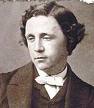 Recognize this gentleman? He was another crazy guy genius with a great facility at word play. Born on this date in 1832, he was an English author, mathematician, Anglican clergyman, and photographer. His middle name was Lutwidge.
Click on the headline and you will see what you get. Or we might just as well have said “click on the headline and you will get what you see.”
Friday, January 26, 2007
Report from Minneapolis
Here’s the latest on the Village Voice shuffle by Minneapolis Star Tribune reporter Deborah Caulfield Rybak:
City Pages, the Twin Cities' largest alternative newspaper, is a weekly, but change at the top of its masthead took only days.
Editor Steve Perry left his office early last week for a meeting with an executive from Village Voice Media, the company created by last year's merger between Phoenix-based New Times and the Village Voice chain. After that, the last time staff saw him last week was removing some items from his Minneapolis office.
Late Monday afternoon, Perry announced his resignation next month after 13 years (over two terms) as editor. By noon Tuesday, Village Voice Media had announced his successor, Kevin Hoffman, now managing editor at its Cleveland Scene weekly newspaper.
The whirlwind turn of events has left the staff of the award-winning weekly shellshocked. Yet change is the new norm in the Twin Cities, which recently has seen media properties and staff flipped and discarded like a Texas Hold 'Em marathon.
[skipping a few graphs]
Andy Van De Voorde of Village Voice Media called Hoffman "a writer and editor with experience in hard news" who would help City Pages do more investigative reporting and narrative writing -- two New Times hallmarks.
The New Times/Village Voice merger created a chain of 17 alternative weeklies. City Pages, with a weekly circulation of 117,000, according to figures from the Audit Bureau of Circulations, is one of its larger properties.
New editor Hoffman first visited the Twin Cities last weekend and said he was "impressed with the nature and the people." Hoffman, 30, who joined the Cleveland paper as a writer in 2002 and was promoted to managing editor in 2005, said he was drawn to the City Pages job because he and his wife, an attorney, were looking for a place to live that wasn't too far from her family in Michigan.
Click on the headline to read more
City Pages, the Twin Cities' largest alternative newspaper, is a weekly, but change at the top of its masthead took only days.
Editor Steve Perry left his office early last week for a meeting with an executive from Village Voice Media, the company created by last year's merger between Phoenix-based New Times and the Village Voice chain. After that, the last time staff saw him last week was removing some items from his Minneapolis office.
Late Monday afternoon, Perry announced his resignation next month after 13 years (over two terms) as editor. By noon Tuesday, Village Voice Media had announced his successor, Kevin Hoffman, now managing editor at its Cleveland Scene weekly newspaper.
The whirlwind turn of events has left the staff of the award-winning weekly shellshocked. Yet change is the new norm in the Twin Cities, which recently has seen media properties and staff flipped and discarded like a Texas Hold 'Em marathon.
[skipping a few graphs]
Andy Van De Voorde of Village Voice Media called Hoffman "a writer and editor with experience in hard news" who would help City Pages do more investigative reporting and narrative writing -- two New Times hallmarks.
The New Times/Village Voice merger created a chain of 17 alternative weeklies. City Pages, with a weekly circulation of 117,000, according to figures from the Audit Bureau of Circulations, is one of its larger properties.
New editor Hoffman first visited the Twin Cities last weekend and said he was "impressed with the nature and the people." Hoffman, 30, who joined the Cleveland paper as a writer in 2002 and was promoted to managing editor in 2005, said he was drawn to the City Pages job because he and his wife, an attorney, were looking for a place to live that wasn't too far from her family in Michigan.
Click on the headline to read more
How talk shows look at news
How do the TV talk shows look at the news? The Project for Excellence in Journalism this month began posting a weekly index of news each Tuesday. PEJ has now added a talk show index which will be posted each Friday. We have added the first ones to our PEJ Index page on the web site. The reports show which news items are getting the most coverage.
Click on the headline to see the reports.
Click on the headline to see the reports.
Kerry Clawson in BJ promo ad

The Beacon Journal is keeping its best faces out front in what is apparently a new series of promotion ads titled IN PRINT ●ONLINE Informative.
Here’s one that appeared on page E4 on Monday:
“As the Beacon Journal’s Mad Shopper and retail business writer, it’s my job to keep readers informed about everything from the opening of the latest clothing store to the sale of Northeast Ohio grocery stores – happenings that affect the habits of Akron-area shoppers on a daily basis. Readers also can count on plenty of seasonal shopping coverage from me, including tips on off-the-beaten-path stores, as well as information on consumer spending habits.”
Kerry Clawson
[Click on the ad to enlarge it for a better view]
Thursday, January 25, 2007
Philip Meyer awards announced
Three major investigative reports that used social science research methods as key parts of their probes were named today as winners of the Philip Meyer Awards.
The Wall Street Journal won top honors for its story on the backdating of stock options. Gannett News Service was recognized for its analysis that rated hospitals on care for heart-attack patients, and a Philadelphia Inquirer investigation of a cheating scandal in New Jersey schools completed the winners list.
The awards are in honor of Philip Meyer, the Knight Chair in Journalism at the University of N orth Carolina at Chapel Hill. Meyer was the Washington correspondent of the Beacon Journal 1962-1966. He is the author of Precision Journalism, the seminal 1973 book (and subsequent editions) that encouraged journalists to incorporate social science methods in the pursuit of better journalism.
Philip Meyer's work in precision journalism established a new and ongoing trend-the use by reporters of social science research techniques to increase the depth and accuracy of major stories. Meyer shows journalists and students of journalism how to use new technology to analyze data and provide more precise information in easier-to-understand forms.
The Meyer Awards are administered by the National Institute for Computer-Assisted Reporting (a joint program of Investigative Reporters and Editors and the Missouri School of Journalism), and the Knight Chair in Journalism at the Walter Cronkite School of Journalism and Mass Communication at Arizona State University.
The awards recognize the best uses of social science methods in journalism. The awards will be presented on March 9 in Cleveland at the 2007 CAR Conference, sponsored by Investigative Reporters and Editors. The first-place winner will receive $500; second and third will receive $300 and $200.
Precision Journalism indeed may have been spawned by an assignment Meyer and Bob Kotzbauer got from Ben Maidenburg at the BJ in the Fall of 1962. Meyer explains it all in a chapter of his book.
Click on the headline to read an excerpt from Chapter 4 of Precision Genealogy.
The Wall Street Journal won top honors for its story on the backdating of stock options. Gannett News Service was recognized for its analysis that rated hospitals on care for heart-attack patients, and a Philadelphia Inquirer investigation of a cheating scandal in New Jersey schools completed the winners list.
The awards are in honor of Philip Meyer, the Knight Chair in Journalism at the University of N
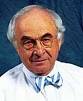 orth Carolina at Chapel Hill. Meyer was the Washington correspondent of the Beacon Journal 1962-1966. He is the author of Precision Journalism, the seminal 1973 book (and subsequent editions) that encouraged journalists to incorporate social science methods in the pursuit of better journalism.
Philip Meyer's work in precision journalism established a new and ongoing trend-the use by reporters of social science research techniques to increase the depth and accuracy of major stories. Meyer shows journalists and students of journalism how to use new technology to analyze data and provide more precise information in easier-to-understand forms.
The Meyer Awards are administered by the National Institute for Computer-Assisted Reporting (a joint program of Investigative Reporters and Editors and the Missouri School of Journalism), and the Knight Chair in Journalism at the Walter Cronkite School of Journalism and Mass Communication at Arizona State University.
The awards recognize the best uses of social science methods in journalism. The awards will be presented on March 9 in Cleveland at the 2007 CAR Conference, sponsored by Investigative Reporters and Editors. The first-place winner will receive $500; second and third will receive $300 and $200.
Precision Journalism indeed may have been spawned by an assignment Meyer and Bob Kotzbauer got from Ben Maidenburg at the BJ in the Fall of 1962. Meyer explains it all in a chapter of his book.
Click on the headline to read an excerpt from Chapter 4 of Precision Genealogy.
Wednesday, January 24, 2007
Guild e-mail to newsrooom staff
I just wanted to send a note to brief everyone on a few newsroom issues.
The matter of student and regular correspondents being used after a reduction in force is headed for arbitration. No date set.
A recent story by Gina Mace on the Falls Muni Court moving to Stow has been added to a pending grievance.
A grievance has also been filed on the matter of the features dept hiring an outside correspondent to write a wine column to replace one previously done by Tricia Colliane. The opening was not posted and I'm sure you all saw that Mike Needs is the replacement columnist.
Paperwork has also been filed in the matter of artists being forced to do page layout.
Friday, Feb 9 is the date set for the next meeting with the company over the ethics policy. Yuvonne Bruce, Phil Trexler and Jim Mackinnon will join me on the negotiating team for this issue. Grievances on the above matters will be taken up on this date as well.
Several of you have approached me concerning W-2 forms. Guild dues was not reported correctly and the company has sent letters with the correct amount. Corrected W-2 forms will not be issued. I received the following from Executive Secretary Mark Davis after questing whether the company was obligated to furnish a corrected tax form. While it is incumbent upon an employer to provide a correct W-2, the reporting of union dues paid by an employee on a W-2 is not mandatory and as such I believe it is not a material mistake which would require the Employer to send out a W-2C?(corrected version). The letter of correction should be sufficent to clear up any dispute with the IRS
Those who file the long form should keep the letter for your records.
There will be an executive board and general membership meeting 7 pm Tuesday, Feb 27 at the Printers Club.
Bob DeMay
The matter of student and regular correspondents being used after a reduction in force is headed for arbitration. No date set.
A recent story by Gina Mace on the Falls Muni Court moving to Stow has been added to a pending grievance.
A grievance has also been filed on the matter of the features dept hiring an outside correspondent to write a wine column to replace one previously done by Tricia Colliane. The opening was not posted and I'm sure you all saw that Mike Needs is the replacement columnist.
Paperwork has also been filed in the matter of artists being forced to do page layout.
Friday, Feb 9 is the date set for the next meeting with the company over the ethics policy. Yuvonne Bruce, Phil Trexler and Jim Mackinnon will join me on the negotiating team for this issue. Grievances on the above matters will be taken up on this date as well.
Several of you have approached me concerning W-2 forms. Guild dues was not reported correctly and the company has sent letters with the correct amount. Corrected W-2 forms will not be issued. I received the following from Executive Secretary Mark Davis after questing whether the company was obligated to furnish a corrected tax form. While it is incumbent upon an employer to provide a correct W-2, the reporting of union dues paid by an employee on a W-2 is not mandatory and as such I believe it is not a material mistake which would require the Employer to send out a W-2C?(corrected version). The letter of correction should be sufficent to clear up any dispute with the IRS
Those who file the long form should keep the letter for your records.
There will be an executive board and general membership meeting 7 pm Tuesday, Feb 27 at the Printers Club.
Bob DeMay
Note from Regina White
Dave and I went to a meeting yesterday to check on a different Medicare plan than the one the Beacon is offering. And, we were informed that most doctor's offices will not accept the Medicare Advantage Plans upfront. In other words, the doctor's want payment and then we get to submit the invoices to Medicare. I just thought you all might find that interesting.
--Gina White
--Gina White
Connie Schultz returns to PD
Connie Schultz, the Pulitzer Prize-winning columnist, returned to her desk in The Plain Dealer's newsroom Monday from a leave of absence to devote herself to the campaign of her husband, Sherrod Brown, Ohio’s new Democratic senator.
The couple hope to be together in Ohio most weekends. They have little interest in the Washington social scene. Nonetheless, the maintenance worker's daughter from Ashtabula may someti mes find herself having dinner with the power elite and hanging out with celebrities.
Schultz's dual roles of journalist and senator's wife have prompted some to wonder whether that automatically equals a conflict of interest.
"I doubt this would even come up if the roles were reversed," said Brown, 54.
Schultz, he said, is her own person and abides by the highest professional standards.
Doug Clifton, editor of The Plain Dealer, pointed out that Schultz doesn't have a reporting beat, which would be more cause for concern. Nor does her work appear on the Forum page. He does not plan to police the content of her columns. The two have already agreed that it would be inappropriate for her to cover topics when her husband is debating them on the floor or voting on relevant legislation. Beyond that, it's business as usual.
Her first column will appear Friday. She has no idea what the subject will be. No doubt, whatever story she tells, it will please her fans and provoke her critics.
Her return strangely was announced in Monday’s PD as a “Special to the Plain Dealer” by Laura Taxel, a freelance writer in Cleveland Hieghts.
The couple hope to be together in Ohio most weekends. They have little interest in the Washington social scene. Nonetheless, the maintenance worker's daughter from Ashtabula may someti
 mes find herself having dinner with the power elite and hanging out with celebrities.
Schultz's dual roles of journalist and senator's wife have prompted some to wonder whether that automatically equals a conflict of interest.
"I doubt this would even come up if the roles were reversed," said Brown, 54.
Schultz, he said, is her own person and abides by the highest professional standards.
Doug Clifton, editor of The Plain Dealer, pointed out that Schultz doesn't have a reporting beat, which would be more cause for concern. Nor does her work appear on the Forum page. He does not plan to police the content of her columns. The two have already agreed that it would be inappropriate for her to cover topics when her husband is debating them on the floor or voting on relevant legislation. Beyond that, it's business as usual.
Her first column will appear Friday. She has no idea what the subject will be. No doubt, whatever story she tells, it will please her fans and provoke her critics.
Her return strangely was announced in Monday’s PD as a “Special to the Plain Dealer” by Laura Taxel, a freelance writer in Cleveland Hieghts.
Cleveland Scene editor off to Twin Cities
Kevin Hoffman will be the new editor-in-chief of Minneapolis/St. Paul City Pages, Village Voice Media announced today.
Hoffman, presently the managing editor of VVM's Cleveland Scene, will take over from departing City Pages editor Steve Perry early next month. Perry announced yesterday that he is leaving the paper to pursue other opportunities.
A 1998 graduate of Washington College in Chestertown, Maryland, Hoffman worked for the Associated Press and the daily Wilkes-Barre Times Leader before receiving his master's degree from the Columbia University Graduate School of Journalism in May 2001. He briefly worked at the weekly Cleveland Free Times before being hired as a staff writer at Scene in January 2002. He was promoted to the managing editor position at Scene three years later.
Hoffman, 30, will be in Minneapolis next week to meet City Pages staff. He is married to Erin Hoffman, an attorney specializing in constitutional law.
[Source: Village Voice Media press release]
Hoffman, presently the managing editor of VVM's Cleveland Scene, will take over from departing City Pages editor Steve Perry early next month. Perry announced yesterday that he is leaving the paper to pursue other opportunities.
A 1998 graduate of Washington College in Chestertown, Maryland, Hoffman worked for the Associated Press and the daily Wilkes-Barre Times Leader before receiving his master's degree from the Columbia University Graduate School of Journalism in May 2001. He briefly worked at the weekly Cleveland Free Times before being hired as a staff writer at Scene in January 2002. He was promoted to the managing editor position at Scene three years later.
Hoffman, 30, will be in Minneapolis next week to meet City Pages staff. He is married to Erin Hoffman, an attorney specializing in constitutional law.
[Source: Village Voice Media press release]
Needs wine column makes debut
Mike Needs made his debut today as the Beacon Journal’s new wine columnist in the last column of page E1 just above the QUICK & EASY recipe for wasabi-crusted salmon.
The headline for his first column:
New columnist,
a familiar face,
sips cheap wine
Denies being a snob;
drinks vino with a sub
Needs chose Crane Lake Shiraz, $3.99 at Acme, for his first treatise. He admits he knows nothing about wine, is not a connoisseur and asks readers to join him in learning more.
Needs resigned as design editor voluntarily during the layoff debacle at the BJ. He was public editor before that.
Click on the headline to read the full column and then leave your comment below.
The headline for his first column:
New columnist,
a familiar face,
sips cheap wine
Denies being a snob;
drinks vino with a sub
Needs chose Crane Lake Shiraz, $3.99 at Acme, for his first treatise. He admits he knows nothing about wine, is not a connoisseur and asks readers to join him in learning more.
Needs resigned as design editor voluntarily during the layoff debacle at the BJ. He was public editor before that.
Click on the headline to read the full column and then leave your comment below.
Tuesday, January 23, 2007
Goodbye Gutenberg: News in digital age
The Nieman Foundation for Journalism at Harvard University has published Goodbye Gutenberg, an issue of Nieman Reports devoted to newspapers and journalism in the digital age.
Among the articles is one by William Dietrich who writes about “Vanishing Jobs at Newspapers.”
Dietrich, a 1988 Nieman Fellow, an author and Sunday magazine writer with The Seattle Times, writes:
Employment news at newspapers is bad, but just how bad depends on who's counting. Between 1992 and 2002, the number of full-time editorial employees at U.S. dailies fell 8,438, or almost 13 percent, by the estimate of Indiana University professor David H. Weaver, a coauthor of "The American Journalist in the 21st Century." The Project for Excellence in Journalism cites a smaller total of newsgathering and editing jobs—a peak of 56,400 in 2000—that had fallen to 52,000 by 2006, with most of the losses at the bigger papers. The American Society of Newspaper Editors has newsroom employment nationally rising from about 42,000 in 1977 to today's 52,000, a 19 percent increase in 29 years, even after the recent cuts (compared to a 36 percent increase in U.S. population in the same time frame).
Editorial layoffs are making news: 45 jobs at The New York Times, 75 at The Philadelphia Inquirer, and 85 at the Los Angeles Times in 2005; and this year, 50 at the San Jose Mercury News, 111 at The Dallas Morning News, and 80 at The Washington Post, to cite some examples.
Another piece by Dietrich is titled “Are Journalists the 21st Century's Buggy Whip Makers?”
He writes that newspapers might vanish, too, if they continue to “dream of past dominance while taking their product and trying to fit it into their competitor's terrain.”
Summarizing Dietrich:
When anyone can record and post information—the commodity for which reporters, editors, producers and photographers are paid—journalists are in danger of becoming a luxury society no longer can afford.
The direct cause of shrinking news staffs is a loss of advertising and circulation to new digital competition. But my questions—and they are still only questions—are whether recent layoffs because of loss of revenue are only part of the technological earthquake. Will the ubiquity of information make traditional journalism less valuable or even obsolete?
People used to pay newspapers to gather information that was often expensive or tedious to find. But with the Internet, we have lost our monopoly on information. Yes, newspapers have numerous advantages, but so did horses. They were quieter than cars, less likely to get stuck, could be fueled in a field, and didn't depreciate as quickly. But have you commuted by horseback lately?
But the on-the-ground newspaper reporter—whose purpose is to fulfill an essential function of our democracy not just by disseminating information but also by analyzing it, detecting patterns, spotting trends, and increasing societal understanding—is being starved of resources. Lifetime security is long gone. Travel budgets are disappearing. Overseas bureaus are closed. The most veteran and knowledgeable reporters—expensive to keep on board—are being encouraged to leave through buyouts and cutbacks.
Despite this depletion of resources, the need to "make sense" will not go away. Those who are adept at being incisive and eloquent
Newspaper journalism has a strong case to make. At its best, it offers a combination of perspective, authority, penetration, accuracy, comprehensiveness, brevity and ease of use that other media can't match. And newspapers offer something the Web can never really duplicate—the serendipitous discovery of an intriguing article or a remarkable picture, an eye-opening cartoon or an explanatory graphic, all in the process of just turning the page.
Click on the headline to see other articles in “Goodbye Gutenberg”
Among the articles is one by William Dietrich who writes about “Vanishing Jobs at Newspapers.”
Dietrich, a 1988 Nieman Fellow, an author and Sunday magazine writer with The Seattle Times, writes:
Employment news at newspapers is bad, but just how bad depends on who's counting. Between 1992 and 2002, the number of full-time editorial employees at U.S. dailies fell 8,438, or almost 13 percent, by the estimate of Indiana University professor David H. Weaver, a coauthor of
 "The American Journalist in the 21st Century." The Project for Excellence in Journalism cites a smaller total of newsgathering and editing jobs—a peak of 56,400 in 2000—that had fallen to 52,000 by 2006, with most of the losses at the bigger papers. The American Society of Newspaper Editors has newsroom employment nationally rising from about 42,000 in 1977 to today's 52,000, a 19 percent increase in 29 years, even after the recent cuts (compared to a 36 percent increase in U.S. population in the same time frame).
Editorial layoffs are making news: 45 jobs at The New York Times, 75 at The Philadelphia Inquirer, and 85 at the Los Angeles Times in 2005; and this year, 50 at the San Jose Mercury News, 111 at The Dallas Morning News, and 80 at The Washington Post, to cite some examples.
Another piece by Dietrich is titled “Are Journalists the 21st Century's Buggy Whip Makers?”
He writes that newspapers might vanish, too, if they continue to “dream of past dominance while taking their product and trying to fit it into their competitor's terrain.”
Summarizing Dietrich:
When anyone can record and post information—the commodity for which reporters, editors, producers and photographers are paid—journalists are in danger of becoming a luxury society no longer can afford.
The direct cause of shrinking news staffs is a loss of advertising and circulation to new digital competition. But my questions—and they are still only questions—are whether recent layoffs because of loss of revenue are only part of the technological earthquake. Will the ubiquity of information make traditional journalism less valuable or even obsolete?
People used to pay newspapers to gather information that was often expensive or tedious to find. But with the Internet, we have lost our monopoly on information. Yes, newspapers have numerous advantages, but so did horses. They were quieter than cars, less likely to get stuck, could be fueled in a field, and didn't depreciate as quickly. But have you commuted by horseback lately?
But the on-the-ground newspaper reporter—whose purpose is to fulfill an essential function of our democracy not just by disseminating information but also by analyzing it, detecting patterns, spotting trends, and increasing societal understanding—is being starved of resources. Lifetime security is long gone. Travel budgets are disappearing. Overseas bureaus are closed. The most veteran and knowledgeable reporters—expensive to keep on board—are being encouraged to leave through buyouts and cutbacks.
Despite this depletion of resources, the need to "make sense" will not go away. Those who are adept at being incisive and eloquent
Newspaper journalism has a strong case to make. At its best, it offers a combination of perspective, authority, penetration, accuracy, comprehensiveness, brevity and ease of use that other media can't match. And newspapers offer something the Web can never really duplicate—the serendipitous discovery of an intriguing article or a remarkable picture, an eye-opening cartoon or an explanatory graphic, all in the process of just turning the page.
Click on the headline to see other articles in “Goodbye Gutenberg”
Monday, January 22, 2007
Black to the rescue in Seattle?
Could David Black save the Seattle Post-Intelligencer?
With a decision looming in four months that might spell the beginning of the end for the smaller of Seattle's two daily newspapers, some speculate Black could ride to the Post-Intelligencer's rescue.
He kept an endangered daily alive before under similar circumstances, they note, in Honolulu.
Liz Brown, administrative officer for the Pacific Northwest Newspaper Guild, said she mentioned the possibility to Don Kendall, who heads Black Press' new King County operations, at a meeting last month.
"I told him, 'You could save the day again,' " said Brown, whose union represents workers at both Seattle papers.
But Kendall said he's never discussed buying or printing the P-I with Black. What's more, he added, Seattle isn't Honolulu.
Publishing the P-I would require a huge investment on Black's part, not just in equipment but in people, said John Morton, a leading national newspaper analyst.
"It would be a very daunting prospect," he said.
Click on the headlne to read the Seattle Times story by Eric Pryne
With a decision looming in four months that might spell the beginning of the end for the smaller of Seattle's two daily newspapers, some speculate Black could ride to the Post-Intelligencer's rescue.
He kept an endangered daily alive before under similar circumstances, they note, in Honolulu.
Liz Brown, administrative officer for the Pacific Northwest Newspaper Guild, said she mentioned the possibility to Don Kendall, who heads Black Press' new King County operations, at a meeting last month.
"I told him, 'You could save the day again,' " said Brown, whose union represents workers at both Seattle papers.
But Kendall said he's never discussed buying or printing the P-I with Black. What's more, he added, Seattle isn't Honolulu.
Publishing the P-I would require a huge investment on Black's part, not just in equipment but in people, said John Morton, a leading national newspaper analyst.
"It would be a very daunting prospect," he said.
Click on the headlne to read the Seattle Times story by Eric Pryne
Bob Pell Sr., Jr. and III
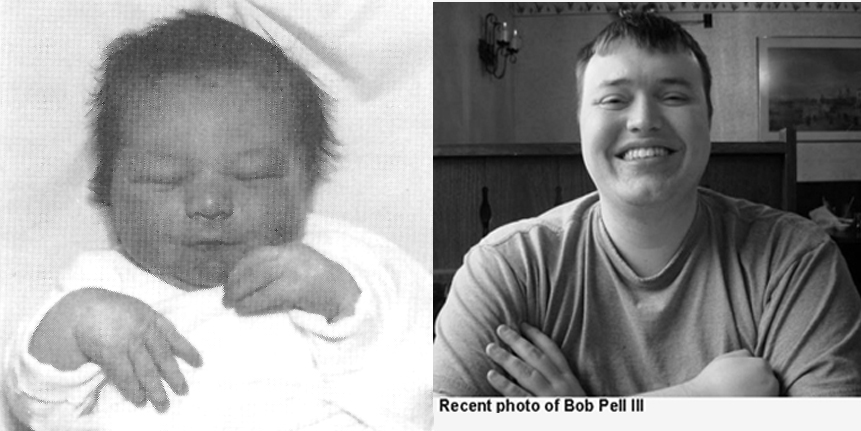 Crying out for an update is this baby photo in the January / February 1982 issue of Tower Topics announcing the birth on January 15 of Robert R. Pell III, son of Robert Pell II.
Robert III was 25 years old on January 15 this year. He graduated from Wadsworth High School in 2000 and attended the University of Akron Wayne County Branch. He is now with the Bob Evans Restaurant.
The trio of Bob Pells is Bob Pell Sr. born December 7, 1928, Bob Pell Jr. born May 27, 1952 and Bob Pell III born January 15, 1982. All three live in Wadsworth.
Grandmother, Peggy, is now in a nursing home and is on antibiotics for recently developed pneumonia. I am sure your prayers would be appreciated.
Click on the photos to enlarge them for a better view.
Note from Craig Wilson
Dear Friends and Family,
I welcome the opportunity to be back home to enter a new phase of medical care. I know I will be a lot more comfortable with the love and attention of Elizabeth, Dawn and Andrea and the opportunity to visit with friends and neighbors.
We are doing this with the guidance of the Visiting Nurse Hospice program of Summit County. I will remain home as long as possible. The care will be designed to keep me as free of pain as possible, however curative efforts will be discontinued. There is no point in laying around the hospital for a long time on efforts that cannot succeed anyway.
We would welcome visitors any day 1-5 PM but please call first so we can have one or two visitors at most at a time. If those times do not work into your schedule please call and we can make other arrangements.
Please do not bring flowers or gifts, we have an overabundance. I cannot see greeting cards but welcome letters from you the family can read to me. Your visit or phone call is much more important to me than anything else. I tire easily and may have to cut visits short. I hope to spend days in the living room and have comfortable chairs for guests. If you have interesting nostalgia about the Beacon Journal, the city of Barberton, etc. I would love to discuss it with you.
I have had a very exciting life with my job and contacts, I have no regrets and a lot of good memories.
Craig Wilson
I welcome the opportunity to be back home to enter a new phase of medical care. I know I will be a lot more comfortable with the love and attention of Elizabeth, Dawn and Andrea and the opportunity to visit with friends and neighbors.
We are doing this with the guidance of the Visiting Nurse Hospice program of Summit County. I will remain home as long as possible. The care will be designed to keep me as free of pain as possible, however curative efforts will be discontinued. There is no point in laying around the hospital for a long time on efforts that cannot succeed anyway.
We would welcome visitors any day 1-5 PM but please call first so we can have one or two visitors at most at a time. If those times do not work into your schedule please call and we can make other arrangements.
Please do not bring flowers or gifts, we have an overabundance. I cannot see greeting cards but welcome letters from you the family can read to me. Your visit or phone call is much more important to me than anything else. I tire easily and may have to cut visits short. I hope to spend days in the living room and have comfortable chairs for guests. If you have interesting nostalgia about the Beacon Journal, the city of Barberton, etc. I would love to discuss it with you.
I have had a very exciting life with my job and contacts, I have no regrets and a lot of good memories.
Craig Wilson
Subscribe to:
Posts (Atom)
