Tuesday, January 02, 2007
Newspaper shares down 20 per cent
The shares of publicly held publishing stocks in the last two years lost nearly $13.5 billion in value, or 20.5% of their market capitalization.
That’s the report from the blog of Alan D. Mutter, former city editor of the Chicago Sun-Times (1984) who became the N\o. 2 editor of the San Francisco Chronicle before he left the business in 1988.
The drop came at the same time the Dow Jones industrial average soared to an all-time high and other market indicators gained by healthy double-digit percentages.
Of the 12 publicly held newspaper stocks traded in 2004 that remain with us today, only the shares of Scripps have advanced. Scripps’ 5.4% gain contrasts with the 15.6% advance in the Dow industrials in the same period.
Scripps shares are going in a different direction from the rest of the newspaper industry, because the company has been moving aggressively to build its cable TV, broadcasting and online holdings. With only about a third of Scripps revenues coming from the newspaper business, it probably shouldn’t even count as a publishing company any more.
Although the shares of Dow Jones, Gannett and Tribune gained in 2006, those companies and the rest of the industry have been in negative territory since 2004. The biggest loser, in the last two years, by far, was Journal Register Co., whose shares plunged 61.8%. The Washington Post Co. suffered the smallest decline at –1.9%.
Institutional investors for the last two years have pressured newspaper companies – including Dow Jones, Knight Ridder, the New York Times and Tribune – to put themselves up for sale in hopes of realizing greater value than the stock market accorded their shares.
Click on the headline to go to Mutter’s blog.


Monday, January 01, 2007
Deaths hit 3,000: How father learns
The U.S. military death toll in Iraq reached 3,000 on Sunday, with the reported deaths of two more Americans. It came on the day after the execution of Saddam Hussein.
More Americans have died this month -- at least 110 -- than in any month since Nove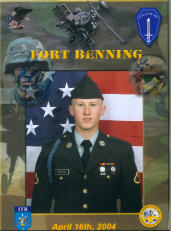 mber 2004. Spc. Dustin R. Donica, 22, of Spring, Texas, was killed Thursday by small arms fire in Baghdad, the Defense Department said Sunday, making him the 3000th to die.
Donica was assigned to the 3rd Battalion, 509th Parachute Infantry Regiment, 4th Airborne Brigade Combat Team, 25th Infantry Division.
David Donica said he learned his son's death was the 3,000th for the U.S. military in Iraq after logging on to the Internet, not long after declining to be interviewed by reporters who had come to the family's home.
"We had no idea why we were getting, within an hour almost, eight or nine people at the door," he said later Sunday. "That was a surprise to us because none of them mentioned why they were there. Perhaps, they were embarrassed. One guy was standing there shaking like a leaf."
Dustin Donica's unit was conducting counter-insurgency operations in Karmah, in Iraq's al-Anbar province, when he was fatally struck by small-arms fire from enemy forces, an Army spokesman said.
"They are trying to create a safe and secure environment for the people of Iraq (and are) working with Iraqi security forces to get them able to take over the security mission," said Maj. Kirk Gohlke.
Reached later by phone, Donica declined to talk about his son, saying, "That would be hard for me to do."
But in an e-mail sent to news organizations, he said, "Dustin had a tremendous sense of duty, both to his family, and his country. He will be missed by his family, and all those that knew him."
Born and raised in Houston, Dustin Donica was a 2002 graduate of Klein High School. He enlisted in 2003 after a stint at the University of Texas at Austin. He completed basic training at Fort Benning, Ga., where he received the coveted airborne wings of an Army paratrooper.
The photo from the Houston Chronicle is a courtesy photo from Klein High School where he was a 2002 graduate. Fort Benning (GA) is the Infantry Center where paratroopes receive their training..
A detailed breakdown on casualties can be found in Editor & Publisher
The story quoting Donica’s father is by Mike Glenn in the Houston Chronicle.
There were 130 Ohioans killed.
More Americans have died this month -- at least 110 -- than in any month since Nove
 mber 2004. Spc. Dustin R. Donica, 22, of Spring, Texas, was killed Thursday by small arms fire in Baghdad, the Defense Department said Sunday, making him the 3000th to die.
Donica was assigned to the 3rd Battalion, 509th Parachute Infantry Regiment, 4th Airborne Brigade Combat Team, 25th Infantry Division.
David Donica said he learned his son's death was the 3,000th for the U.S. military in Iraq after logging on to the Internet, not long after declining to be interviewed by reporters who had come to the family's home.
"We had no idea why we were getting, within an hour almost, eight or nine people at the door," he said later Sunday. "That was a surprise to us because none of them mentioned why they were there. Perhaps, they were embarrassed. One guy was standing there shaking like a leaf."
Dustin Donica's unit was conducting counter-insurgency operations in Karmah, in Iraq's al-Anbar province, when he was fatally struck by small-arms fire from enemy forces, an Army spokesman said.
"They are trying to create a safe and secure environment for the people of Iraq (and are) working with Iraqi security forces to get them able to take over the security mission," said Maj. Kirk Gohlke.
Reached later by phone, Donica declined to talk about his son, saying, "That would be hard for me to do."
But in an e-mail sent to news organizations, he said, "Dustin had a tremendous sense of duty, both to his family, and his country. He will be missed by his family, and all those that knew him."
Born and raised in Houston, Dustin Donica was a 2002 graduate of Klein High School. He enlisted in 2003 after a stint at the University of Texas at Austin. He completed basic training at Fort Benning, Ga., where he received the coveted airborne wings of an Army paratrooper.
The photo from the Houston Chronicle is a courtesy photo from Klein High School where he was a 2002 graduate. Fort Benning (GA) is the Infantry Center where paratroopes receive their training..
A detailed breakdown on casualties can be found in Editor & Publisher
The story quoting Donica’s father is by Mike Glenn in the Houston Chronicle.
There were 130 Ohioans killed.
Sunday, December 31, 2006
Giffels takes leave to write memoir
Beacon Journal columnist David Giffels announced today that he is taking a leave of absence to write his memoir. The book is being publlished by William Morrow/HarperCollins and is scheduled for release in spring 2008.
Click on the headline to read the Giffels column.
Saturday, December 30, 2006
Blog visits increased dramatically in 2006
Visits to the BJ Retirees blog increased dramatically in 2006 with the sale of Kinght Ridder which was approved in June, the subsequent sale of the Beacon Journal and the big staff cuts at the newspaper.
Visits to the blog increased from 8,883 at the beginning of the year to 32,245 on our December report. The average number of visits increased from 36 a day at the beginning of the year to 73 the week ending December 27. There were 129 the week ending November 8.
The number of visits each week increased from 245 at the beginning of the year to 508 the week ending Decemvber 27. The highest was 900 the week ending November 8,
In the 29 months since the blog was established in July, 2004, there have been 824 articles posted or an average of more than 28 a month. The number probably will top 1,000 in the next couple of months.
A web site was opened September 18, 2006 to allow use of articles too long for the blog and for storage of informatin files such as our list of postal addresses of retirees. A Commentary section also was added. There are links on the web site and on the blog so you can jump easily from one to the other.
Visits to the blog increased from 8,883 at the beginning of the year to 32,245 on our December report. The average number of visits increased from 36 a day at the beginning of the year to 73 the week ending December 27. There were 129 the week ending November 8.
The number of visits each week increased from 245 at the beginning of the year to 508 the week ending Decemvber 27. The highest was 900 the week ending November 8,
In the 29 months since the blog was established in July, 2004, there have been 824 articles posted or an average of more than 28 a month. The number probably will top 1,000 in the next couple of months.
A web site was opened September 18, 2006 to allow use of articles too long for the blog and for storage of informatin files such as our list of postal addresses of retirees. A Commentary section also was added. There are links on the web site and on the blog so you can jump easily from one to the other.
A Christmas bedtime story
You won’t want to miss a nice story by Nick Coleman of the Minneapolis Star-Tribune about the sale of the newspaper.
Some quotes from the story:
When the McClatchy Co. got the keys to the Star Tribune in 1998, McClatchy's patriarch hailed the merger. James McClatchy called it a wedding of two newspaper traditions that shared "a deep-rooted commitment to building a just society." You now are permitted to laugh derisively.
Eight years later, hardly anyone in the newspaper business talks about anything other than building profit margins that would choke a robber baron.
Mercifully, Mr. McClatchy passed away in May and did not live to see the Sacramento-based company that bore his name disgrace his legacy by dumping its largest newspaper -- the most important one between Chicago and the West Coast, the one that serves 5 million Minnesotans and that can be a conscience, a scold, a cheerleader and an interpreter of life on the tundra.
On the day after Christmas, the McClatchy Co. took the Star Tribune to the return window and sold us to a company that removes medical wastes, drills for oil and (quoting its website) "operates four off-shore jack-ups, three mobile off-shore production units and one self-propelled completion and work over rig" in the Gulf of Mexico. Not to mention a newspaper in flyoverland.
Maybe we're an on-shore jack-up.
There are two possibilities:
1) A private equity firm with no newspaper experience will show the newspaper industry how to save itself, or
2) A privateer thinks the Star Tribune, with 2,000-plus workers, is ripe for plucking and pillaging.
Despite lip service to the cause of quality journalism, in the end McClatchy folded like a cheap lawn chair under a steady gale of Wall Street demands.
McClatchy CEO Gary Pruitt did not bother to come to Minneapolis on Tuesday to say he surreptitiously had sold the paper and to kiss us goodbye.
"The Star Tribune is one of the best newspapers in this country," Pruitt said in 1998. "The Twin Cities is one of the most attractive newspaper markets in the country. And it was a near-perfect fit in terms of values and traditions."
We didn't change. But you, Mr. Pruitt? We don't recognize you anymore. So long.
Don't bother to write.
Nick Coleman ● ncoleman@startribune.com
Click on the headline to go to the story
Thursday, December 28, 2006
Black closes King County Journal
The King County (WA) Journal, purchased by Black Papers Ltd. in November, will put out its last issue on Jan. 21, the newspaper's new owners told employees at a meeting Thursday.
Black Press bought the Journal and its nine sister publications in November from Kent-based Horvitz Newspapers Inc. Circulation of the Journal, which has been losing money since 1994, has fallen to 39,100. It is the region's fifth-largest daily paper.
Don Kendall, general manager of Black's newly created King County Publications Ltd. division, made the announcement in the newsroom in Kent, reading from a prepared statement. Forty full-time employees will be laid off.
Kendall, vice president of Sound Publishing, said in a report published on this blog November 28 that he sees "virtually unlimited potential" in seven local non-daily sister publications of the Journal, and plans to expand them next year. They include; two weeklies, the Mercer Island Reporter and Snoqualmie ValleyRecord; and seven papers published twice monthly and distributed by mail: the Auburn Reporter, Bellevue Reporter, Bothell/Kenmore Reporter, Covington/Maple Valley Reporter, Kent Reporter, Redmond Reporter and Renton Reporter.
Employees were encouraged in December to apply for about a dozen jobs at the Journal's weekly sister publications. The Journal Newspapers employ about 330 people.
"I am saddened by the closure of the King County Journal and by the loss of valuable employees," Kendall wrote in a letter that was handed to staff. "I wish you the very best in your pursuit of other job opportunities."
Doug Margeson, a 24-year veteran reporter at the paper, said before the announcement that he hopes to become a reporter at one of the sister publications. He will take a more than 11 percent pay cut.
"On the other hand it's either that or unemployment, take your pick," he said. "What can you say about the death of a newspaper? It's never good."
Click on the headline to read a story by Andrea James in the Seattle Post Intelligencer.
Harte gets new role in Minneapolis
Former Beacon Journal publisher Chris Harte, who becomes the new chairman of the Minneapolis Star-Tribune, says he's driven by public service.
Harte, a resident of Texas and Maine, will be advising an investment group that has never owned a daily newspaper.
A day after McClatchy announced the sale of the Star Tribune to Avista, a New York private equity group, there are more questions than answers about how the deal will reshape the newspaper and its community, and whether it will serve as a template for an industry in transition.
Harte says he's still trying to figure it all out himself.
"This whole transaction came together so fast, really in just the last week or so," Harte said. "At this point we just don't know about things like my schedule."
Harte will be diving into a media market that, in less than a year, has become emblematic of the uncertainty facing the newspaper industry.
Minnesota's oldest newspaper, the St. Paul Pioneer Press, was sold this year after the McClatchy Co., the California-based owner of the Star Tribune, bought Knight Ridder. The Star Tribune, meanwhile, will be sold for $530 million less than half of what McClatchy paid for it in 1998.
[Like other papers sold by McClatchy, the Pioneer Press is also a Guild newspaper.]
Avista has promised to invest in the Star Tribune and to retain its publisher, Keith Moyer, and its top management. But industry observers worry that it might have to cut costs if advertising or circulation revenue don't improve.
"I would expect nothing to change right away, and we will have to look at all of this stuff and see what makes the most sense going forward. We want the product to stay at least as it is today and, if possible, improve. Our objective isn't to cut things out of the paper, it is to increase things in the paper."
Though this is Avista's first newspaper investment, Harte brings some media credentials. He's part owner of Current Publishing, which publishes eight weekly newspapers in Maine. He's a director and large shareholder of Harte-Hankes Inc., a San Antonio-based publisher and direct-marketing firm founded by his grandfather, Houston Harte.
Ford's daughter as a photo intern
In all of the coverage of President Ford’s death, one of the nice stories is about his daughter Susan as a photography intern at the Topeka Capital-Journal. The other photo intern the summer of 1975 was Chris Johns, who is now editor of the National Geographic. Rich Clarkson, then director of photography for The Capital-Journal, said from his office in Denver on Wednesday that he still sees Johns occasionally and still calls him "the other intern."
Click on the headline to read the Capital-Journal story by Mike Hall.
Click on the headline to read the Capital-Journal story by Mike Hall.
Wednesday, December 27, 2006
McClatchy sells Star-Tribune
The McClatchy Co. capped a year of dramatic changes in the newspaper industry Tuesday by announcing the surprise sale of the Star Tribune, its largest newspaper, to a private investment group.
McClatchy Co. said Tuesday it will sell the Star Tribune newspaper to the private equity firm Avista Capital Partners for $530 million, a sharp drop from the $1.2 billion it paid to acquire the flagship property just eight years ago.
Former Akron Beacon Jouranl publisher Chris Harte will be chairman of a board of directors who will oversee the newspaper for Avista.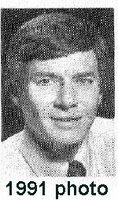
The $530 million sale will place the future of Minnesota's dominant newspaper in the hands of Avista Capital Partners, a New York-based partnership of former investment bankers. It also continues a trend that accelerated this year in which large newspaper companies, such as McClatchy, Knight Ridder and Tribune, either winnowed their holdings or put themselves up for sale. Private owners have emerged to bid for many of the big-city papers that have come into play as a result.
McClatchy has played a major role in that change, agreeing to buy all of Knight Ridder Inc. last spring. Sacramento, Calif.-based McClatchy then sold a number of the Knight Ridder papers it considered to be less desirable, including the St. Paul Pioneer Press, which is now run by privately held MediaNews Group Inc. of Denver.
While the sale price is far less than McClatchy paid in 1998, the company will also realize $160 million in tax benefits as a result, making the total benefit to McClatchy closer to $700 million.
The sale, which is expected to close in the first quarter of 2007, will mark the entry of Avista into the newspaper business. The private equity firm, which has holdings in media, health care and energy businesses, was among the firms that had been interested in the Philadelphia Inquirer and the Philadelphia Daily News before McClatchy sold the former Knight Ridder papers to another group earlier this year.
The Avista partners did not disclose any specific plans for the Star Tribune, saying those discussions have not yet been held. Speaking to a handful of reporters after the announcement, Harte said the sale came about quickly.
We just saw an opportunity here to take a historically strong asset in an industry that's clearly out of favor right now," Harte said. "The long-term goal is to provide great content."
Some observers of the industry believe that newspaper readers will continue to migrate to the Internet, leaving fewer readers to support the printed product that remains the main source of revenue for publishers, although most are aggressively beefing up their Web content and advertising.
However, Harte indicated that his group believes the printed product will remain in demand and profitable for many years.
"We believe strongly that there will be a Star Tribune printed and delivered to hundreds of thousands of customers every morning for decades to come, probably for generations, maybe for centuries."
The Star Tribune has a paid circulation of 361,172 daily copies and 596,333 on Sunday.
While layoffs and other staff reductions have occurred among a number of the papers that have been bought by private groups this year, Avista officials said they are not eyeing major staff reductions or a quick sale.
Click on the headline to read coverage in the Star-Tribune which includes a number of related articles and history of the newspaper.
McClatchy Co. said Tuesday it will sell the Star Tribune newspaper to the private equity firm Avista Capital Partners for $530 million, a sharp drop from the $1.2 billion it paid to acquire the flagship property just eight years ago.
Former Akron Beacon Jouranl publisher Chris Harte will be chairman of a board of directors who will oversee the newspaper for Avista.

The $530 million sale will place the future of Minnesota's dominant newspaper in the hands of Avista Capital Partners, a New York-based partnership of former investment bankers. It also continues a trend that accelerated this year in which large newspaper companies, such as McClatchy, Knight Ridder and Tribune, either winnowed their holdings or put themselves up for sale. Private owners have emerged to bid for many of the big-city papers that have come into play as a result.
McClatchy has played a major role in that change, agreeing to buy all of Knight Ridder Inc. last spring. Sacramento, Calif.-based McClatchy then sold a number of the Knight Ridder papers it considered to be less desirable, including the St. Paul Pioneer Press, which is now run by privately held MediaNews Group Inc. of Denver.
While the sale price is far less than McClatchy paid in 1998, the company will also realize $160 million in tax benefits as a result, making the total benefit to McClatchy closer to $700 million.
The sale, which is expected to close in the first quarter of 2007, will mark the entry of Avista into the newspaper business. The private equity firm, which has holdings in media, health care and energy businesses, was among the firms that had been interested in the Philadelphia Inquirer and the Philadelphia Daily News before McClatchy sold the former Knight Ridder papers to another group earlier this year.
The Avista partners did not disclose any specific plans for the Star Tribune, saying those discussions have not yet been held. Speaking to a handful of reporters after the announcement, Harte said the sale came about quickly.
We just saw an opportunity here to take a historically strong asset in an industry that's clearly out of favor right now," Harte said. "The long-term goal is to provide great content."
Some observers of the industry believe that newspaper readers will continue to migrate to the Internet, leaving fewer readers to support the printed product that remains the main source of revenue for publishers, although most are aggressively beefing up their Web content and advertising.
However, Harte indicated that his group believes the printed product will remain in demand and profitable for many years.
"We believe strongly that there will be a Star Tribune printed and delivered to hundreds of thousands of customers every morning for decades to come, probably for generations, maybe for centuries."
The Star Tribune has a paid circulation of 361,172 daily copies and 596,333 on Sunday.
While layoffs and other staff reductions have occurred among a number of the papers that have been bought by private groups this year, Avista officials said they are not eyeing major staff reductions or a quick sale.
Click on the headline to read coverage in the Star-Tribune which includes a number of related articles and history of the newspaper.
Saturday, December 23, 2006
David Bonar dies at 81
[Bonar was the former husband of Nancy Yockey Bonar, a former BJ staff member]
David Troyer Bonar, 81, born in Akron, Ohio, October 13, 1925, to Boyd and Lula (Troyer) Bonar, died peacefully Friday, December 22, at Bath Manor Special Care Centre, Akron, from Alzheimer's complications.
Among survivors are his loving and caring son and daughter, Timothy C. Bonar of Bath Township, and Julie Bonar Baughman (John) of West Palm Beach, Fla. He's also survived by former wife, Nancy Yockey Bonar of Granger Township, Medina.
Arrangements by the Ohio Cremation and Memorial Society. Details to come.
[Akron Beacon Journal, Akron, OH, Saturday, December 22, 2006, page B7, col. 2]
David Troyer Bonar, 81, born in Akron, Ohio, October 13, 1925, to Boyd and Lula (Troyer) Bonar, died peacefully Friday, December 22, at Bath Manor Special Care Centre, Akron, from Alzheimer's complications.
Among survivors are his loving and caring son and daughter, Timothy C. Bonar of Bath Township, and Julie Bonar Baughman (John) of West Palm Beach, Fla. He's also survived by former wife, Nancy Yockey Bonar of Granger Township, Medina.
Arrangements by the Ohio Cremation and Memorial Society. Details to come.
[Akron Beacon Journal, Akron, OH, Saturday, December 22, 2006, page B7, col. 2]
Friday, December 22, 2006
BJ shrine in John Olesky's den
John Olesky got three lights and a brick from the old Beacon Journal tower in the Layoff Raffle for those who lost jobs at the Beacon Journal. He also got two "courtesy of Fran Murphey" matchbooks and a "Frances B. Murphey" bookmark. John used photos of the BJ tower and building as a backdrop for a BJ shrine in his den. The years 1966-2005 and RIP are on the tower.
You can find photos on the retirees web site at http://www.acorn.net/bjretirees or just click on the headline to go straight to the shrine photos.
Knight Ridder is No. 1, not No. 3, Potts says
Mark Potts who writes a blog he calls "Recovering Journalist" is taking issue with the choice of Editor & Publisher Joe Strupp's picks for the top 10 stories in the news media in 2006, Here's his dig:
Strupp's pick for the top development affecting the newspaper industry in 2006: "The Web Comes of Age." Uh, it did? In 2006? Nope. Certainly not in the rest of the wired (and wireless) world, where the Web came of age years ago—and has been pounding newspapers ever since. And it's not even true in the newspaper industry, where most of the Web trends that Strupp heralds (24/7 Web newsrooms, substantial gains in online audiences) have been happening for years. I'd argue that there are a LOT of things newspapers still aren't doing on the Web (Citizens' media? Social networking? Google mapping? Liberal use of video?), but that's not the problem with Strupp's No. 1 pick.
No, the problem with Strupp's list is that the biggest story of the year in the newspaper industry is that everybody in the industry seems finally to have figured out that the industry is in very serious trouble, and the upheaval that's resulted from that realization in the past year has been nothing short of massive. Hints of that upheaval, in fact, are all over Strupp's list: The dissolution of Knight Ridder, continued job cuts, Tribune Co.'s problems—all of those are symptoms of the greater story, which is an overall decline in the industry's fortunes.
Click on the headline to go to Potts blog. See Stroup's list in post below.
Strupp's pick for the top development affecting the newspaper industry in 2006: "The Web Comes of Age." Uh, it did? In 2006? Nope. Certainly not in the rest of the wired (and wireless) world, where the Web came of age years ago—and has been pounding newspapers ever since. And it's not even true in the newspaper industry, where most of the Web trends that Strupp heralds (24/7 Web newsrooms, substantial gains in online audiences) have been happening for years. I'd argue that there are a LOT of things newspapers still aren't doing on the Web (Citizens' media? Social networking? Google mapping? Liberal use of video?), but that's not the problem with Strupp's No. 1 pick.
No, the problem with Strupp's list is that the biggest story of the year in the newspaper industry is that everybody in the industry seems finally to have figured out that the industry is in very serious trouble, and the upheaval that's resulted from that realization in the past year has been nothing short of massive. Hints of that upheaval, in fact, are all over Strupp's list: The dissolution of Knight Ridder, continued job cuts, Tribune Co.'s problems—all of those are symptoms of the greater story, which is an overall decline in the industry's fortunes.
Click on the headline to go to Potts blog. See Stroup's list in post below.
Thursday, December 21, 2006
Questions, Comments on health coverage
From Dave White:
How is it possible that the Beacon Journal can just ignore the retirement letters that were given to retirees guaranteeing their benefits for life??
And how can they force the retirees to use Aetna for their Medicare provider? I signed up for my Medicare without any help or advice from the Beacon Journal. What is this all about?
Dave White
Venice, FL
From Regina White:
When we sign up for this Aetna to be the Medicare provider, does that do away with our supplemental insurance? Now, we submit a claim to Medicare and then resubmit the balance due to United Healthcare? How is that going to work under this new plan????
Also, does this effect our life insurance?
Also from Regina:
I talked to Aaron Burr's assistant Lisa yesterday, and from what she said I don't believe there is going to be any supplemental insurance. The example I gave here was that if there was a $100,000 hospital bill, and Medicare paid $80,000 who would pay the other $20,000. And she didn't have an answer.
So, if you would, please ask in the meeting if there is any supplemental insurance? And even though, the BJ is paying the prescription cost, there is still the donut hole after $2500 where only generic drugs would be paid for. That is from Aaron Burr.
======
I talked to Aaron Burr yesterday and he did confirm that there will be no supplemental insurance once this change takes place. I don't know about anyone else but I think this is a big deal! That means they are taking away Dave's $2 prescription card, forcing him into a different Medicare provider and also taking away the supplemental insurance.
I don't know what the answer is but surely there must be some recourse???????
From Ott Gangl:
Quoting from letter: "Second, the Beacon Journal's retiree medical plan is changing from the PPO plan administered by United Healthcare to the Medicare Advantage Plan administered by Aetna. This means that Aetna will administer your Medicare Part A and Part B plans instead of Medicare. Retirees must continue to pay their Medicare Part B premium. The new plan will be effective February 1, 2007. More details of this new plan is also enclosed. "
Now after I switched my Medicare A and B to the Aetna Medicare, what happens if Aetna closes up or something else happens, will the US government take me back into their Medicare?
Also from Gangl:
One reason, actually the main reason I decided in 1992 to retire at age 60, two years before I was eligible for Social Security and 5 years before Medicare was that I could retire WITHOUT any co-pay. I believe the following contract had 5% co-pay.
The life insurance was halved to $15,000 which is OK with me. I thought I read somewhere that there will be a difference in the new Aetna plan depending on when you retired, I may be wrong and all of us get the same deal.
From John Olesky:
The premiums listed $52 for prescription coverage and $11-something for medical coverage. I guess the $11-something will be a de facto secondary coverage.
I looked at the Aetna Medicare plan for the Akron Beacon Journal and I saw these things listed for "employee." I hope that includes "retirees":
$250 deductible per calendar year, which is a heckuva lot better than the $2,000 deductible under United Health Care.
Coinsurance of 15% on all medical expenses unless otherwise stated (there are things covered 100%).
Payment limit per calendar year, however, is $5,000. That would be about two days in the hospital, if that long.
Lifetime maximum is unlimited except where otherwise indicated.
Routine physical exams are covered 100%, which is an improvement over UHC.
100% also applies to gynecological care exams, routine mammograms, routine digital rectal exams and prostate specific antigen tests (PSAs), colorectal cancer screening for those 50 or older, bone density testing.
And 100% for routine eye exam (retirees lost vision and dental coverage when they retired) and routine hearing screening.
Up to $500 every 36 months for hearing air reimbursement.
But 15% co-pay for primary care physician visits, allergy testing treatments.
And a bunch of other stuff.
Including diabetic supplies covered 100%.
We really need someone to go to the meeting and ask questions and find out what's really happening. I would go, but I'll be in China when the meetings are held.
Until we find out what's what from the Canadian, it's hard to have a strategy.
How is it possible that the Beacon Journal can just ignore the retirement letters that were given to retirees guaranteeing their benefits for life??
And how can they force the retirees to use Aetna for their Medicare provider? I signed up for my Medicare without any help or advice from the Beacon Journal. What is this all about?
Dave White
Venice, FL
From Regina White:
When we sign up for this Aetna to be the Medicare provider, does that do away with our supplemental insurance? Now, we submit a claim to Medicare and then resubmit the balance due to United Healthcare? How is that going to work under this new plan????
Also, does this effect our life insurance?
Also from Regina:
I talked to Aaron Burr's assistant Lisa yesterday, and from what she said I don't believe there is going to be any supplemental insurance. The example I gave here was that if there was a $100,000 hospital bill, and Medicare paid $80,000 who would pay the other $20,000. And she didn't have an answer.
So, if you would, please ask in the meeting if there is any supplemental insurance? And even though, the BJ is paying the prescription cost, there is still the donut hole after $2500 where only generic drugs would be paid for. That is from Aaron Burr.
======
I talked to Aaron Burr yesterday and he did confirm that there will be no supplemental insurance once this change takes place. I don't know about anyone else but I think this is a big deal! That means they are taking away Dave's $2 prescription card, forcing him into a different Medicare provider and also taking away the supplemental insurance.
I don't know what the answer is but surely there must be some recourse???????
From Ott Gangl:
Quoting from letter: "Second, the Beacon Journal's retiree medical plan is changing from the PPO plan administered by United Healthcare to the Medicare Advantage Plan administered by Aetna. This means that Aetna will administer your Medicare Part A and Part B plans instead of Medicare. Retirees must continue to pay their Medicare Part B premium. The new plan will be effective February 1, 2007. More details of this new plan is also enclosed. "
Now after I switched my Medicare A and B to the Aetna Medicare, what happens if Aetna closes up or something else happens, will the US government take me back into their Medicare?
Also from Gangl:
One reason, actually the main reason I decided in 1992 to retire at age 60, two years before I was eligible for Social Security and 5 years before Medicare was that I could retire WITHOUT any co-pay. I believe the following contract had 5% co-pay.
The life insurance was halved to $15,000 which is OK with me. I thought I read somewhere that there will be a difference in the new Aetna plan depending on when you retired, I may be wrong and all of us get the same deal.
From John Olesky:
The premiums listed $52 for prescription coverage and $11-something for medical coverage. I guess the $11-something will be a de facto secondary coverage.
I looked at the Aetna Medicare plan for the Akron Beacon Journal and I saw these things listed for "employee." I hope that includes "retirees":
$250 deductible per calendar year, which is a heckuva lot better than the $2,000 deductible under United Health Care.
Coinsurance of 15% on all medical expenses unless otherwise stated (there are things covered 100%).
Payment limit per calendar year, however, is $5,000. That would be about two days in the hospital, if that long.
Lifetime maximum is unlimited except where otherwise indicated.
Routine physical exams are covered 100%, which is an improvement over UHC.
100% also applies to gynecological care exams, routine mammograms, routine digital rectal exams and prostate specific antigen tests (PSAs), colorectal cancer screening for those 50 or older, bone density testing.
And 100% for routine eye exam (retirees lost vision and dental coverage when they retired) and routine hearing screening.
Up to $500 every 36 months for hearing air reimbursement.
But 15% co-pay for primary care physician visits, allergy testing treatments.
And a bunch of other stuff.
Including diabetic supplies covered 100%.
We really need someone to go to the meeting and ask questions and find out what's really happening. I would go, but I'll be in China when the meetings are held.
Until we find out what's what from the Canadian, it's hard to have a strategy.
32 journalists die in Iraq in 2006
With murder the leading cause, at least 32 journalists have been killed in Iraq in 2006, the highest one-year toll ever in a single country, the Committee to Protect Journalists said in a report Wednesday.
The Middle East nation, torn by war and bloody sectarian violence, was the world's most dangerous for the news media for the fourth straight year, according to CPJ, a New York-based advocacy group.
The committee said its latest yearly count brings to 93 the total killed in Iraq since the U.S. invasion in 2003, with another 37 drivers, messengers and other press "support staff" also slain.
Source: Richard Pyle. AP via Yahoo! News
Demise of Knight Ridder is No. 3
Editor and Pubisher senior editor Joe Strupp's ranked the demise of Knight Ridder as No. 3 on his Top 10 Newspaper Industry Stories of 2006. Continued job cuts was No. 5
Here is the summary for No. 3
3. Knight Ridder Dissolves: We knew it was coming, but when the McClatchy Company took over Knight Ridder it set in motion one of the biggest cross-chain effects yet of a major news paper deal. While McClatchy held on to 20 of the 32 former KR dailies, it sold off a handful to MediaNews Group, which in turn brought Hearst, Gannett and Stephens Media into the deal. Meanwhile, other buyers took over the Philadelphia Inquirer and Daily News, Akron Beacon-Journal, and the remaining properties from South Dakota to Pennsylvania. It seemed everyone short of Charles Foster Kane and Donald Trump were in the mix. But don't think this is the last of the big chain buyouts, with Tribune likely to make a move in 2007.
The others:
10. Loss of Stock Listings and TV Books (Among Other Things): There was a time when some people bought newspapers just for these specials. But with Internet competition and space cutbacks mounting, the traditional stock tables and TV grids are becoming less and less relevant.
9. Upheaval at The Miami Herald: It wasn't enough that the South Florida daily changed hands with the sale of Knight Ridder to McClatchy this year. But the longtime circulation leader also got into a tussle with sister paper, El Nuevo Herald, over coverage of the Spanish-language daily's semi-scandal involving some staffers' paid appearances on a government-supported broadcast outlet. When the dust settled, Publisher Jesus Diaz was out and Editor Tom Fiedler soon announced his retirement
8. Jill Carroll: A year ago she was a little-known freelancer covering Iraq for The Christian Science Monitor. But when the brave correspondent was kidnapped in Baghdad and held for 82 days, her abduction sparked an international movement to free her, while also drawing some controversy when major U.S. news outlets agreed to a news blackout of the kidnapping for the first 48 hours.
7. The New York Times Reveals Bank Records Monitoring Program: Reporter James Risen, who months earlier had uncovered the Bush Administration domestic wiretapping program, teamed with staffer Eric Lichtblau to expose the federal government's SWIFT program that kept watch on thousands of banking records.
6. Subpoenas: That ugly word continues to rear its head, most prominently in San Francisco where San Francisco Chronicle reporters Lance Williams and Mark Fainaru-Wada were found in contempt for failing to reveal their source in the award-winning BALCO steroid scandal coverage. They face a possible jail cell in February.
5. Continued Job Cuts: The year continued a downward trend in job security, with papers from the Los Angeles Times to The Washington Post either announcing such cuts or implementing them. The same old causes, declining ads, circulation and growing competition, were the usual culprits.
4. Labor Battles: Newspaper unions felt the brunt of management angst more than ever in 2006, with contract battles at the Philadelphia Inquirer and Daily News, The Boston Globe, Pittsburgh Post-Gazette, and even the York (Pa.) Daily Record, among others.
2. Dean Baquet Firing/Tribune Problems: It seems like it was just a year ago that the hiring of Dean Baquet, the first black editor of the Los Angeles Times, was big news. That's because it was just a year ago. When Baquet and former publisher Jeff Johnson stood up to Tribune Company calls for even further cutbacks, they received praise, accolades and platitudes. Unfortunately, Tribune honchos did not see the courage in their convictions, dumping both in a matter of weeks.
1. The Web Comes of Age: Hands down, the online growth, both for and against newspapers, was the dominant story in 2006. The daily miracle became less daily and more, well, minute by minute. Not only did numerous papers, from USA Today to Chicago Tribune, either combine their print and Web newsrooms or establish a "24-hour news cycle," but nearly every paper saw their online audience surpass their print readers.
Blogs exploded, with dozens sprouting at many papers' sites. Podcasts became common. Amid Youtube mania, sites feverishly added more and more video.
Click on the headline to read the full story.
Here is the summary for No. 3
3. Knight Ridder Dissolves: We knew it was coming, but when the McClatchy Company took over Knight Ridder it set in motion one of the biggest cross-chain effects yet of a major news
 paper deal. While McClatchy held on to 20 of the 32 former KR dailies, it sold off a handful to MediaNews Group, which in turn brought Hearst, Gannett and Stephens Media into the deal. Meanwhile, other buyers took over the Philadelphia Inquirer and Daily News, Akron Beacon-Journal, and the remaining properties from South Dakota to Pennsylvania. It seemed everyone short of Charles Foster Kane and Donald Trump were in the mix. But don't think this is the last of the big chain buyouts, with Tribune likely to make a move in 2007.
The others:
10. Loss of Stock Listings and TV Books (Among Other Things): There was a time when some people bought newspapers just for these specials. But with Internet competition and space cutbacks mounting, the traditional stock tables and TV grids are becoming less and less relevant.
9. Upheaval at The Miami Herald: It wasn't enough that the South Florida daily changed hands with the sale of Knight Ridder to McClatchy this year. But the longtime circulation leader also got into a tussle with sister paper, El Nuevo Herald, over coverage of the Spanish-language daily's semi-scandal involving some staffers' paid appearances on a government-supported broadcast outlet. When the dust settled, Publisher Jesus Diaz was out and Editor Tom Fiedler soon announced his retirement
8. Jill Carroll: A year ago she was a little-known freelancer covering Iraq for The Christian Science Monitor. But when the brave correspondent was kidnapped in Baghdad and held for 82 days, her abduction sparked an international movement to free her, while also drawing some controversy when major U.S. news outlets agreed to a news blackout of the kidnapping for the first 48 hours.
7. The New York Times Reveals Bank Records Monitoring Program: Reporter James Risen, who months earlier had uncovered the Bush Administration domestic wiretapping program, teamed with staffer Eric Lichtblau to expose the federal government's SWIFT program that kept watch on thousands of banking records.
6. Subpoenas: That ugly word continues to rear its head, most prominently in San Francisco where San Francisco Chronicle reporters Lance Williams and Mark Fainaru-Wada were found in contempt for failing to reveal their source in the award-winning BALCO steroid scandal coverage. They face a possible jail cell in February.
5. Continued Job Cuts: The year continued a downward trend in job security, with papers from the Los Angeles Times to The Washington Post either announcing such cuts or implementing them. The same old causes, declining ads, circulation and growing competition, were the usual culprits.
4. Labor Battles: Newspaper unions felt the brunt of management angst more than ever in 2006, with contract battles at the Philadelphia Inquirer and Daily News, The Boston Globe, Pittsburgh Post-Gazette, and even the York (Pa.) Daily Record, among others.
2. Dean Baquet Firing/Tribune Problems: It seems like it was just a year ago that the hiring of Dean Baquet, the first black editor of the Los Angeles Times, was big news. That's because it was just a year ago. When Baquet and former publisher Jeff Johnson stood up to Tribune Company calls for even further cutbacks, they received praise, accolades and platitudes. Unfortunately, Tribune honchos did not see the courage in their convictions, dumping both in a matter of weeks.
1. The Web Comes of Age: Hands down, the online growth, both for and against newspapers, was the dominant story in 2006. The daily miracle became less daily and more, well, minute by minute. Not only did numerous papers, from USA Today to Chicago Tribune, either combine their print and Web newsrooms or establish a "24-hour news cycle," but nearly every paper saw their online audience surpass their print readers.
Blogs exploded, with dozens sprouting at many papers' sites. Podcasts became common. Amid Youtube mania, sites feverishly added more and more video.
Click on the headline to read the full story.
Wednesday, December 20, 2006
Holiday letter from the Hertz family
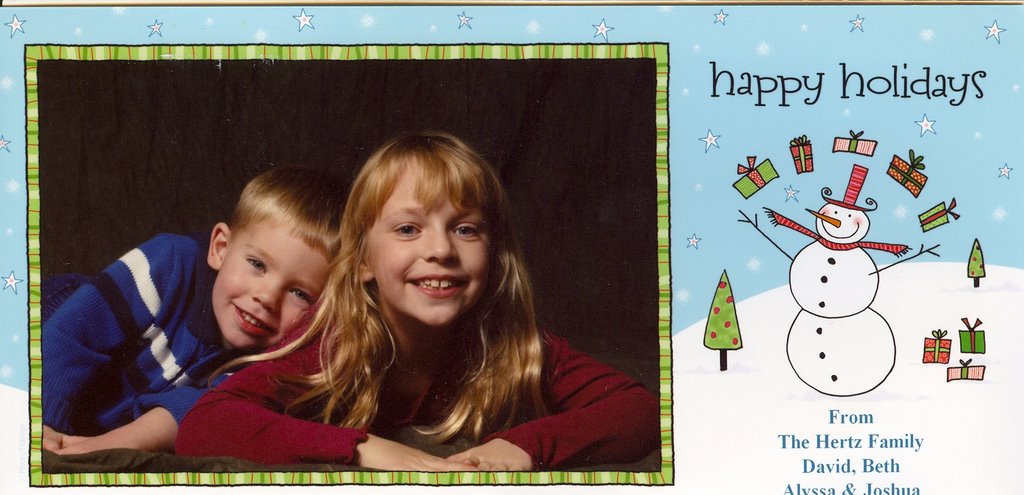
This letter came in a card from the Hertz family: (click to enlarge the photo)
Merry Christmas, Happy Hanukkah and Happy 2007! Hope all is well. Weare good - we had one of those hectic but fun-filled, kids-growing-up years that busy people everywhere know causes gray hair.
The big news is that David left the Akron Beacon Journal on Sept. 29 (his 45th birthday!).Yes, he crossed over into the "dark side," also known as public relations, accepting a position as vice president of media relations at the downtown Cleveland firm of Dix & Eaton. He's finding he has a lot to learn but is enjoying it immensely. He misses daily journalism but the Beacon was looking to reduce staff at the same time this opportunity came up, so he decided it was time to try something new.
Beth continues to work in the communications department at the Cleveland Clinic, and her favorite part is the work she does supporting the Cole Eye Institute. In fact, she availed herself of their services in October when she got LASIK. She still reaches up to take off her glasses every night but they aren't there! She also is active as a Girl Scout leader and with the BG News Alumni Society board, and is in deep denial about the impending arrival of her 40th birthday in 2007.
Alyssa is doing great in second grade. She loves art and music and is becoming such a good little reader. She does gymnastics, swim lessons and Girl Scouts, and recently got her own e-mail address.She’d be thrilled if you dropped her a line: alyssaart221@aol.com
Joshua has blossomed into little Mr. Personality and enjoys most everything about life.
He's 3 1/2 and idolizes his sister, unless she has something he wants. He likes super heroes and trains. "All aboard!"
The highlight of our summer vacation was a trip to Niagara Falls. The kids LOVED it.
Everyone in our families is doing pretty well. Beth's mom moved to Dallas in May and is still recovering from being hit by a truck last year. She lives near Beth's sister now.
Well, we know everyone's busy so we'll stop here! Hope all is well with you and that you have a peaceful, blessed holiday!
Love, David, Beth, Alyssa and Joshua Hertz
Reporter gives up politics for food
Lisa Abraham will replace Jane Snow.
In her first Food section front column, Abraham says covering government prepared her for new role. But she never really says how.

Her personal collection, however, contains the recipe for hamloaf that Nancy Petro used to woo her husband, Ohio Attorney General Jim Petro.
‘’Writing about government and politics has been my job for more than 20 years. Food has been my passion.” Lisa writes. “For me, the chance to turn my passion into my career is one of those heady, once-in-a-lifetime-did-I-just-win-the-lottery experiences.
“Most of all, I feel so privileged to be given the opportunity.
“Look for me to get cooking shortly after the first of the year. And tie on your aprons, Akron, because cooking, like politics, can be sticky business.”
Click on the headline to read Lisa’s nice column.
Blogger addend: Perhaps to be politically correct, Lisa refers to herself as food writer. When Food editor Jane Snow left the Beacon Journal, she reported (Oct 29) that there would be an open house with her the following month to introduce the new food editor. She also said she would continue to write her BJ e-mail newsletter, Second Helpings. Is anyone getting it? Neither Snow nor Mickey Porter left the BJ happily.
In her first Food section front column, Abraham says covering government prepared her for new role. But she never really says how.
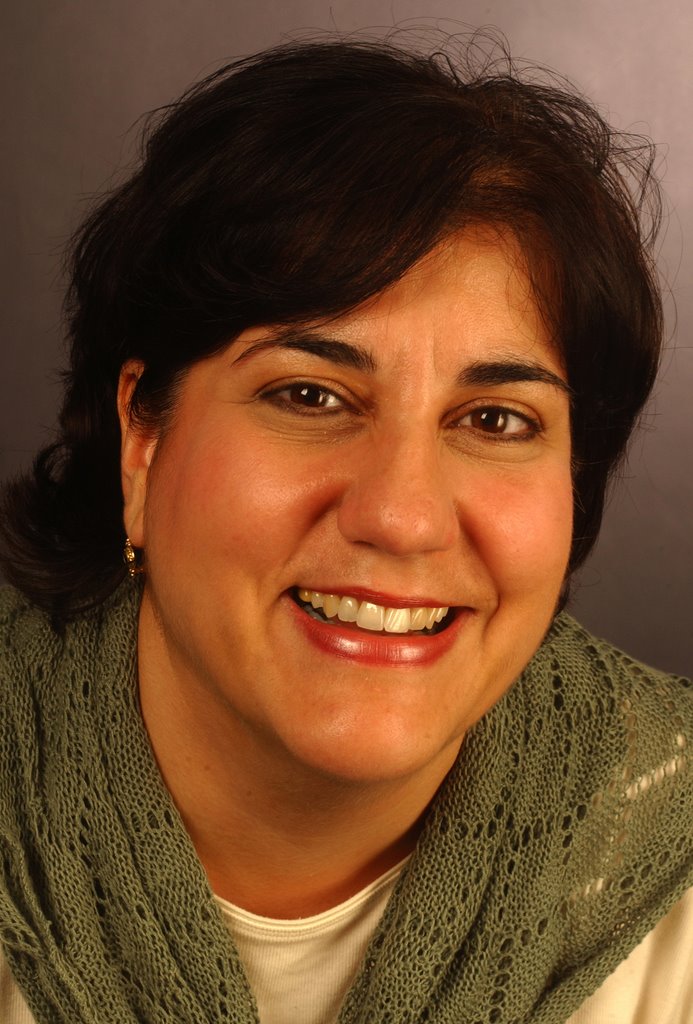
Her personal collection, however, contains the recipe for hamloaf that Nancy Petro used to woo her husband, Ohio Attorney General Jim Petro.
‘’Writing about government and politics has been my job for more than 20 years. Food has been my passion.” Lisa writes. “For me, the chance to turn my passion into my career is one of those heady, once-in-a-lifetime-did-I-just-win-the-lottery experiences.
“Most of all, I feel so privileged to be given the opportunity.
“Look for me to get cooking shortly after the first of the year. And tie on your aprons, Akron, because cooking, like politics, can be sticky business.”
Click on the headline to read Lisa’s nice column.
Blogger addend: Perhaps to be politically correct, Lisa refers to herself as food writer. When Food editor Jane Snow left the Beacon Journal, she reported (Oct 29) that there would be an open house with her the following month to introduce the new food editor. She also said she would continue to write her BJ e-mail newsletter, Second Helpings. Is anyone getting it? Neither Snow nor Mickey Porter left the BJ happily.
Craig Wilson back in hospital
Craig Wilson is back in Barberton Citizens Hospital for his fifth time in 2006. Must be some kind of record.
[Report from Craig's wife, Elizabeth]
Contract violation?
What the Guild contract states
Guild contract covering July 23, 1993 to July 22, 1996.
Article 25 Insurance and Pension Provisions:
Section 3. Retired employees of the Beacon Journal newsroom will be
provided with group hospitalization-medical and life insurance to the
extent in existence on December 31, 1989. This provision shall apply to
any employees who retired during the life of this contract.
Article 25 Insurance and Pension Provisions:
Section 3. Retired employees of the Beacon Journal newsroom will be
provided with group hospitalization-medical and life insurance to the
extent in existence on December 31, 1989. This provision shall apply to
any employees who retired during the life of this contract.
So how is it that the Beacon Journal can change our insurance coverage, including drastically changing prescription coverage which will cost me hundreds of dollars more a year? Isn't this a violation of the Guild contract? For the moment the BJ, and its Canadian owner, will pay the retirees' Medicare Part D premium, but we all know that will change down the road. We had no premium payments and $2 co-pay for prescriptions when I retired and, indeed, till the Beacon was sold to Black Press. And the medical deductibles have been changed, even under United Health Care, from $300 to $2,000 a year out-of-pocket, for one thing. I certainly don't have the same hospitalization-medical coverage that I did the day I retired, which was pegged to "usual and customary care."
John Olesky
Tuesday, December 19, 2006
Sharyn Surface dies at 68
It was in December two years ago that we told of the plight of Sharon Surface who was gravely ill in a West Virgnia nursing home.
We got an e-mail today from her sister, Shelva Pettit, that Sharon died. Here is her obitu tary:
tary:
Sharyn L. Surface, 68, of Richwood, died on Dec. 10, 2006, in Richwood Area Community Hospital after a long illness.
Before her illness, she lived in Akron, Ohio. She was a typist for Firestone Tire and Rubber Company from 1963 until 1970. She worked from 1970 until 1983 at the Akron Beacon Journal. She later worked from 1983 until 1999 at the First National Bank of Ohio where she was a secretary from which she retired and later moved to Richwood. She volunteered at the Children's Hospital for five years, for political candidates, and the United Fund through Summit County Medical Society. She was of the Methodist faith.
She was preceded in death by her parents, Gayle J. and Dosha Russell Surface; sister, Gail Diana Surface; and brother, Russell J. Surface.
She is survived by two sisters, Shelva Pettit and husband, Joe, of Sutton, Hallie Moose and husband, Roy, of Fenwick, three nephews, and three nieces.
Graveside service will be held at a later date.
Arrangements by Simons-Coleman Funeral Home, Richwood.
Blogger Notes:
Sharon Surface came to the BJ when we changed from the Linotype keyboard to a typewriter keyboard. She came about the same time as Regina White, Rita Stapleton and Ruth West, along with a couple of others.
In a note to retired printer Bob Bell in December, 2004, Shelva wrote:
Sharon is in bad shape. She can't walk or feed herself or care for herself in any way.
Our sister Hallie and I don't think she knows us every time we see her, but there are times she seems to know me . She doesn't talk...other than to answer a question with "yes" or "no ". She started having small strokes and then a massive one. This all started happening around 1990, beginning with uterine cancer. She is cancer free. It's the stroke that is the cause of her condition. The doctors told us about 5 years ago that she would not improve but get steadily worse which has been the case. It's hard on us to see her as she is and remember the way she was.
Send condolences to:
Shelva Pettit
625 Appalachian Corridor
Sutton, WV 26601
We got an e-mail today from her sister, Shelva Pettit, that Sharon died. Here is her obitu
 tary:
tary:Sharyn L. Surface, 68, of Richwood, died on Dec. 10, 2006, in Richwood Area Community Hospital after a long illness.
Before her illness, she lived in Akron, Ohio. She was a typist for Firestone Tire and Rubber Company from 1963 until 1970. She worked from 1970 until 1983 at the Akron Beacon Journal. She later worked from 1983 until 1999 at the First National Bank of Ohio where she was a secretary from which she retired and later moved to Richwood. She volunteered at the Children's Hospital for five years, for political candidates, and the United Fund through Summit County Medical Society. She was of the Methodist faith.
She was preceded in death by her parents, Gayle J. and Dosha Russell Surface; sister, Gail Diana Surface; and brother, Russell J. Surface.
She is survived by two sisters, Shelva Pettit and husband, Joe, of Sutton, Hallie Moose and husband, Roy, of Fenwick, three nephews, and three nieces.
Graveside service will be held at a later date.
Arrangements by Simons-Coleman Funeral Home, Richwood.
Blogger Notes:
Sharon Surface came to the BJ when we changed from the Linotype keyboard to a typewriter keyboard. She came about the same time as Regina White, Rita Stapleton and Ruth West, along with a couple of others.
In a note to retired printer Bob Bell in December, 2004, Shelva wrote:
Sharon is in bad shape. She can't walk or feed herself or care for herself in any way.
Our sister Hallie and I don't think she knows us every time we see her, but there are times she seems to know me . She doesn't talk...other than to answer a question with "yes" or "no ". She started having small strokes and then a massive one. This all started happening around 1990, beginning with uterine cancer. She is cancer free. It's the stroke that is the cause of her condition. The doctors told us about 5 years ago that she would not improve but get steadily worse which has been the case. It's hard on us to see her as she is and remember the way she was.
Send condolences to:
Shelva Pettit
625 Appalachian Corridor
Sutton, WV 26601
Subscribe to:
Posts (Atom)
